












Charge trapping in TiO2 polymorphs as seen by Electron Paramagnetic Resonance spectroscopy
文献情報
出版日
2013-04-24
DOI
10.1039/C3CP50658D
インパクトファクター
3.676
著者
Mario Chiesa, Maria Cristina Paganini, Stefano Livraghi, Elio Giamello
原文を見る
要旨
Electron Paramagnetic Resonance (EPR) techniques have been employed to investigate charge carrier trapping in the two main TiO2 polymorphs, anatase and rutile, with particular attention to the features of electron trapping sites (formally Ti3+ ions). The classic CW-EPR technique in this case provides signals based on the g tensor only. Nevertheless a systematic analysis of the signals obtained in the various cases (anatase and rutile, surface and bulk centers, regular and defective sites) has been performed providing useful guidelines on a field affected by some confusion. The problem of the localization of the electron spin density has been tackled by means of Pulse-EPR hyperfine techniques on samples appositely enriched with 17O. This approach has led to evidence of a substantial difference, in terms of wavefunction localization between anatase (electrons trapped in regular lattice sites exhibiting delocalized electron density) and rutile (interstitial sites showing localized electron density).
関連文献
Protein conformational alterations induced by the retinal excited state in proton and sodium pumping rhodopsins
Mihir Ghosh, Kwang-Hwan Jung, Mordechai Sheves
2019-04-09
Paper
DOI: 10.1039/C9CP00681H
Studies of competing evaporation rates of multiple volatile components from a single binary-component aerosol droplet
F. K. A. Gregson, M. Ordoubadi, R. E. H. Miles, A. E. Haddrell, D. Barona, D. Lewis, T. Church, R. Vehring, J. P. Reid
2019-04-23
Paper
DOI: 10.1039/C9CP01158G
Ionic conductivity of deep eutectic solvents: the role of orientational dynamics and glassy freezing
Daniel Reuter, Catharina Binder, Peter Lunkenheimer, Alois Loidl
2019-02-26
Paper
DOI: 10.1039/C9CP00742C
Development of a potential energy surface for the O3–Ar system: rovibrational states of the complex
Sangeeta Sur, Ernesto Quintas-Sánchez, Steve A. Ndengué, Richard Dawes
2019-03-12
Paper
DOI: 10.1039/C9CP01044K
Absorption shifts of diastereotopically ligated chlorophyll dimers of photosystem I
Carl-Mikael Suomivuori, Heike Fliegl, Evgeni B. Starikov, T. Silviu Balaban, Ville R. I. Kaila
2019-03-11
Paper
DOI: 10.1039/C9CP00616H
Identification of the Criegee intermediate reaction network in ethylene ozonolysis: impact on energy conversion strategies and atmospheric chemistry
Aric C. Rousso, Nils Hansen, Ahren W. Jasper, Yiguang Ju
2019-03-08
Paper
DOI: 10.1039/C9CP00473D
Self-assembly and stimuli-responsive behaviours of side-chain liquid crystalline copolymers: a dissipative particle dynamics simulation approach
Yisheng Lv, Liquan Wang, Fangsheng Wu, Shuting Gong, Jie Wei, Shaoliang Lin
2019-03-13
Paper
DOI: 10.1039/C9CP00400A
The importance of charge redistribution during electrochemical reactions: a density functional theory study of silver orthophosphate (Ag3PO4)
Xi Cao, Rochan Sinha, Shuxia Tao
2019-04-17
Paper
DOI: 10.1039/C8CP07684G
Effect of extending conjugation via thiophene-based oligomers on the excited state electron transfer rates to ZnO nanocrystals
Amanda N. Oehrlein, Antonio Sanchez-Diaz, Philip C. Goff, Miquel Planells, Neil Robertson, David A. Blank, Wayne L. Gladfelter
2019-03-14
Paper
DOI: 10.1039/C9CP00420C
Resolving local configurational contributions to X-ray and neutron radial distribution functions within solutions of concentrated electrolytes – a case study of concentrated NaOH
David Semrouni, Hsiu-Wen Wang, Carolyn I. Pearce, Katharine Page, David J. Wesolowski, Andrew G. Stack
2018-12-21
Paper
DOI: 10.1039/C8CP06802J
こちらもおすすめ
化合物よくある質問
(S)-四氢呋喃-3-羧酸の物理化学的性質は何ですか?
CAS番号168395-26-4の(S)-四氢呋喃-3-羧酸は、白色の結晶が特徴的な性質を持ちます。分子量は128.08であり、水に溶けやすく、アルコールなど...
168395-26-4(3S)-Tetrahydro-3-fu...
化合物よくある質問
塩基性硫黄化合物1,3-ジメチル-1-[5-(三氟甲基)-1,3,4-硫杂环己二酮-2-基]尿素を含む廃棄物はどのように処理すべきですか?
塩基性硫黄化合物1,3-ジメチル-1-[5-(三氟甲基)-1,3,4-硫杂环己二酮-2-基]尿素を含む廃棄物は、専門的な廃棄処理施設で焼却処理を行うべきです。ま...
25366-23-81,3-Dimethyl-1-[5-(t...
化合物よくある質問
インドリジン-2-カルボン酸は安全ですか?
インドリジン-2-カルボン酸は一般的に安全ですが、過度に濃い状態では刺激性があります。取り扱いには適切な防護具を使用し、直接触れや吸入を避ける必要があります。
3189-48-8Indolizine-2-carboxy...
化合物よくある質問
5-甲基-2-(3-ピリジニル)-1,3-テイゾール-4-オールの市場動向や研究トレンドはどうですか?
5-甲基-2-(3-ピリジニル)-1,3-テイゾール-4-オールは、医薬品や農薬、および合成化学の分野において研究が進められています。市場動向としては、化学物質...
131786-48-65-Methyl-2-(3-pyridi...
化合物よくある質問
4,4',4''-(嘧啶-2,4,6-三基)三苯甲醛はどのように保存すればよいですか?
4,4',4''-(嘧啶-2,4,6-三基)三苯甲醛は、密閉容器に保管し、避けておくことが重要です。室温で保管し、直射日光を避けてください。
2230887-23-54,4',4''-(2,4,6-Pyri...
化合物よくある質問
(3aR)-1,3,3-トリフェニルテトラヒドロ-3H-ピロロ[1,2-c][1,3,2]-オキザボロロールについて、適用される法規ガイドラインは何ですか?
(3aR)-1,3,3-トリフェニルテトラヒドロ-3H-ピロロ[1,2-c][1,3,2]-オキザボロロールは、GHS(国際危険物識別ルール)の分類が適用されま...
145238-45-5(3aR)-1,3,3-Tripheny...
102-83-0N,N-Dibutyl-1,3-prop...
化合物よくある質問
6-(4-氯苯氧基)吡啶-3-胺の代替品はありますか?
6-(4-氯苯氧基)吡啶-3-胺の代替品としては、他の芳香族アミン化合物や類似の除草剤が考えられます。ただし、他の化合物と同様に、代替品の選択には安全性と効果性...
75926-64-66-(4-Chlorophenoxy)-...
79408-85-84-Methyl-2-oxo-2H-ch...
化合物よくある質問
3-フェニル-3,4-ジヒドロ-2H-1,4-ベンゾキサジンを取り扱う際の実験室安全事項は何ですか?
3-フェニル-3,4-ジヒドロ-2H-1,4-ベンゾキサジンを取り扱う際は、防塵マスク、ゴーグル、ゴム手袋を使用し、ドラフトチャンバー内で作業することを推奨しま...
70310-30-43-Phenyl-3,4-dihydro...
掲載誌
Physical Chemistry Chemical Physics

CiteScore:
5.5
自己引用率:
10.3%
年間論文数:
3036
Physical Chemistry Chemical Physics (PCCP) is an international journal co-owned by 19 physical chemistry and physics societies from around the world. This journal publishes original, cutting-edge research in physical chemistry, chemical physics and biophysical chemistry. To be suitable for publication in PCCP, articles must include significant innovation and/or insight into physical chemistry; this is the most important criterion that reviewers and Editors will judge against when evaluating submissions. The journal has a broad scope and welcomes contributions spanning experiment, theory, computation and data science. Topical coverage includes spectroscopy, dynamics, kinetics, statistical mechanics, thermodynamics, electrochemistry, catalysis, surface science, quantum mechanics, quantum computing and machine learning. Interdisciplinary research areas such as polymers and soft matter, materials, nanoscience, energy, surfaces/interfaces, and biophysical chemistry are welcomed if they demonstrate significant innovation and/or insight into physical chemistry. Joined experimental/theoretical studies are particularly appreciated when complementary and based on up-to-date approaches.
おすすめ化合物
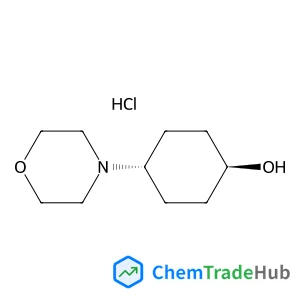
![4-{1-[4-(4,4,5,5-Tetramethyl-1,3,2-dioxaborolan-2-yl)phenyl]cyclopropyl}morpholine structure](https://static.chemtradehub.com/structs/120/1206594-08-2-7afb.webp "4-{1-[4-(4,4,5,5-Tetramethyl-1,3,2-dioxaborolan-2-yl)phenyl]cyclopropyl}morpholine structure")
おすすめサプライヤー





免責事項
このページに表示される学術雑誌情報は、参考および研究目的のみを目的としています。当社は雑誌出版社とは提携しておらず、投稿の取り扱いも行っておりません。出版に関するお問い合わせは、各雑誌出版社に直接ご連絡ください。
表示されている情報に誤りがある場合は、support@chemtradehub.com までご連絡ください。迅速に確認し、対応いたします。