












Chemically modified ribbon edge stimulated H2 dissociation: a first-principles computational study
文献情報
出版日
2013-04-12
DOI
10.1039/C3CP50654A
インパクトファクター
3.676
著者
Ting Liao, Ziqi Sun, Aijun Du, Sean Smith
原文を見る
要旨
First-principles computational studies indicate that (B, N, or O)-doped graphene ribbon edges can substantially reduce the energy barrier for H2 dissociative adsorption. The low barrier is competitive with many widely used metal or metal oxide catalysts. This suggests that suitably functionalized graphene architectures are promising metal-free alternatives for low-cost catalytic processes.
関連文献
Eu(iii)–cyclen–phen conjugate as a luminescent copper sensor: the formation of mixed polymetallic macrocyclic complexes in water
Thorfinnur Gunnlaugsson, Joseph P. Leonard, Katell Sénéchal, Andrew J. Harte
2004-03-03
Communication
DOI: 10.1039/B316176E
Formation of a bifunctional zirconocene complex that favours intramolecular –B(C6F5)2 addition to a Cp ring over σ-ligand abstraction
Michael Hill, Gerald Kehr, Gerhard Erker, Olga Kataeva, Roland Fröhlich
2004-03-23
Communication
DOI: 10.1039/B400228H
ZnS bubble clusters with onion-like structures
Eleonora Spanó, Said Hamad, C. Richard A. Catlow
2004-02-27
Communication
DOI: 10.1039/B314104G
Selective deposition of polystyrene nanoparticles in a nanoetchpit array on a silicon substrate
Manabu Tanaka, Takumi Hosaka, Takashi Tanii, Iwao Ohdomari, Hiroyuki Nishide
2004-03-16
Communication
DOI: 10.1039/B315816K
Magnetic bead-based label-free chemiluminescence detection of telomeres
Jianzhong Lu, Choiwan Lau, Masaaki Kai
2003-10-20
Communication
DOI: 10.1039/B306895A
Heteropoly acid as a novel nitrene transfer agent: a facile and practical aziridination of olefins with Chloramine-T
G. D. Kishore Kumar, Sundarababu Baskaran
2004-03-23
Communication
DOI: 10.1039/B402371D
“Green”-enzymatic synthesis of pegylated phenolic macromer and polymer
Ferdinando Bruno, Virinder S. Parmar, Jayant Kumar, Arthur C. Watterson, Kethinni G. Chittibabu, Lynne A. Samuelson
2004-03-02
Communication
DOI: 10.1039/B400404C
Symmetrical dinuclear complexes with high DNA affinity based on [Ru(dpq)2(phen)]2+
Janice Aldrich-Wright, Craig Brodie, Edith C. Glazer, Nathan W. Luedtke, Lev Elson-Schwab, Yitzhak Tor
2004-03-23
Communication
DOI: 10.1039/B316917K
Synthesis of a quinone-functionalized macrocyclic ligand and the intense fluorescence of its zinc complex
Michael Ruf, William S. Durfee, Cortlandt G. Pierpont
2004-03-23
Communication
DOI: 10.1039/B401334D
Synthesis of the stable UO2I2, the last of the uranyl dihalides. X-Ray crystal structure of [UO2I2(py)3]
Jean-Claude Berthet, Martine Nierlich, Michel Ephritikhine
2004-02-27
Communication
DOI: 10.1039/B400717D
こちらもおすすめ
化合物よくある質問
3-イチチルビフェニルはどのように合成されますか?
3-イチチルビフェニルは、ビフェニルとイチプロピオニトリルを回収率約90%で反応させて合成されます。触媒は通常、亜リチウムホウ素を用います。
5668-93-93-Ethylbiphenyl
化合物よくある質問
8-溴-5-三氟甲基喹啉はどのように合成されますか?
8-溴-5-三氟甲基喹啉は、5-トリフルオロメチル-2-メチル-1,3-ベンゼンジオールをブロモエタノールと反応させて生成します。この反応は塩基性条件下で行われ...
917251-92-48-Bromo-5-(trifluoro...
化合物よくある質問
ジメチル4-(4,4,5,5-テトラメチル-1,3,2-ドioxaborolan-2-基)-2,6-ピリジンジカルボイル酸フェニルアミニドの代替品はありますか?
ジメチル4-(4,4,5,5-テトラメチル-1,3,2-ドioxaborolan-2-基)-2,6-ピリジンジカルボイル酸フェニルアミニドの代替品としては、4-...
741709-66-0Dimethyl 4-(4,4,5,5-...
化合物よくある質問
N-(3,5-ヘキサクロロ-4-ピリドインイル)-8-メチオキシ-5-キノリンカーボン酸の市場動向や研究トレンドはどのようなものでしょうか?
N-(3,5-ヘキサクロロ-4-ピリドインイル)-8-メチオキシ-5-キノリンカーボン酸の市場動向は、主に産業用途での需要により影響を受けます。研究トレンドとし...
199871-63-1N-(3,5-Dichloro-4-py...
化合物よくある質問
イソステアロイルグリセリルは安全ですか?
イソステアロイルグリセリルは一般的に安全性が高いとされていますが、過度な使用や個人差により皮�owsん炎などの反応が起こる可能性があります。使用前に医師に相談す...
222723-55-92-[(5Z,8Z,11Z,14Z)-5...
化合物よくある質問
1-(二苯甲基)-3,3-二氟-氮杂环丁烷の市場動向や研究トレンドはどうですか?
1-(二苯甲基)-3,3-二氟-氮杂环丁烷の市場動向は、医薬品や合成化学の研究分野で注目を集めています。新興研究は、該当化合物の合成改良と生体内での作用メカニズ...
288315-02-61-Benzhydryl-3,3-dif...
化合物よくある質問
3-チオフェンスチオールの物理化学的性質は何ですか?
3-チオフェンスチオールのCAS番号は7774-73-4です。結晶性の白色粉末で、分子量は122.17です。この化合物は水に微溶解し、エタノールやジクロロメタン...
7774-73-43-Thiophenethiol
化合物よくある質問
2-Methyl-2-propanyl (2S)-2-(aminomethyl)-1-piperidinecarboxylateは安全ですか?
2-Methyl-2-propanyl (2S)-2-(aminomethyl)-1-piperidinecarboxylateは一定の安全性基準を満たしていま...
475105-35-22-Methyl-2-propanyl ...
化合物よくある質問
CAS番号1316822-90-8の化合物は安全ですか?
CAS番号1316822-90-8の化合物は安全性に関しては評価が不足していますが、一般的には生物学的に活性な物質であり、取り扱いには適切な安全防護措置が必要で...
1316822-90-8Gal beta(1-3)[Neu5Ac...
化合物よくある質問
Tert-butyl 2-(2-羟基乙基)哌嗪-1-羧酸はどのように保存すればよいですか?
Tert-butyl 2-(2-羟基乙基)哌嗪-1-羧酸は、冷暗所で保存し、直射日光から遠ざけてください。容器は密閉し、高湿度や高温を避けて保管してください。
517866-79-4Tert-butyl 2-(2-hydr...
掲載誌
Physical Chemistry Chemical Physics

CiteScore:
5.5
自己引用率:
10.3%
年間論文数:
3036
Physical Chemistry Chemical Physics (PCCP) is an international journal co-owned by 19 physical chemistry and physics societies from around the world. This journal publishes original, cutting-edge research in physical chemistry, chemical physics and biophysical chemistry. To be suitable for publication in PCCP, articles must include significant innovation and/or insight into physical chemistry; this is the most important criterion that reviewers and Editors will judge against when evaluating submissions. The journal has a broad scope and welcomes contributions spanning experiment, theory, computation and data science. Topical coverage includes spectroscopy, dynamics, kinetics, statistical mechanics, thermodynamics, electrochemistry, catalysis, surface science, quantum mechanics, quantum computing and machine learning. Interdisciplinary research areas such as polymers and soft matter, materials, nanoscience, energy, surfaces/interfaces, and biophysical chemistry are welcomed if they demonstrate significant innovation and/or insight into physical chemistry. Joined experimental/theoretical studies are particularly appreciated when complementary and based on up-to-date approaches.
おすすめ化合物
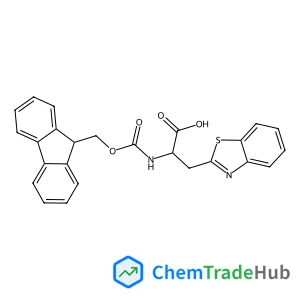
![N-{[(2-Methyl-2-propanyl)oxy]carbonyl}-L-methionylglycine structure](https://static.chemtradehub.com/structs/234/23446-03-9-e1e5.webp "N-{[(2-Methyl-2-propanyl)oxy]carbonyl}-L-methionylglycine structure")
おすすめサプライヤー




免責事項
このページに表示される学術雑誌情報は、参考および研究目的のみを目的としています。当社は雑誌出版社とは提携しておらず、投稿の取り扱いも行っておりません。出版に関するお問い合わせは、各雑誌出版社に直接ご連絡ください。
表示されている情報に誤りがある場合は、support@chemtradehub.com までご連絡ください。迅速に確認し、対応いたします。