












Effective bulk and surface temperatures of the catalyst bed of FT-IR cells used for in situ and operando studies
文献情報
出版日
2013-03-22
DOI
10.1039/C3CP50442E
インパクトファクター
3.676
著者
Haoguang Li, Mickael Rivallan, Frederic Thibault-Starzyk, Arnaud Travert
原文を見る
要旨
The temperature prevailing in the catalyst bed of three different IR spectroscopic reaction cells was assessed by means of thermocouples, an optical pyrometer and reaction rate measurements. One of the cells was a custom-made transmission FT-IR cell for use with thin wafers and the two others were commercial Harrick and Spectra-Tech diffuse reflectance FT-IR (DRIFTS) cells used for the analysis of powdered samples. The rate of CO methanation measured over a 16 wt% Ni/alumina catalyst was used as a means to derive the effective temperature prevailing in the IR cells from that existing in a traditional (non-spectroscopic) reactor having a well-controlled temperature. The sample bed of these three IR cells exhibited a significantly lower temperature than that of the corresponding measure thermocouple, which was yet located in or close to the sample bed. The comparison of Arrhenius plots enabled us to determine a temperature correction valid over a large temperature range. The use of an optical pyrometer was assessed with a view to determining the temperature of the surface of the powdered beds and that at the centre of the wafer. The optical pyrometer proved useful in the case of the catalyst powder, which behaved as a black non-reflecting body. In contrast, the temperature reading was inaccurate in the case of the pressed wafer, probably due to the shiny surface and minute thickness of the wafer, which led to a significant portion of the IR radiation of the surroundings being reflected by and transmitted through the wafer. The optical pyrometer data showed that the temperature of the surface of the powdered beds was significantly lower than that of the bulk of the bed, and that the total flow rate and composition did not affect this value. This work emphasises that the effective bed temperature in spectroscopic cells can be significantly different from that given by measure thermocouples, even when located in the vicinity of the sample, but that the calibration curves derived from rate measurements can be used to overcome this problem.
おすすめジャーナル
関連文献
Systematic metabolic engineering of Klebsiella oxytoca for production of 1,3-propanediol from glucose
Zhifei Chen, Hongyu Liu, Xiao Han, Ping Xu, Fei Tao
2023-10-27
Paper
DOI: 10.1039/D3RE00501A
Lipoic acid-based vitrimer-like elastomer
Xiaohong Lan, Laura Boetje, Théophile Pelras, Chongnan Ye, Fitrilia Silvianti, Katja Loos
2023-10-20
Paper
DOI: 10.1039/D3PY00883E
Hybrid catalysis for enantioselective Baeyer–Villiger oxidation and stereoselective epoxidation: a Cp*Ir complex to fuel FMN and FAD reduction for flavoprotein monooxygenase modules
Robert Röllig, Caroline E. Paul, Pierre Rousselot-Pailley, Véronique Alphand
2023-08-04
Paper
DOI: 10.1039/D3RE00411B
An effective approach for the preparation of epoxy vitrimers by in situ formation of dynamic and permanent linkages in a one-pot curing reaction
Du-Yuan Hung, Jia-Jun Lee, Ying-Ling Liu
2023-10-17
Paper
DOI: 10.1039/D3PY00957B
Investigation of support effects during ethanol steam reforming over a Ni/sepiolite catalyst
Marinela D. Zhurka, James A. Anderson, Alan J. McCue, Angeliki A. Lemonidou, Panagiotis N. Kechagiopoulos
2023-07-12
Paper
DOI: 10.1039/D3RE00181D
Efficient all polymer active layers with long-range ordered 1D p–n nanoheterojunctions confirmed by TEM tomography
Seon-Mi Jin, Jun Ho Hwang, Jaehyeong Park, Du Hyeon Ryu, BongSoo Kim, Chang Eun Song, Eunji Lee
2023-10-25
Paper
DOI: 10.1039/D3PY00718A
Hofmeister effect-driven superlattice construction via hydrophilic/hydrophobic transition of poly(ethylene glycol) ligands
Yanqiu Du, Haidong Li, Yang Jiang, Yunchao Xiao, Jipeng Guan, Xuejie Liu, Nan Yan
2023-12-13
Paper
DOI: 10.1039/D3PY01159C
こちらもおすすめ
化合物よくある質問
3-イチチルビフェニルはどのように合成されますか?
3-イチチルビフェニルは、ビフェニルとイチプロピオニトリルを回収率約90%で反応させて合成されます。触媒は通常、亜リチウムホウ素を用います。
5668-93-93-Ethylbiphenyl
化合物よくある質問
8-溴-5-三氟甲基喹啉はどのように合成されますか?
8-溴-5-三氟甲基喹啉は、5-トリフルオロメチル-2-メチル-1,3-ベンゼンジオールをブロモエタノールと反応させて生成します。この反応は塩基性条件下で行われ...
917251-92-48-Bromo-5-(trifluoro...
化合物よくある質問
ジメチル4-(4,4,5,5-テトラメチル-1,3,2-ドioxaborolan-2-基)-2,6-ピリジンジカルボイル酸フェニルアミニドの代替品はありますか?
ジメチル4-(4,4,5,5-テトラメチル-1,3,2-ドioxaborolan-2-基)-2,6-ピリジンジカルボイル酸フェニルアミニドの代替品としては、4-...
741709-66-0Dimethyl 4-(4,4,5,5-...
化合物よくある質問
N-(3,5-ヘキサクロロ-4-ピリドインイル)-8-メチオキシ-5-キノリンカーボン酸の市場動向や研究トレンドはどのようなものでしょうか?
N-(3,5-ヘキサクロロ-4-ピリドインイル)-8-メチオキシ-5-キノリンカーボン酸の市場動向は、主に産業用途での需要により影響を受けます。研究トレンドとし...
199871-63-1N-(3,5-Dichloro-4-py...
化合物よくある質問
イソステアロイルグリセリルは安全ですか?
イソステアロイルグリセリルは一般的に安全性が高いとされていますが、過度な使用や個人差により皮�owsん炎などの反応が起こる可能性があります。使用前に医師に相談す...
222723-55-92-[(5Z,8Z,11Z,14Z)-5...
化合物よくある質問
1-(二苯甲基)-3,3-二氟-氮杂环丁烷の市場動向や研究トレンドはどうですか?
1-(二苯甲基)-3,3-二氟-氮杂环丁烷の市場動向は、医薬品や合成化学の研究分野で注目を集めています。新興研究は、該当化合物の合成改良と生体内での作用メカニズ...
288315-02-61-Benzhydryl-3,3-dif...
化合物よくある質問
3-チオフェンスチオールの物理化学的性質は何ですか?
3-チオフェンスチオールのCAS番号は7774-73-4です。結晶性の白色粉末で、分子量は122.17です。この化合物は水に微溶解し、エタノールやジクロロメタン...
7774-73-43-Thiophenethiol
化合物よくある質問
2-Methyl-2-propanyl (2S)-2-(aminomethyl)-1-piperidinecarboxylateは安全ですか?
2-Methyl-2-propanyl (2S)-2-(aminomethyl)-1-piperidinecarboxylateは一定の安全性基準を満たしていま...
475105-35-22-Methyl-2-propanyl ...
化合物よくある質問
CAS番号1316822-90-8の化合物は安全ですか?
CAS番号1316822-90-8の化合物は安全性に関しては評価が不足していますが、一般的には生物学的に活性な物質であり、取り扱いには適切な安全防護措置が必要で...
1316822-90-8Gal beta(1-3)[Neu5Ac...
化合物よくある質問
Tert-butyl 2-(2-羟基乙基)哌嗪-1-羧酸はどのように保存すればよいですか?
Tert-butyl 2-(2-羟基乙基)哌嗪-1-羧酸は、冷暗所で保存し、直射日光から遠ざけてください。容器は密閉し、高湿度や高温を避けて保管してください。
517866-79-4Tert-butyl 2-(2-hydr...
掲載誌
Physical Chemistry Chemical Physics

CiteScore:
5.5
自己引用率:
10.3%
年間論文数:
3036
Physical Chemistry Chemical Physics (PCCP) is an international journal co-owned by 19 physical chemistry and physics societies from around the world. This journal publishes original, cutting-edge research in physical chemistry, chemical physics and biophysical chemistry. To be suitable for publication in PCCP, articles must include significant innovation and/or insight into physical chemistry; this is the most important criterion that reviewers and Editors will judge against when evaluating submissions. The journal has a broad scope and welcomes contributions spanning experiment, theory, computation and data science. Topical coverage includes spectroscopy, dynamics, kinetics, statistical mechanics, thermodynamics, electrochemistry, catalysis, surface science, quantum mechanics, quantum computing and machine learning. Interdisciplinary research areas such as polymers and soft matter, materials, nanoscience, energy, surfaces/interfaces, and biophysical chemistry are welcomed if they demonstrate significant innovation and/or insight into physical chemistry. Joined experimental/theoretical studies are particularly appreciated when complementary and based on up-to-date approaches.
おすすめ化合物
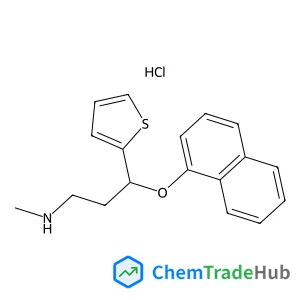
N-Methyl-3-(1-naphthyloxy)-3-(2-thienyl)-1-propanamine hydrochloride (1:1)
CAS番号:
1188266-11-6
分子式:
C18H20ClNOS
おすすめサプライヤー




免責事項
このページに表示される学術雑誌情報は、参考および研究目的のみを目的としています。当社は雑誌出版社とは提携しておらず、投稿の取り扱いも行っておりません。出版に関するお問い合わせは、各雑誌出版社に直接ご連絡ください。
表示されている情報に誤りがある場合は、support@chemtradehub.com までご連絡ください。迅速に確認し、対応いたします。