












Stimuli-responsive pyrimidine ring rotation in copper complexes for switching their physical properties
文献情報
出版日
2013-02-11
DOI
10.1039/C3CP44710C
インパクトファクター
3.676
著者
Michihiro Nishikawa, Shoko Kume, Hiroshi Nishihara
原文を見る
要旨
This paper summarizes the results of our recent studies on the development of an artificial molecular rotor system that exhibits a change in redox potential and photoluminescence in response to external stimuli such as heat and photons. The molecular rotor is made of copper complexes bearing two bidentate ligands; the rotor is described here as [Cu(Rpmpy)(Lx)]+, where Rpmpy and Lx are a 4-methyl-2-(2′-pyridyl)pyrimidine derivative and a bidendate ligand with bulky moieties, x, respectively, and the pyrimidine ring can rotate beside the copper centre while maintaining the pyridine–copper connection. The simplicity of the system enabled us to design the rotating motion more accurately. We expected that placing a wall in the rotational trajectory in the Lx moiety would decrease the rate of the rotational dynamics. This slow rate of rotation was a key factor in achieving an external-stimuli-induced switching from thr equilibrium to metastable states. This switching was based on four stable isomers derived from the rotation and oxidation states, the behaviours of which were characterized for isolated copper(I) complexes using spectroscopic and electrochemical measurements at several temperatures. The steric shifts arising from the ring rotation were exploited not only to exhibit well-established oxidation-triggered motion but also to modulate the rest potential of the electrode, to manipulate the intramolecular electron transfer, to develop a redox potential switch based on photo-driven rotation, and to demonstrate the dual-luminescence behaviour.
関連文献
Directed holey and ordered g-C3N4.5 nanosheets by a hard template nanocasting approach for sustainable visible-light hydrogen evolution with prominent quantum efficiency
Bindu Antil, Sasanka Deka
2020-06-15
Paper
DOI: 10.1039/D0TA02734K
Extraordinary role of Hg in enhancing the thermoelectric performance of p-type SnTe
Gangjian Tan, Fengyuan Shi, Jeff W. Doak, Hui Sun, Li-Dong Zhao, Pengli Wang, Ctirad Uher, Chris Wolverton, Vinayak P. Dravid
2014-10-23
Paper
DOI: 10.1039/C4EE01463D
Electron distribution tuning of fluorine-doped carbon for ammonia electrosynthesis
Di Yuan, Zengxi Wei, Peng Han, Chao Yang, Linsong Huang, Zhengxiang Gu, Yu Ding, Jianmin Ma, Gengfeng Zheng
2019-06-25
Paper
DOI: 10.1039/C9TA04141A
Hierarchical nanohoneycomb-like CoMoO4–MnO2 core–shell and Fe2O3 nanosheet arrays on 3D graphene foam with excellent supercapacitive performance
Sachin Kumar, Ghuzanfar Saeed, Nam Hoon Kim
2018-03-22
Paper
DOI: 10.1039/C8TA00889B
Proton delivery through a dynamic 3D H-bond network constructed from dense hydroxyls for advanced ion-selective membranes
Lei Hu, Li Gao, Wenji Zheng, Yan Dai, Ce Hao, Xuemei Wu
2019-05-24
Paper
DOI: 10.1039/C9TA04423J
Natural product modulators of human sensations and mood: molecular mechanisms and therapeutic potential
Tomáš Pluskal
2017-09-21
Review Article
DOI: 10.1039/C7CS00411G
Polymorphism of chlorpropamide on liquid-assisted mechanical treatment: choice of liquid and type of mechanical treatment matter
2018-02-12
Paper
DOI: 10.1039/C7CE02221B
Constructing bulk-contact inside single crystals of organic semiconductors through gel incorporation
2015-12-23
Paper
DOI: 10.1039/C5CE02383A
こちらもおすすめ
化合物よくある質問
オステニ二甲磺酸塩に適用される法規ガイドラインは何ですか?
オステニ二甲磺酸塩は、GHS分類に基づき corrosive 物質として分類されます。REACH規則では、該当物質の登録が要求される可能性があります。また、FD...
2070014-82-1N-(2-{[2-(Dimethylam...
化合物よくある質問
環丁基肼盐酸盐は安全ですか?
環丁基肼盐酸盐は毒性があり、吸入や皮膚接触は有害です。使用時の安全対策として、密閉システムを使用し、適切な排気設備を備えた場所で作業することが推奨されます。
1156980-49-2Cyclobutylhydrazine ...
化合物よくある質問
N-(4-パリドン基ソニルフェニル)硫代イソシアネートを取り扱う際の実験室安全事項は何ですか?
N-(4-パリドン基ソニルフェニル)硫代イソシアネートは高毒性で、皮膚や吸入による毒性があります。取り扱う際は防毒マスク、保護用手袋、保護眼鏡などのPPEを着用...
7356-55-01-[(4-Isothiocyanato...
化合物よくある質問
5-ヒドロキシ-1,3-ジヒドロ-2H-インドン-2-酮の物理化学的性質は何ですか?
CAS番号3416-18-0の5-ヒドロキシ-1,3-ジヒドロ-2H-インドン-2-酮は、結晶性の白色粉末です。分子量は228.25であり、 aqueous m...
3416-18-05-Hydroxy-1,3-dihydr...
化合物よくある質問
O-苄基-D-丝氨醇はどのように合成されますか?
O-苄基-D-丝氨醇は、D-アミノ酸とベンゼン環の経由で合成されます。触媒としてジメチルアミノピリジンが使用され、選択性は高いです。一般的な収率は約90%です。
58577-88-1(s)-2-Amino-3-benzyl...
化合物よくある質問
ナトリウム3-ヒドロキシbutano酸とは何ですか?
ナトリウム3-ヒドロキシbutano酸は、CAS番号13613-65-5で登録されている化合物です。この化合物は、(3R)-3-ヒドロキシbutano酸とナトリ...
13613-65-5sodium;(3R)-3-hydrox...
化合物よくある質問
1-(二苯甲基)-4-甲基ベンゼンの物理化学的性質は何ですか?
CAS番号603-37-2の1-(二苯甲基)-4-甲基ベンゼンは、結晶性の固体で、分子量は244.28であり、水中的には微溶です。この化合物は有機反応において中...
603-37-21-(Diphenylmethyl)-4...
化合物よくある質問
ネアミン塩酸塩の物理化学的性質は何ですか?
ネアミン塩酸塩の分子量は321.19であり、結晶性の白色粉末です。この化合物は水に溶けやすく、pHが低くなると不溶性になります。反応活性は高く、水溶液中の酸化還...
15446-43-2NEAMINE HYDROCHLORID...
化合物よくある質問
偶氮二甲酰二哌啶の主な用途は何ですか?
偶氮二甲酰二哌啶は、医薬品、染料、高 Então 剤、触媒、溶媒、量論試薬など、様々な分野で使用されています。特に、高 Enough 反応において、グリコール酸...
10465-81-3(E)-1,2-Diazenediylb...
664969-54-44-[(2E)-3-Phenyl-2-p...
掲載誌
Physical Chemistry Chemical Physics

CiteScore:
5.5
自己引用率:
10.3%
年間論文数:
3036
Physical Chemistry Chemical Physics (PCCP) is an international journal co-owned by 19 physical chemistry and physics societies from around the world. This journal publishes original, cutting-edge research in physical chemistry, chemical physics and biophysical chemistry. To be suitable for publication in PCCP, articles must include significant innovation and/or insight into physical chemistry; this is the most important criterion that reviewers and Editors will judge against when evaluating submissions. The journal has a broad scope and welcomes contributions spanning experiment, theory, computation and data science. Topical coverage includes spectroscopy, dynamics, kinetics, statistical mechanics, thermodynamics, electrochemistry, catalysis, surface science, quantum mechanics, quantum computing and machine learning. Interdisciplinary research areas such as polymers and soft matter, materials, nanoscience, energy, surfaces/interfaces, and biophysical chemistry are welcomed if they demonstrate significant innovation and/or insight into physical chemistry. Joined experimental/theoretical studies are particularly appreciated when complementary and based on up-to-date approaches.
おすすめ化合物
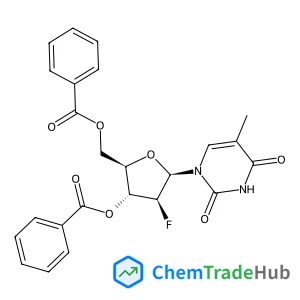
1-(3',5'-Di-O-benzoyl-2'-deoxy-2'-fluoro-b-D-arabinofuranosyl)thymine
CAS番号:
97614-47-6
分子式:
C24H21FN2O7
![Bis(N,N''-dimethylpiperazine)tetra[copper(I) iodide] structure](https://static.chemtradehub.com/structs/140/1401708-91-5-2b86.webp "Bis(N,N''-dimethylpiperazine)tetra[copper(I) iodide] structure")
おすすめサプライヤー





免責事項
このページに表示される学術雑誌情報は、参考および研究目的のみを目的としています。当社は雑誌出版社とは提携しておらず、投稿の取り扱いも行っておりません。出版に関するお問い合わせは、各雑誌出版社に直接ご連絡ください。
表示されている情報に誤りがある場合は、support@chemtradehub.com までご連絡ください。迅速に確認し、対応いたします。