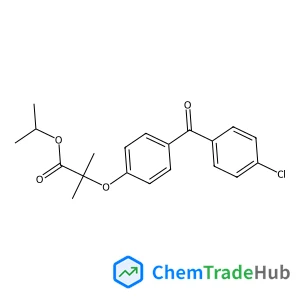
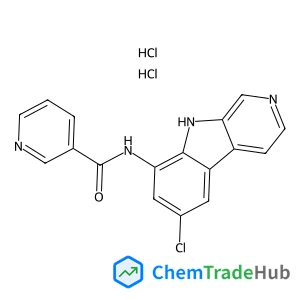
![1-(1-Benzyl-1,2,3,6-tetrahydropyridin-4-yl)-1H-benzo[d]imidazol-2(3H)-one structure](https://static.chemtradehub.com/structs/603/60373-71-9-7dfb.webp "1-(1-Benzyl-1,2,3,6-tetrahydropyridin-4-yl)-1H-benzo[d]imidazol-2(3H)-one structure")
1-(1-Benzyl-1,2,3,6-tetrahydropyridin-4-yl)-1H-benzo[d]imidazol-2(3H)-one
CAS番号:
60373-71-9
分子式:
C19H19N3O
Ben Van de Voorde, Alexis S. Munn, Nathalie Guillou, Franck Millange, Dirk E. De Vos, Richard I. Walton
The adsorption of N/S-containing heterocyclic organic molecules in the flexible iron(III) terephthalate MIL-53, FeIII(OH)0.6F0.4(O2C–C6H4–CO2)·(H2O), from the liquid phase was studied with in situ energy dispersive X-ray diffraction (EDXRD), in order to follow the adsorption-induced expansion of the structure. For comparison with the diffraction data, liquid phase adsorption isotherms were recorded for uptake of benzothiophene, benzothiazole and indole in isopropanol and in heptane. The solvent not only influences pore opening but is also a competing guest. The in situ EDXRD experiments allow the kinetics of guest uptake and the competition with solvent to be monitored directly. Indole uptake is limited; this adsorbate is barely capable of opening the closed, either hydrated or dehydrated, MIL-53(Fe) structure, or of penetrating the isopropanol-containing material in the concentration range under study. When isopropanol is used as a solvent, the guest molecules benzothiophene and benzothiazole must be present at a certain threshold concentration before substantial adsorption into the metal–organic framework takes place, eventually resulting in full opening of the structure. The fully expanded structures of benzothiophene or benzothiazole loaded MIL-53(Fe) materials have Imcm symmetry and a unit cell volume of ca. 1600 Å3, and upon uptake of the guest molecules by the closed form (unit cell volume ∼1000 Å3) no intermediate crystalline phases are seen. Successful uptake by MIL-53(Fe) requires that the adsorbate is primarily a good hydrogen bond acceptor; additionally, based on UV-visible spectroscopy, a charge-transfer interaction between the S atoms of benzothiophene and the aromatic rings in the MOF pore wall is proposed.

Israel Journal of Chemistry

Journal of Heterocyclic Chemistry

Proceedings of the National Academy of Sciences of the United States of America

Pharmacological Reviews

Fibre Chemistry

Journal of Organometallic Chemistry

Science

Science Progress

Organic Preparations and Procedures International

European Journal of Wood and Wood Products
Shuai Xia, Yibin Zhang, Nick Whisman, Jianheng Bi, Tessa E. Steenwinkel, Shulin Wan, Jerry Medford, Momoko Tajiri, Rudy L. Luck, Thomas Werner, Haiying Liu
DOI: 10.1039/C9TB02302J
DOI: 10.1039/JA9860100145
V. Dorčák, M. Kabeláč, O. Kroutil, K. Bednářová, J. Vacek
DOI: 10.1039/C6AN00869K
H. Schulze, G. Henihan, A. Hardie, I. Ciani, G. Giraud, J. G. Terry, A. J. Walton, R. Pethig, P. Ghazal, K. E. Templeton, A. R. Mount, T. T. Bachmann
DOI: 10.1039/C3AN01319G
Xu-Feng Luo, Cheng-Hsien Yang, You-Yu Peng, Nen-Wen Pu, Ming-Der Ger, Chien-Te Hsieh, Jeng-Kuei Chang
DOI: 10.1039/C5TA00727E
Qing-Yun Zhou, Rong-Na Ma, Chao-Long Hu, Fei Sun, Li-Ping Jia, Wei Zhang, Lei Shang, Qing-Wang Xue, Wen-Li Jia, Huai-Sheng Wang
DOI: 10.1039/D1AN00204J
Yue-Ming Yu, Yuan-Yuan Niu, Ling-Yang Wang, Zhi-Yong Wu, Cui-Wei Yan
DOI: 10.1039/D1AN00171J
Hengyan Liu, Ge Xu, Tianli Zhu, Rongchen Wang, Jiahui Tan, Chunchang Zhao, Xianfeng Gu
DOI: 10.1039/D0TB00173B
DOI: 10.1039/JA9860100293
3-イチチルビフェニルは、ビフェニルとイチプロピオニトリルを回収率約90%で反応させて合成されます。触媒は通常、亜リチウムホウ素を用います。
8-溴-5-三氟甲基喹啉は、5-トリフルオロメチル-2-メチル-1,3-ベンゼンジオールをブロモエタノールと反応させて生成します。この反応は塩基性条件下で行われ...
ジメチル4-(4,4,5,5-テトラメチル-1,3,2-ドioxaborolan-2-基)-2,6-ピリジンジカルボイル酸フェニルアミニドの代替品としては、4-...
N-(3,5-ヘキサクロロ-4-ピリドインイル)-8-メチオキシ-5-キノリンカーボン酸の市場動向は、主に産業用途での需要により影響を受けます。研究トレンドとし...
イソステアロイルグリセリルは一般的に安全性が高いとされていますが、過度な使用や個人差により皮�owsん炎などの反応が起こる可能性があります。使用前に医師に相談す...
1-(二苯甲基)-3,3-二氟-氮杂环丁烷の市場動向は、医薬品や合成化学の研究分野で注目を集めています。新興研究は、該当化合物の合成改良と生体内での作用メカニズ...
3-チオフェンスチオールのCAS番号は7774-73-4です。結晶性の白色粉末で、分子量は122.17です。この化合物は水に微溶解し、エタノールやジクロロメタン...
2-Methyl-2-propanyl (2S)-2-(aminomethyl)-1-piperidinecarboxylateは一定の安全性基準を満たしていま...
CAS番号1316822-90-8の化合物は安全性に関しては評価が不足していますが、一般的には生物学的に活性な物質であり、取り扱いには適切な安全防護措置が必要で...
Tert-butyl 2-(2-羟基乙基)哌嗪-1-羧酸は、冷暗所で保存し、直射日光から遠ざけてください。容器は密閉し、高湿度や高温を避けて保管してください。

Physical Chemistry Chemical Physics (PCCP) is an international journal co-owned by 19 physical chemistry and physics societies from around the world. This journal publishes original, cutting-edge research in physical chemistry, chemical physics and biophysical chemistry. To be suitable for publication in PCCP, articles must include significant innovation and/or insight into physical chemistry; this is the most important criterion that reviewers and Editors will judge against when evaluating submissions. The journal has a broad scope and welcomes contributions spanning experiment, theory, computation and data science. Topical coverage includes spectroscopy, dynamics, kinetics, statistical mechanics, thermodynamics, electrochemistry, catalysis, surface science, quantum mechanics, quantum computing and machine learning. Interdisciplinary research areas such as polymers and soft matter, materials, nanoscience, energy, surfaces/interfaces, and biophysical chemistry are welcomed if they demonstrate significant innovation and/or insight into physical chemistry. Joined experimental/theoretical studies are particularly appreciated when complementary and based on up-to-date approaches.
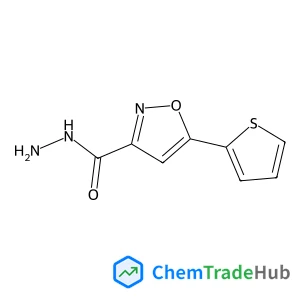
![1-{3-[4-Amino-3-(4-phenoxyphenyl)-1H-pyrazolo[3,4-d]pyrimidin-1-yl]-1-piperidinyl}-2,3-dihydroxy-1-propanone structure](https://static.chemtradehub.com/structs/122/1226872-27-0-e037.webp "1-{3-[4-Amino-3-(4-phenoxyphenyl)-1H-pyrazolo[3,4-d]pyrimidin-1-yl]-1-piperidinyl}-2,3-dihydroxy-1-propanone structure")