












Persistent misconceptions regarding SERS
文献情報
出版日
2012-12-21
DOI
10.1039/C2CP44030J
インパクトファクター
3.676
著者
原文を見る
要旨
SERS is some 35 years old, and the subject of over 11 000 articles. The field of Plasmonics, and large aspects of Metamaterials are clearly based on concepts that became current as a result of SERS. Despite this, a number of persistent, fuzzy ideas about the origin of the enhancement in SERS continue to be current even among SERS researchers, leading to the external impression that SERS is uniquely poorly understood. Six such ideas are discussed.
関連文献
Direct monitoring of toxic compounds in air using a portable mass spectrometer
Christopher C. Mulligan, Dina R. Justes, Robert. J. Noll, Nathaniel L. Sanders, Brian C. Laughlin, R. Graham Cooks
2006-02-28
Paper
DOI: 10.1039/B517541K
Angular-dependent metal-enhanced fluorescence from silver colloid-deposited films: opportunity for angular-ratiometric surface assays‡
Kadir Aslan, Stuart N. Malyn, Chris D. Geddes
2007-08-23
Paper
DOI: 10.1039/B709170B
Infrared laser-assisted desorption electrospray ionization mass spectrometry
Yohannes H. Rezenom, Jianan Dong, Kermit K. Murray
2007-11-29
Paper
DOI: 10.1039/B715146B
Serial processing of biological reactions using flow-through microfluidic devices: coupled PCR/LDR for the detection of low-abundant DNA point mutations
Masahiko Hashimoto, Francis Barany
2007-07-11
Paper
DOI: 10.1039/B700071E
Evaluation of partial least-squares with second-order advantage for the multi-way spectroscopic analysis of complex biological samples in the presence of analyte–background interactions
María J. Culzoni, Héctor C. Goicoechea, Ariana P. Pagani, Miguel A. Cabezón, Alejandro C. Olivieri
2006-04-11
Paper
DOI: 10.1039/B603383K
Surface-enhanced Raman spectroscopy of half-mustard agent
Douglas A. Stuart, Kevin B. Biggs, Richard P. Van Duyne
2006-02-21
Paper
DOI: 10.1039/B513326B
Microwave-accelerated metal-enhanced fluorescence: application to detection of genomic and exosporium anthrax DNA in <30 seconds
Kadir Aslan, Yongxia Zhang, Stephen Hibbs, Les Baillie, Michael J. R. Previte, Chris D. Geddes
2007-09-11
Paper
DOI: 10.1039/B707876E
Poly-l-lysine/hydroxyapatite/carbon nanotube hybrid nanocomposite applied for piezoelectric immunoassay of carbohydrateantigen 19-9
Yanjun Ding, Jia Liu, Xiaoyong Jin, Haixia Lu, Guoli Shen, Ruqin Yu
2007-11-21
Paper
DOI: 10.1039/B713824E
Direct detection of Pb in urine and Cd, Pb, Cu, and Ag in natural waters using electrochemical sensors immobilized with DMSA functionalized magnetic nanoparticles
Wassana Yantasee, Kitiya Hongsirikarn, Cynthia L. Warner, Daiwon Choi, Thanapon Sangvanich, Mychailo B. Toloczko, Marvin G. Warner, Glen E. Fryxell, R. Shane Addleman, Charles Timchalk
2008-02-01
Paper
DOI: 10.1039/B711199A
The characteristic red chemiluminescence from reactions with acidic potassium permanganate: further spectroscopic evidence for a manganese(ii) emitter
Jacqui L. Adcock, Paul S. Francis, Trevor A. Smith, Neil W. Barnett
2007-11-21
Communication
DOI: 10.1039/B714147E
こちらもおすすめ
化合物よくある質問
3-(5-フェニル-2-ファイル)-プロパン酸の市場動向や研究トレンドはどうですか?
この化合物の市場動向は不明ですが、類似化合物の需要は化学繊維、医薬品、農薬分野で安定しています。研究トレンドとしては、該当化合物の生物学的活性の評価や、その他の...
3465-61-03-(5-Phenyl-2-furyl)...
化合物よくある質問
3- Chloro-1H-indazol-5-olはどのように保存すればよいですか?
3- チロロ-1H-吲唑-5-醇は遮光し、直射日光を避けて、温度は室温を推奨し、密閉容器に保存してください。
885519-34-63-Chloro-1H-indazol-...
849924-76-11,2,3,4,5-Cyclopenta...
化合物よくある質問
L-(1-~13~C)メチオニンの市場動向や研究トレンドはどうですか?
L-(1-~13~C)メチオニンは、医薬品やバイオテクノロジー分野での研究が増加しており、その価格は安定しています。新興研究分野では、代謝解析や遺伝子機能解析で...
81202-04-2L-(1-~13~C)Methionin...
化合物よくある質問
1,3-フェニレンビスメチレンビスアクリレートは安全ですか?
1,3-フェニレンビスメチレンビスアクリレートは一般的に安全ですが、直接皮膚に触れる場合は保護用具を使用することを推奨します。高濃度の蒸気が吸入された場合は呼吸...
22757-16-01,3-Phenylenebis(met...
化合物よくある質問
丹参醇Aはどのように保存すればよいですか?
丹参醇Aは、直射日光を避けて室温で保存し、密栓容器に入れることをお勧めします。適切な保存条件は、安定性を保ち、安全性を確保する上で重要です。
189308-08-5Danshenol A
化合物よくある質問
4-メチル-2-(1,1,1-三フロロ-2-メチルプロパニル)ピリドインとは何ですか?
CAS番号1378865-93-0の4-メチル-2-(1,1,1-三フロロ-2-メチルプロパニル)ピリドインは、合成化学分野で用いられる有機化合物の一種です。こ...
1378865-93-04-Methyl-2-(1,1,1-tr...
化合物よくある質問
N-フェニルベンジル-2-クロロ酢氨を取り扱う際の実験室安全事項は何ですか?
N-フェニルベンジル-2-クロロ酢氨は毒性があり、皮膚や粘膜に刺激を与えます。取り扱う際には、保護眼鏡、手袋、ゴーグルを着用することを強く推奨します。ドラフトチ...
2653-14-7N-benzyl-2-chloro-N-...
化合物よくある質問
UCN-02を取り扱う際の実験室安全事項は何ですか?
UCN-02は毒性は低いですが、人体への直接的な接触は避けるべきです。PPE要件はグローブと顔面保護具を着用することです。ドラフトチャンバーを使用して漏洩を処理...
121569-61-7UCN-02
化合物よくある質問
N-[3-[2-(二甲基氨基)乙氧基]-4-甲氧基苯基]-2'-甲基-4'-(5-甲基-1,2,4-恶二唑-3-基)-[1,1'-联苯]-4-甲酰胺を取り扱う際の実験室安全事項は何ですか?
手袋と保護眼鏡を着用し、漏洩時には吸気防止装置を使用してください。室温、乾燥した場所に保管し、直日光から隔離してください。SDS(安全データシート)を参照してく...
170230-39-4N-{3-[2-(Dimethylami...
掲載誌
Physical Chemistry Chemical Physics

CiteScore:
5.5
自己引用率:
10.3%
年間論文数:
3036
Physical Chemistry Chemical Physics (PCCP) is an international journal co-owned by 19 physical chemistry and physics societies from around the world. This journal publishes original, cutting-edge research in physical chemistry, chemical physics and biophysical chemistry. To be suitable for publication in PCCP, articles must include significant innovation and/or insight into physical chemistry; this is the most important criterion that reviewers and Editors will judge against when evaluating submissions. The journal has a broad scope and welcomes contributions spanning experiment, theory, computation and data science. Topical coverage includes spectroscopy, dynamics, kinetics, statistical mechanics, thermodynamics, electrochemistry, catalysis, surface science, quantum mechanics, quantum computing and machine learning. Interdisciplinary research areas such as polymers and soft matter, materials, nanoscience, energy, surfaces/interfaces, and biophysical chemistry are welcomed if they demonstrate significant innovation and/or insight into physical chemistry. Joined experimental/theoretical studies are particularly appreciated when complementary and based on up-to-date approaches.
おすすめ化合物
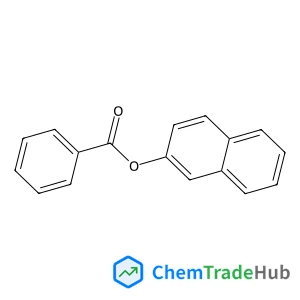
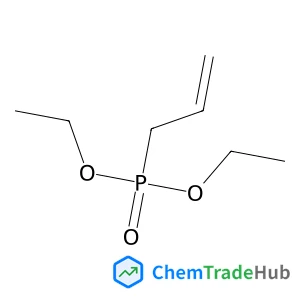
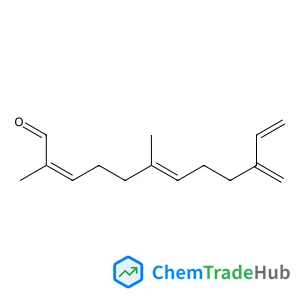
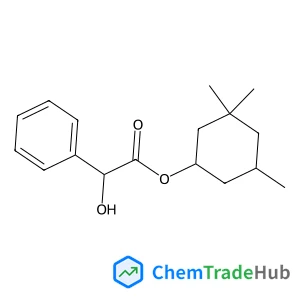
おすすめサプライヤー


免責事項
このページに表示される学術雑誌情報は、参考および研究目的のみを目的としています。当社は雑誌出版社とは提携しておらず、投稿の取り扱いも行っておりません。出版に関するお問い合わせは、各雑誌出版社に直接ご連絡ください。
表示されている情報に誤りがある場合は、support@chemtradehub.com までご連絡ください。迅速に確認し、対応いたします。