![2-[({[(2-Methyl-2-propanyl)oxy]carbonyl}amino)methyl]isonicotinic acid structure](https://static.chemtradehub.com/structs/473/473924-63-9-973b.webp "2-[({[(2-Methyl-2-propanyl)oxy]carbonyl}amino)methyl]isonicotinic acid structure")
2-[({[(2-Methyl-2-propanyl)oxy]carbonyl}amino)methyl]isonicotinic acid
CAS番号:
473924-63-9
分子式:
C12H16N2O4
Andriy Marko, Thomas F. Prisner
Pulsed Electron–electron Double Resonance (PELDOR) is a method frequently used to determine the distances between paramagnetic centers in biomacromolecules on the nanometer scale. A standard algorithm for determination of distances from the experimental data assumes that all possible mutual orientations of the spin labels are equally probable. However, in many applications the mobility of the spin labels attached to large molecules can be significantly restricted. In order to determine the total PELDOR signal in this case, the individual contributions of each rigid biradical should be explicitly calculated for the given frequencies of the probe and pump pulses. The solution of the inverse problem of determination of the ensemble of molecular structures that fit the experimental PELDOR data acquired at multiple microwave frequencies and magnetic fields has proven to be a non-trivial task, especially, when no information about the molecular structure under study is available. In this work we present a fitting algorithm that reconstructs experimental data by searching for an optimal combination of presimulated PELDOR time traces for nitroxide biradicals with all relative orientations and with inter-spin distances in the experimentally accessible range. The generated library of PELDOR time traces has been employed to excellently fit experimental data containing orientation selection effects gathered on model biradical systems.
Jenna W. J. Wu, Ryoichi Moriyama, Keijiro Ohshimo, Fuminori Misaizu
DOI: 10.1039/C7CP04017B
Bin Zhao, Bo Zhou, Ning Qi, Zhiquan Chen, Wei Zhou
DOI: 10.1039/C6CP07483A
Illia Dobryden, Gen Li, Yunjuan He, Hui Huang, Per-Anders Thorén, David B. Haviland
DOI: 10.1039/C7CP02612A
Saeid Arabnejad, Koichi Yamashita, Sergei Manzhos
DOI: 10.1039/C7CP00510E
Pratik P. Dholabhai, Enrique Martínez, Nicholas T. Brown, Blas Pedro Uberuaga
DOI: 10.1039/C7CP04884J
DOI: 10.1039/C7CP00798A
J. S. Eardley, N. Warner, L. Z. Deng, E. Wrede
DOI: 10.1039/C7CP00458C
Lauri Hautala, Kari Jänkälä, Mikko-Heikki Mikkelä, Paavo Turunen, Nønne L. Prisle, Minna Patanen, Maxim Tchaplyguine, Marko Huttula
DOI: 10.1039/C7CP04398H
Eric R. Kennehan, Christopher Grieco, Alyssa N. Brigeman, Adam Rimshaw, Kayla Bisgaier, Noel C. Giebink
DOI: 10.1039/C7CP04819J
3-(2-オキサプロピル)ベンzoic酸は、ベンzoic酸とプロパノ酸をヒドロキシム化合物として反応させて生成します。具体的には、ベンzoic酸とプロパノ酸を反...
4-メチル-4-ピペリジニル-1-ピロリドイン甲酸は、主に医薬品の合成材料や研究用物質として使用されます。さらに、一部の薬理学的研究にも応用されています。
Biotin-PEG3-oxyamine HCl塩は、GHS( Globally Harmonized System of Classification and...
N-(4-イソチオシアネートフェニル)-2-メトキシアリニンは、4-イソチオシアノフェノールと2-メトキシアリニルアミンのアミニド反応を用いて合成されます。この...
金粉蕨亭2'-O-葡萄糖甙は主に薬理研究や医薬品製造に使用され、抗炎症作用や抗がん作用などがあります。また、その構造や性質から、合成化学や化学生理学の研究にも用...
2-(2-ニトロフェニル)酢酸ヒドライドのCAS番号は114953-81-0です。この化合物は白色結晶性粉末で、分子量は244.12です。水溶性は限られており、...
この化合物は高活性のため、取り扱いには注意が必要です。PPE(個人保護具)としてゴーグル、ガントリー、および防滴シールドを着用することが推奨されます。ドラフトチ...
11-脱氢血栓烷 b2は、血栓溶解・抗凝固作用に関する研究で注目を集めています。特に心血管疾患の治療法開発において、市場の需要が高まっています。研究トレンドとし...
3,3-二甲基哌啶-4-酮は避光、常温、乾燥した場所で保存してください。容器は密閉し、遠くから火源を離して保管することを確認してください。

Physical Chemistry Chemical Physics (PCCP) is an international journal co-owned by 19 physical chemistry and physics societies from around the world. This journal publishes original, cutting-edge research in physical chemistry, chemical physics and biophysical chemistry. To be suitable for publication in PCCP, articles must include significant innovation and/or insight into physical chemistry; this is the most important criterion that reviewers and Editors will judge against when evaluating submissions. The journal has a broad scope and welcomes contributions spanning experiment, theory, computation and data science. Topical coverage includes spectroscopy, dynamics, kinetics, statistical mechanics, thermodynamics, electrochemistry, catalysis, surface science, quantum mechanics, quantum computing and machine learning. Interdisciplinary research areas such as polymers and soft matter, materials, nanoscience, energy, surfaces/interfaces, and biophysical chemistry are welcomed if they demonstrate significant innovation and/or insight into physical chemistry. Joined experimental/theoretical studies are particularly appreciated when complementary and based on up-to-date approaches.
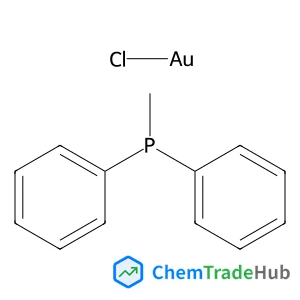
![(2E)-4-[(1R,2S,8R,19S,21R)-14-Hydroxy-11-isopropenyl-8,23,23-trimethyl-5-(3-methyl-2-buten-1-yl)-16,20-dioxo-3,7,22-trioxaheptacyclo[17.4.1.1~8,12~.0~2,17~.0~2,21~.0~4,15~.0~6,13~]pentacosa-4(15),5,13
,17-tetraen-21-yl]-2-methyl-2-butenoic acid structure](https://static.chemtradehub.com/structs/173/173867-04-4-d2d3.webp "(2E)-4-[(1R,2S,8R,19S,21R)-14-Hydroxy-11-isopropenyl-8,23,23-trimethyl-5-(3-methyl-2-buten-1-yl)-16,20-dioxo-3,7,22-trioxaheptacyclo[17.4.1.1~8,12~.0~2,17~.0~2,21~.0~4,15~.0~6,13~]pentacosa-4(15),5,13
,17-tetraen-21-yl]-2-methyl-2-butenoic acid structure")