












Theoretical investigations of ferrocene/ferrocenium solvation in imidazolium-based room-temperature ionic liquids
文献情報
出版日
2012-12-14
DOI
10.1039/C2CP42876H
インパクトファクター
3.676
著者
Yang Yang, Lei Yu
原文を見る
要旨
The ferrocene/ferrocenium (Fc/Fc+) redox couple has been deemed one of the best candidates of the standard electrochemical reference for redox reactions in ionic liquids (ILs). To fully reveal the redox reaction mechanism in the IL condensed phase, solvation, as a prerequisite, apparently needs to be understood. As a preliminary attempt to study the solvation of Fc/Fc+ in imidazolium-based ILs, using model complexes, systematic investigations of the intrinsic pair-wise interactions between the solute and solvent ions in the gas phase are performed with B97-D, a dispersion-corrected density functional method. B97-D is carefully benchmarked with available experimental values and high-level ab initio quantum mechanical results for Fc/Fc+ alone and the solvated structures. Present calculations demonstrate dramatically different solvation features for Fc vs. Fc+, e.g., Fc forms direct stable interactions with both solvent cations and anions with binding energies of −11 to −14 kcal mol−1. As an interesting observation, no π-stacking interactions are captured between the imidazolium ring of the solvent cation and the cyclopentadienyl motif of the solute. However, due to the strong electrostatic interactions, Fc+ can only be solvated by solvent anions in the first solvation shell with much stronger binding energies of −72 to −86 kcal mol−1. Binding energies, structures, and electrostatic potentials are all characterized. The electronic structures are further analyzed with the Natural Bond Orbital method. The theoretical calculation results help explain several experimental observations obtained earlier or in the present work, including solubility, diffusion coefficient, and solution conductivity. Due to the involvement of the aromatic structures, the current study also sheds valuable light on π-interactions, in general.
関連文献
Hydrogen bonding assisted reversible-deactivation radical copolymerization of 4-vinylpyridine and styrene: a facile approach for adjusting polymerization behavior, polymer composition, etc.
Xiaoji Zhou, Wenxiang Wang, Huali Yu, Junfei Zhao, Zhengbiao Zhang, Xiulin Zhu
2013-04-08
Paper
DOI: 10.1039/C3PY00255A
Amphiphilic supramolecular A(B)2A quasi-triblock copolymers
2013-03-13
Communication
DOI: 10.1039/C3PY00216K
Main-chain second-order nonlinear optical polyaryleneethynylenes containing isolation chromophores: enhanced nonlinear optical properties, improved optical transparency and stability
Wenbo Wu, Shaohui Xin, Zhen Xu, Cheng Ye, Jingui Qin, Zhen Li
2013-03-26
Paper
DOI: 10.1039/C3PY00257H
Benzodifuran-alt-thienothiophene based low band gap copolymers: substituent effects on their molecular energy levels and photovoltaic properties
Lijun Huo, Zhaojun Li, Xia Guo, Yue Wu, Maojie Zhang, Long Ye, Shaoqing Zhang, Jianhui Hou
2013-03-01
Paper
DOI: 10.1039/C3PY00074E
Poly(γ-benzyl-l-glutamate) decorated with cyanoferrate complex: synthesis, characterization and electrochemical properties
Qihua Wu, Wangping Qin, Suping Bao
2013-04-19
Paper
DOI: 10.1039/C3PY00404J
Characterization and assembly investigation of a dodecapeptide hydrolyzed from the crystalline domain of Bombyx mori silk fibroin
Ruiwen Hao, Jinming Zhang, Tao Xu, Lei Huang, Jinrong Yao, Xin Chen, Zhengzhong Shao
2013-02-07
Paper
DOI: 10.1039/C3PY21096K
Synthesis of donor–acceptor copolymers based on anthracene derivatives for polymer solar cells
Chunchen Liu, Wanzhu Cai, Xing Guan, Chunhui Duan, Qifan Xue, Lei Ying, Fei Huang, Yong Cao
2013-04-23
Paper
DOI: 10.1039/C3PY00430A
Fabrication of polymerizable ZnS nanoparticles in N,N′-dimethylacrylamide and the resulting high refractive index optical materials
Guoyan Zhang, Jibin Zhang, Bai Yang
2013-04-26
Paper
DOI: 10.1039/C3PY00458A
Photo-responsive linear and cross-linked supramolecular polymers based on host–guest interactions
Shengyi Dong, Lingyan Gao, Jinying Li, Donghua Xu, Qizhong Zhou
2013-05-01
Paper
DOI: 10.1039/C3PY00494E
こちらもおすすめ
化合物よくある質問
3-(2-オキサプロピル)ベンzoic酸はどのように合成されますか?
3-(2-オキサプロピル)ベンzoic酸は、ベンzoic酸とプロパノ酸をヒドロキシム化合物として反応させて生成します。具体的には、ベンzoic酸とプロパノ酸を反...
205927-63-53-(2-Oxopropyl)benzo...
114873-01-73-Fluoro-N-{[(2-meth...
化合物よくある質問
4-メチル-4-ピペリジニル-1-ピロリドイン甲酸の主な用途は何ですか?
4-メチル-4-ピペリジニル-1-ピロリドイン甲酸は、主に医薬品の合成材料や研究用物質として使用されます。さらに、一部の薬理学的研究にも応用されています。
885523-47-7(4-Methyl-4-piperidi...
化合物よくある質問
Biotin-PEG3-oxyamine HCl塩について、適切な化合物名称に適用される法規ガイドラインは何ですか?
Biotin-PEG3-oxyamine HCl塩は、GHS( Globally Harmonized System of Classification and...
1786206-22-1Biotin-PEG3-oxyamine...
化合物よくある質問
N-(4-イソチオシアネートフェニル)-2-メトキシアリニンはどのように合成されますか?
N-(4-イソチオシアネートフェニル)-2-メトキシアリニンは、4-イソチオシアノフェノールと2-メトキシアリニルアミンのアミニド反応を用いて合成されます。この...
915919-57-2N-(4-Isothiocyanatop...
化合物よくある質問
金粉蕨亭2'-O-葡萄糖甙の主な用途は何ですか?
金粉蕨亭2'-O-葡萄糖甙は主に薬理研究や医薬品製造に使用され、抗炎症作用や抗がん作用などがあります。また、その構造や性質から、合成化学や化学生理学の研究にも用...
76947-60-92-(7-Hydroxy-2,2,4,6...
化合物よくある質問
2-(2-ニトロフェニル)酢酸ヒドライドの物理化学的性質は何ですか?
2-(2-ニトロフェニル)酢酸ヒドライドのCAS番号は114953-81-0です。この化合物は白色結晶性粉末で、分子量は244.12です。水溶性は限られており、...
114953-81-02-(2-Nitrophenyl)ace...
化合物よくある質問
5-(ヒドロキシメチル)-2-チオキソ-2,3-ジヒドロピリミジン-4(1H)-オンを取り扱う際の実験室安全事項は何ですか?
この化合物は高活性のため、取り扱いには注意が必要です。PPE(個人保護具)としてゴーグル、ガントリー、および防滴シールドを着用することが推奨されます。ドラフトチ...
93185-31-05-(Hydroxymethyl)-2-...
化合物よくある質問
11-脱氢血栓烷 b2の市場動向や研究トレンドはどうですか?
11-脱氢血栓烷 b2は、血栓溶解・抗凝固作用に関する研究で注目を集めています。特に心血管疾患の治療法開発において、市場の需要が高まっています。研究トレンドとし...
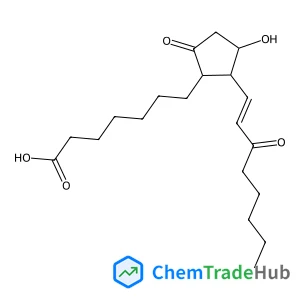
67910-12-77-{(2R,3S,4S)-4-Hydr...
化合物よくある質問
3,3-二甲基哌啶-4-酮はどのように保存すればよいですか?
3,3-二甲基哌啶-4-酮は避光、常温、乾燥した場所で保存してください。容器は密閉し、遠くから火源を離して保管することを確認してください。
150668-82-93,3-Dimethyl-4-piper...
掲載誌
Physical Chemistry Chemical Physics

CiteScore:
5.5
自己引用率:
10.3%
年間論文数:
3036
Physical Chemistry Chemical Physics (PCCP) is an international journal co-owned by 19 physical chemistry and physics societies from around the world. This journal publishes original, cutting-edge research in physical chemistry, chemical physics and biophysical chemistry. To be suitable for publication in PCCP, articles must include significant innovation and/or insight into physical chemistry; this is the most important criterion that reviewers and Editors will judge against when evaluating submissions. The journal has a broad scope and welcomes contributions spanning experiment, theory, computation and data science. Topical coverage includes spectroscopy, dynamics, kinetics, statistical mechanics, thermodynamics, electrochemistry, catalysis, surface science, quantum mechanics, quantum computing and machine learning. Interdisciplinary research areas such as polymers and soft matter, materials, nanoscience, energy, surfaces/interfaces, and biophysical chemistry are welcomed if they demonstrate significant innovation and/or insight into physical chemistry. Joined experimental/theoretical studies are particularly appreciated when complementary and based on up-to-date approaches.
おすすめ化合物
おすすめサプライヤー





免責事項
このページに表示される学術雑誌情報は、参考および研究目的のみを目的としています。当社は雑誌出版社とは提携しておらず、投稿の取り扱いも行っておりません。出版に関するお問い合わせは、各雑誌出版社に直接ご連絡ください。
表示されている情報に誤りがある場合は、support@chemtradehub.com までご連絡ください。迅速に確認し、対応いたします。