












Free volume and phase transitions of 1-butyl-3-methylimidazolium based ionic liquids from positron lifetime spectroscopy
文献情報
出版日
2012-03-12
DOI
10.1039/C2CP40486A
インパクトファクター
3.676
著者
Yang Yu, Witali Beichel, Günter Dlubek, Reinhard Krause-Rehberg, Marian Paluch, Jürgen Pionteck, Dirk Pfefferkorn, Safak Bulut, Christian Friedrich, Natalia Pogodina, Ingo Krossing
原文を見る
要旨
Positron annihilation lifetime spectroscopy (PALS) was used to study a series of ionic liquids (ILs) with the 1-butyl-3-methylimidazolium cation ([C4MIM]+) but different anions [Cl]−, [BF4]−, [PF6]−, [OTf]−, [NTf2]−, and [B(hfip)4]− with increasing anion volumes. Changes of the ortho-positronium (o-Ps) lifetime parameters with temperature were observed for crystalline and amorphous (glass, supercooled, and normal liquid) states. Evidence for distinct phase transitions, e.g. melting, crystallization and solid–solid transitions, was observed in several PALS experiments. The o-Ps mean lifetime 〈τ3〉 showed smaller values in the crystalline phase due to dense packing of the material compared to the amorphous phase. The o-Ps lifetime intensity I3 in the liquid state is clearly smaller than in the crystallized state. This behaviour can be attributed to a solvation of e+ by the anions, which reduces the Ps formation probability in the normal and supercooled liquid. These phenomena were observed for the first time when applying the PALS technique to ionic liquids by us in one preliminary and in this work. Four of the ionic liquids investigated in this work ([BF4]−, [NTf2]−, [PF6]− and [Cl]− ILs) exhibit supercooled phases. The specific hole densities and occupied volumes of those ILs were obtained by comparing the local free volume with the specific volume from pressure–volume–temperature (PVT) experiments. From the o-Ps lifetime, the mean size 〈vh〉 of free volume holes of the four samples was calculated and compared with that calculated according to Fürth's hole theory. The hole volumes from both methods agree well. From the Cohen–Turnbull fitting of viscosity and conductivity against PALS/PVT results, the influence of the free volume on molecular transport properties was investigated.
関連文献
Simultaneous analysis of acylcarnitines using MALDI-TOF mass spectrometry based on a parylene matrix chip
Joo-Yoon Noh, Moon-Ju Kim, Tae Gyeong Yun, Min-Jung Kang, Jae-Chul Pyun
2022-09-23
Paper
DOI: 10.1039/D2AN01199A
Correction of axial chromatic aberrations in confocal Raman microspectroscopic measurements of a single microbial spore
Peter Lasch, Antje Hermelink, Dieter Naumann
2009-03-23
Paper
DOI: 10.1039/B822553B
Screening of hepatocellular carcinoma via machine learning based on atmospheric pressure glow discharge mass spectrometry
Yuze Li
2022-11-23
Paper
DOI: 10.1039/D2AN01756C
An electroactive fiber optic chip for spectroelectrochemical characterization of ultra-thin redox-active films
Brooke M. Beam, Neal R. Armstrong, Sergio B. Mendes
2008-12-19
Paper
DOI: 10.1039/B814338B
Ultra-thin silica shell-guarded nanoflares for high-fidelity live cell miRNA-21 imaging by fully avoiding the interference of biothiols
Yuze Luo, Zefeng Wang, Junqin Li, Wenhua Yi, Ke Yang, Chunlei Ou, Le Deng, Dinggeng He
2022-11-07
Communication
DOI: 10.1039/D2AN01441F
Label-free fibre optic Raman spectroscopy with bounded simplex-structured matrix factorization for the serial study of serum in amyotrophic lateral sclerosis
Visakan Kadirkamanathan, Martin R. Turner, Andrea Malaspina, John C. C. Day
2022-09-28
Paper
DOI: 10.1039/D2AN00936F
Characterization of glycerophospholipids at multiple isomer levels via Mn(ii)-catalyzed epoxidation
Xi Chen, Shuli Tang, Dallas Freitas, Erin Hirtzel, Heyong Cheng, Xin Yan
2022-09-13
Paper
DOI: 10.1039/D2AN01174C
A colorimetric chemical tongue detects and distinguishes between multiple analytes
Francis Buan Hong Lim, Tingjun Lei, Gabriella Fernandez, Nicole Lopez, Andre-Lorenz Chu, Allan Valiente, Abhignyan Nagesetti, Andy Nelson, Kerstin Schmidt, Ta Chen Chang, Obdulio Piloto
2022-10-17
Paper
DOI: 10.1039/D2AN01615J
Selective UV-filter detection with sensors based on stainless steel electrodes modified with polyaniline doped with metal tetrasulfonated phthalocyanine films
Luiz Fernando Moreira, Marcos Roberto de Vasconcelos Lanza, Auro Atsushi Tanaka, Maria Del Pilar Taboada Sotomayor
2009-04-28
Paper
DOI: 10.1039/B902273B
こちらもおすすめ
化合物よくある質問
2-ブロモ-9,9-ジフェニル-9H-フルオレンの主な用途は何ですか?
2-溴-9,9-二苯基芴は、医薬品、工業材料、有機合成の研究分野で応用されます。特に、レーザー材料や機能性ポリマーの合成に使用されることがあります。また、蛍光色...
474918-32-62-Bromo-9,9-diphenyl...
化合物よくある質問
四氯化铱の市場動向や研究トレンドはどうですか?
四氯化铱の市場は研究開発分野で注目されており、特にナノ技術や金属有機框架(MOFs)の分野での需要が増加傾向にあります。価格は安定しており、中国や韓国での生産が...
207399-11-9Tetrachloroiridium h...
882-06-44-Nitrocinnamic acid
化合物よくある質問
1-(4-溴-3-氟苯基)-2-氯乙酮を含む廃棄物はどのように処理すべきですか?
1-(4-溴-3-氟苯基)-2-氯乙酮 (CAS番号: 1260857-14-4) の廃棄物は専門的な廃棄処理が必要です。まず、廃棄物は密閉された容器に収集し、...
1260857-14-41-(4-Bromo-3-fluorop...
化合物よくある質問
苦参酚Kとは何ですか?
苦参酚Kは、CAS番号101236-49-1を持つ化合物で、主に天然由来の生薬から抽出されます。この化合物は、抗炎症作用や抗癌作用を持つことが報告されています。
101236-49-1Kushenol K
化合物よくある質問
POTASSIUM (1-(TERTBUTOXYCARBONYL)AZETIDIN-3-YL)TRIFLUOROBORATE を含む廃棄物はどのように処理すべきですか?
POTASSIUM (1-(TERTBUTOXYCARBONYL)AZETIDIN-3-YL)TRIFLUOROBORATE を含む廃棄物は、まず安全なエント...
1430219-73-0Potassium (1-(tert-b...
化合物よくある質問
4-庚基-4’-联苯羧酸の市場動向や研究トレンドはどうですか?
4-庚基-4’-聯苯羧酸は、特殊化学品や合成化学の分野で用いられる化学物質ですが、市場動向としては、研究開発の進展とともに需要が増加しています。また、環境配慮型...
58573-94-74'-Heptyl-4-biphenyl...
化合物よくある質問
6-ブロモ-3-メトキシ-1-フェニル-1H-インドゾールを含む廃棄物はどのように処理すべきですか?
6-ブロモ-3-メトキシ-1-フェニル-1H-インドゾールを含む廃棄物は、適切な化学廃棄処理が必要です。通常、廃棄物は密閉容器に収集され、専門の廃棄処理業者に引...
1332527-03-36-Bromo-3-methoxy-1-...
化合物よくある質問
4,4-二甲基-2-吡咯烷酮はどの業界で使用されていますか?
4,4-二甲基-2-吡咯烷酮は医薬、ポリマー、センサー、半導体などの業界で広く使用されています。特に溶媒としての性能が高く評価されています。
66899-02-34,4-dimethylpyrrolid...
51312-42-6Sodium Phosphotungst...
掲載誌
Physical Chemistry Chemical Physics

CiteScore:
5.5
自己引用率:
10.3%
年間論文数:
3036
Physical Chemistry Chemical Physics (PCCP) is an international journal co-owned by 19 physical chemistry and physics societies from around the world. This journal publishes original, cutting-edge research in physical chemistry, chemical physics and biophysical chemistry. To be suitable for publication in PCCP, articles must include significant innovation and/or insight into physical chemistry; this is the most important criterion that reviewers and Editors will judge against when evaluating submissions. The journal has a broad scope and welcomes contributions spanning experiment, theory, computation and data science. Topical coverage includes spectroscopy, dynamics, kinetics, statistical mechanics, thermodynamics, electrochemistry, catalysis, surface science, quantum mechanics, quantum computing and machine learning. Interdisciplinary research areas such as polymers and soft matter, materials, nanoscience, energy, surfaces/interfaces, and biophysical chemistry are welcomed if they demonstrate significant innovation and/or insight into physical chemistry. Joined experimental/theoretical studies are particularly appreciated when complementary and based on up-to-date approaches.
おすすめ化合物
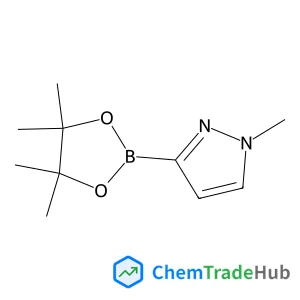
1-Methyl-3-(4,4,5,5-tetramethyl-1,3,2-dioxaborolan-2-yl)-1H-pyrazole
CAS番号:
1020174-04-2
分子式:
C10H17BN2O2
おすすめサプライヤー




免責事項
このページに表示される学術雑誌情報は、参考および研究目的のみを目的としています。当社は雑誌出版社とは提携しておらず、投稿の取り扱いも行っておりません。出版に関するお問い合わせは、各雑誌出版社に直接ご連絡ください。
表示されている情報に誤りがある場合は、support@chemtradehub.com までご連絡ください。迅速に確認し、対応いたします。