












Solvatochromic investigation of highly fluorescent 2-aminobithiophene derivatives
文献情報
出版日
2012-03-28
DOI
10.1039/C2CP40293A
インパクトファクター
3.676
著者
Andréanne Bolduc, Yanmei Dong, Amélie Guérin, W. G. Skene
原文を見る
要旨
The solvatochromic and electrochemical properties of electronic push–pull 2-aminobithiophenes consisting of an aldehyde and nitro withdrawing groups were examined. With the use of an integrating sphere, the absolute quantum yields of the bithiophenes were measured. They were found to be highly fluorescent (Φfl > 70%), provided the nitro group was not located in the 4′-position. High fluorescence yields were observed regardless of solvent, except for alcohols, notably methanol and ethanol. Cryofluorescence was used to probe the bithiophene temperature dependent excited state deactivation modes. The singlet excited state deactivation mode other than fluorescence was found to be internal conversion involving rotation around the thiophene–thiophene bond. Deactivation by intersystem crossing to the triplet state occurred in ca. 40% only for the unsubstituted 2-aminobithiophene. In contrast, the fluorescence was quenched by photoinduced intramolecular electron transfer when the nitro group was located in the 4′-position of the bithiophene. Both the absorbance and fluorescence of the bithiophenes were found to be solvatochromic with more pronounced solvent dependent shifts being observed with the fluorescence. In fact, both the fluorescence and Stokes shifts were linearly dependent on the ET(30) solvent parameter. Deviations from the linear trend of the Stokes shift with ET(30) were observed in ethanol and methanol as a result of intermolecular hydrogen abstraction from the solvent and by the excited nitro group. The oxidation potential of the bithiophenes was also highly dependent on the type and number of the electron withdrawing substituents, with values ranging between 0.8 and 1.2 V vs. SCE.
関連文献
Dual-strategy biosensing of glucose based on multifunctional CuWO4 nanoparticles
Yu Zhang, Shuang Li, Hongyuan Liu, Feng Shi, Juan Li, Xiaoya Hu, Zhanjun Yang
2022-07-22
Paper
DOI: 10.1039/D2AN01003H
Specific detection of fusion transcripts based on a duplex-specific nuclease and isothermal exponential amplification reaction
Fengxia Su, Tian Li, Xiaofei He, Zhengping Li
2022-11-02
Paper
DOI: 10.1039/D2AN01665F
An ultra-fast UV-electrochemical sensor based on Cu-MOF for highly sensitive and selective detection of ferric ions
Xiaoqin Wu, Juanli Xi, Xuehong Wei, Caixia Yin
2022-12-09
Paper
DOI: 10.1039/D2AN01865A
Ultrasensitive Pb2+ detection based on fluorescence resonance energy transfer (FRET) between quantum dots and gold nanoparticles
Xin Wang, Xiangqun Guo
2009-04-01
Paper
DOI: 10.1039/B822744F
Fluorescence detection of the human angiotensinogen protein by the G-quadruplex aptamer
Hui Xi, Hanlin Jiang, Mario Juhas, Yang Zhang
2022-08-03
Paper
DOI: 10.1039/D2AN01057G
Fast polymer fingerprinting using flowing afterglow atmospheric pressure glow discharge mass spectrometry
Matthias C. Jecklin, Gerardo Gamez, Renato Zenobi
2009-05-12
Paper
DOI: 10.1039/B819560A
Sensitive and selective detection ofcysteine using gold nanoparticles as colorimetric probes
Li Li, Baoxin Li
2009-04-02
Paper
DOI: 10.1039/B819842J
Chemiluminescence resonance energy transfer as a simple and sensitive readout mode for a CRISPR/Cas12a-based biosensing platform
Yuyuan Zhang, Jing Lei, Wei Liu, Yan Jin, Baoxin Li
2022-11-16
Paper
DOI: 10.1039/D2AN01735K
Mussel-inspired PDA-based MIP-SERS sensor for the detection of trace MG in environmental water
Xiang Zhang, Longlong Luan, Ying Huang, Mingming Yao, Pan Li
2022-11-02
Paper
DOI: 10.1039/D2AN01337A
こちらもおすすめ
化合物よくある質問
2-ブロモ-9,9-ジフェニル-9H-フルオレンの主な用途は何ですか?
2-溴-9,9-二苯基芴は、医薬品、工業材料、有機合成の研究分野で応用されます。特に、レーザー材料や機能性ポリマーの合成に使用されることがあります。また、蛍光色...
474918-32-62-Bromo-9,9-diphenyl...
化合物よくある質問
四氯化铱の市場動向や研究トレンドはどうですか?
四氯化铱の市場は研究開発分野で注目されており、特にナノ技術や金属有機框架(MOFs)の分野での需要が増加傾向にあります。価格は安定しており、中国や韓国での生産が...
207399-11-9Tetrachloroiridium h...
882-06-44-Nitrocinnamic acid
化合物よくある質問
1-(4-溴-3-氟苯基)-2-氯乙酮を含む廃棄物はどのように処理すべきですか?
1-(4-溴-3-氟苯基)-2-氯乙酮 (CAS番号: 1260857-14-4) の廃棄物は専門的な廃棄処理が必要です。まず、廃棄物は密閉された容器に収集し、...
1260857-14-41-(4-Bromo-3-fluorop...
化合物よくある質問
苦参酚Kとは何ですか?
苦参酚Kは、CAS番号101236-49-1を持つ化合物で、主に天然由来の生薬から抽出されます。この化合物は、抗炎症作用や抗癌作用を持つことが報告されています。
101236-49-1Kushenol K
化合物よくある質問
POTASSIUM (1-(TERTBUTOXYCARBONYL)AZETIDIN-3-YL)TRIFLUOROBORATE を含む廃棄物はどのように処理すべきですか?
POTASSIUM (1-(TERTBUTOXYCARBONYL)AZETIDIN-3-YL)TRIFLUOROBORATE を含む廃棄物は、まず安全なエント...
1430219-73-0Potassium (1-(tert-b...
化合物よくある質問
4-庚基-4’-联苯羧酸の市場動向や研究トレンドはどうですか?
4-庚基-4’-聯苯羧酸は、特殊化学品や合成化学の分野で用いられる化学物質ですが、市場動向としては、研究開発の進展とともに需要が増加しています。また、環境配慮型...
58573-94-74'-Heptyl-4-biphenyl...
化合物よくある質問
6-ブロモ-3-メトキシ-1-フェニル-1H-インドゾールを含む廃棄物はどのように処理すべきですか?
6-ブロモ-3-メトキシ-1-フェニル-1H-インドゾールを含む廃棄物は、適切な化学廃棄処理が必要です。通常、廃棄物は密閉容器に収集され、専門の廃棄処理業者に引...
1332527-03-36-Bromo-3-methoxy-1-...
化合物よくある質問
4,4-二甲基-2-吡咯烷酮はどの業界で使用されていますか?
4,4-二甲基-2-吡咯烷酮は医薬、ポリマー、センサー、半導体などの業界で広く使用されています。特に溶媒としての性能が高く評価されています。
66899-02-34,4-dimethylpyrrolid...
51312-42-6Sodium Phosphotungst...
掲載誌
Physical Chemistry Chemical Physics

CiteScore:
5.5
自己引用率:
10.3%
年間論文数:
3036
Physical Chemistry Chemical Physics (PCCP) is an international journal co-owned by 19 physical chemistry and physics societies from around the world. This journal publishes original, cutting-edge research in physical chemistry, chemical physics and biophysical chemistry. To be suitable for publication in PCCP, articles must include significant innovation and/or insight into physical chemistry; this is the most important criterion that reviewers and Editors will judge against when evaluating submissions. The journal has a broad scope and welcomes contributions spanning experiment, theory, computation and data science. Topical coverage includes spectroscopy, dynamics, kinetics, statistical mechanics, thermodynamics, electrochemistry, catalysis, surface science, quantum mechanics, quantum computing and machine learning. Interdisciplinary research areas such as polymers and soft matter, materials, nanoscience, energy, surfaces/interfaces, and biophysical chemistry are welcomed if they demonstrate significant innovation and/or insight into physical chemistry. Joined experimental/theoretical studies are particularly appreciated when complementary and based on up-to-date approaches.
おすすめ化合物
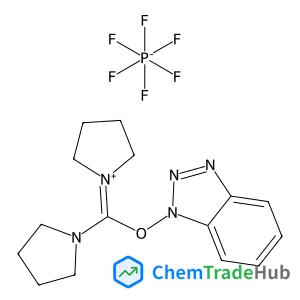
(1H-Benzotriazol-1-yloxy)(di-1-pyrrolidinyl)methylium hexafluorophosphate
CAS番号:
105379-24-6
分子式:
C15H21F6N5OP
![4-{2-[4-(2-Methyl-2-propanyl)phenyl]ethoxy}quinazoline structure](https://static.chemtradehub.com/structs/120/120928-09-8-d3db.webp "4-{2-[4-(2-Methyl-2-propanyl)phenyl]ethoxy}quinazoline structure")
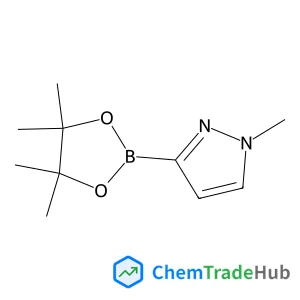
1-Methyl-3-(4,4,5,5-tetramethyl-1,3,2-dioxaborolan-2-yl)-1H-pyrazole
CAS番号:
1020174-04-2
分子式:
C10H17BN2O2
おすすめサプライヤー




免責事項
このページに表示される学術雑誌情報は、参考および研究目的のみを目的としています。当社は雑誌出版社とは提携しておらず、投稿の取り扱いも行っておりません。出版に関するお問い合わせは、各雑誌出版社に直接ご連絡ください。
表示されている情報に誤りがある場合は、support@chemtradehub.com までご連絡ください。迅速に確認し、対応いたします。