












In situ identification of the adsorption of 4,4′-thiobisbenzenethiol on silver nanoparticles surface: a combined investigation of surface-enhanced Raman scattering and density functional theory study
文献情報
出版日
2012-03-26
DOI
10.1039/C2CP24147A
インパクトファクター
3.676
著者
Ting-ting You, Peng-gang Yin, Li Jiang, Xiu-feng Lang, Lin Guo
原文を見る
要旨
We investigated the configuration characteristic and adsorption behavior of 4,4′-thiobisbenzenethiol (TBBT) on the surface of silver nanoparticles (NPs). Under different conditions and preparation processes, several possible surface species were produced including single-end adsorption on a silicon wafer, double-end adsorption and bridge-like adsorption. Although consisting of the same molecule and nano material, different adsorption systems exhibited different spectral characteristics in the surface-enhanced Raman spectroscopy (SERS). A density functional theory (DFT) study further verified the corresponding adsorption states. The combined SERS-DFT study provided a framework towards investigating and designing adsorption systems at a molecular level, indicating the potential use in applications such as nano-sensors.
関連文献
Colorimetric recognition of the coralyne–poly(dA) interaction using unmodified gold nanoparticle probes, and further detection of coralyne based upon this recognition system
Zhaozi Lv, Erkang Wang
2009-06-22
Paper
DOI: 10.1039/B909069J
Label-free fibre optic Raman spectroscopy with bounded simplex-structured matrix factorization for the serial study of serum in amyotrophic lateral sclerosis
Visakan Kadirkamanathan, Martin R. Turner, Andrea Malaspina, John C. C. Day
2022-09-28
Paper
DOI: 10.1039/D2AN00936F
A colorimetric aptasensor based on a hemin/EpCAM aptamer DNAzyme for sensitive exosome detection
Jingjing Kuang, Zhibo Fu, Xuezhi Sun, Chuhui Lin, Shenglong Yang, Jiayao Xu, Min Zhang, Hongyang Zhang, Fanghong Ning, Ping Hu
2022-10-05
Paper
DOI: 10.1039/D2AN01410F
Coil spring-powered pump with inertial microfluidic chip for size-based isolation and enrichment of biological cells
Hogyeong Gwak, Seong Min Ha, Jae-Woo Song, Kyung-A. Hyun
2022-11-11
Paper
DOI: 10.1039/D2AN01380K
Specific detection of fusion transcripts based on a duplex-specific nuclease and isothermal exponential amplification reaction
Fengxia Su, Tian Li, Xiaofei He, Zhengping Li
2022-11-02
Paper
DOI: 10.1039/D2AN01665F
Radiation treatment response and hypoxia biomarkers revealed by machine learning assisted Raman spectroscopy in tumour cells and xenograft tissues
Xinchen Deng, Kirsty Milligan, Alexandre Brolo, Jeffrey L. Andrews, Andrew Jirasek
2022-09-26
Paper
DOI: 10.1039/D2AN01222G
Nanoparticle-induced potentiometric biosensing of NADH at copper ion-selective electrodes
Karin Y. Chumbimuni-Torres, Joseph Wang
2009-05-15
Paper
DOI: 10.1039/B902171J
Circular arrays of polymer-based miniature rectilinear ion traps
Miriam Fico, Jeffrey D. Maas, Scott A. Smith, Anthony B. Costa, Zheng Ouyang, William J. Chappell, R. Graham Cooks
2009-04-03
Paper
DOI: 10.1039/B822140E
Simultaneous quantification of uranium(vi), samarium, nitric acid, and temperature with combined ensemble learning, laser fluorescence, and Raman scattering for real-time monitoring‡
Luke R. Sadergaski, Hunter B. Andrews
2022-08-08
Paper
DOI: 10.1039/D2AN00998F
UV-PEDD photometry dedicated for bioanalytical uses
Łukasz Tymecki, Luiza Brodacka, Beata Rozum, Robert Koncki
2009-03-13
Paper
DOI: 10.1039/B822025E
こちらもおすすめ
化合物よくある質問
2-ブロモ-9,9-ジフェニル-9H-フルオレンの主な用途は何ですか?
2-溴-9,9-二苯基芴は、医薬品、工業材料、有機合成の研究分野で応用されます。特に、レーザー材料や機能性ポリマーの合成に使用されることがあります。また、蛍光色...
474918-32-62-Bromo-9,9-diphenyl...
化合物よくある質問
四氯化铱の市場動向や研究トレンドはどうですか?
四氯化铱の市場は研究開発分野で注目されており、特にナノ技術や金属有機框架(MOFs)の分野での需要が増加傾向にあります。価格は安定しており、中国や韓国での生産が...
207399-11-9Tetrachloroiridium h...
882-06-44-Nitrocinnamic acid
化合物よくある質問
1-(4-溴-3-氟苯基)-2-氯乙酮を含む廃棄物はどのように処理すべきですか?
1-(4-溴-3-氟苯基)-2-氯乙酮 (CAS番号: 1260857-14-4) の廃棄物は専門的な廃棄処理が必要です。まず、廃棄物は密閉された容器に収集し、...
1260857-14-41-(4-Bromo-3-fluorop...
化合物よくある質問
苦参酚Kとは何ですか?
苦参酚Kは、CAS番号101236-49-1を持つ化合物で、主に天然由来の生薬から抽出されます。この化合物は、抗炎症作用や抗癌作用を持つことが報告されています。
101236-49-1Kushenol K
化合物よくある質問
POTASSIUM (1-(TERTBUTOXYCARBONYL)AZETIDIN-3-YL)TRIFLUOROBORATE を含む廃棄物はどのように処理すべきですか?
POTASSIUM (1-(TERTBUTOXYCARBONYL)AZETIDIN-3-YL)TRIFLUOROBORATE を含む廃棄物は、まず安全なエント...
1430219-73-0Potassium (1-(tert-b...
化合物よくある質問
4-庚基-4’-联苯羧酸の市場動向や研究トレンドはどうですか?
4-庚基-4’-聯苯羧酸は、特殊化学品や合成化学の分野で用いられる化学物質ですが、市場動向としては、研究開発の進展とともに需要が増加しています。また、環境配慮型...
58573-94-74'-Heptyl-4-biphenyl...
化合物よくある質問
6-ブロモ-3-メトキシ-1-フェニル-1H-インドゾールを含む廃棄物はどのように処理すべきですか?
6-ブロモ-3-メトキシ-1-フェニル-1H-インドゾールを含む廃棄物は、適切な化学廃棄処理が必要です。通常、廃棄物は密閉容器に収集され、専門の廃棄処理業者に引...
1332527-03-36-Bromo-3-methoxy-1-...
化合物よくある質問
4,4-二甲基-2-吡咯烷酮はどの業界で使用されていますか?
4,4-二甲基-2-吡咯烷酮は医薬、ポリマー、センサー、半導体などの業界で広く使用されています。特に溶媒としての性能が高く評価されています。
66899-02-34,4-dimethylpyrrolid...
51312-42-6Sodium Phosphotungst...
掲載誌
Physical Chemistry Chemical Physics

CiteScore:
5.5
自己引用率:
10.3%
年間論文数:
3036
Physical Chemistry Chemical Physics (PCCP) is an international journal co-owned by 19 physical chemistry and physics societies from around the world. This journal publishes original, cutting-edge research in physical chemistry, chemical physics and biophysical chemistry. To be suitable for publication in PCCP, articles must include significant innovation and/or insight into physical chemistry; this is the most important criterion that reviewers and Editors will judge against when evaluating submissions. The journal has a broad scope and welcomes contributions spanning experiment, theory, computation and data science. Topical coverage includes spectroscopy, dynamics, kinetics, statistical mechanics, thermodynamics, electrochemistry, catalysis, surface science, quantum mechanics, quantum computing and machine learning. Interdisciplinary research areas such as polymers and soft matter, materials, nanoscience, energy, surfaces/interfaces, and biophysical chemistry are welcomed if they demonstrate significant innovation and/or insight into physical chemistry. Joined experimental/theoretical studies are particularly appreciated when complementary and based on up-to-date approaches.
おすすめ化合物
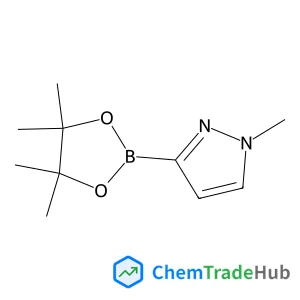
1-Methyl-3-(4,4,5,5-tetramethyl-1,3,2-dioxaborolan-2-yl)-1H-pyrazole
CAS番号:
1020174-04-2
分子式:
C10H17BN2O2
![1,2-Diphenyl-4-[2-(phenylsulfinyl)ethyl]-3,5-pyrazolidinedione structure](https://static.chemtradehub.com/structs/57-/57-96-5-efcc.webp "1,2-Diphenyl-4-[2-(phenylsulfinyl)ethyl]-3,5-pyrazolidinedione structure")
おすすめサプライヤー




免責事項
このページに表示される学術雑誌情報は、参考および研究目的のみを目的としています。当社は雑誌出版社とは提携しておらず、投稿の取り扱いも行っておりません。出版に関するお問い合わせは、各雑誌出版社に直接ご連絡ください。
表示されている情報に誤りがある場合は、support@chemtradehub.com までご連絡ください。迅速に確認し、対応いたします。