












The importance of p–n junction interfaces for efficient small molecule-based organic solar cells
文献情報
出版日
2012-02-20
DOI
10.1039/C2CP24047E
インパクトファクター
3.676
著者
Wei-Yang Chou, Jay Chang, Chia-Te Yen, Yi-Sheng Lin, Fu-Ching Tang, Shyh-Jiun Liu, Horng-Long Cheng, Steve Lien-Chung Hsu, Jen-Sue Chen
原文を見る
要旨
The efficiency of small-molecule solar cells critically depends on the match of the junction of the donor and acceptor semiconductors used in these devices to create charged carriers and on the mobility of individual components to transport holes and electrons. In the present study, a 2% efficient bilayer organic solar cell consisting of a p-type semiconductor, pentacene, and an n-type semiconductor, N,N′-diheptyl-3,4,9,10-perylenetetracarboxylic diimide (PTCDI-C7), is fabricated. The morphology of PTCDI-C7 interestingly follows pentacene due to the matched surface energy of these two active layers and the easily deposited PTCDI-C7 monomers on an inclined plane of the pentacene grains. This condition results in the low trap states in the PTCDI-C7 film and at the pentacene/PTCDI-C7 interface for the enhancement of exciton dissociation and carrier transport compared with the photoactive layer comprised of pentacene and N,N-ditridecyl-3,4,9,10-perylenetetracarboxylic diimide (PTCDI-C13). The detailed exciton and carrier transport mechanisms are investigated using time-resolved photoluminescence and X-ray diffraction spectroscopy.
関連文献
Plasma-induced grafting of polyacrylamide on graphene oxide nanosheets for simultaneous removal of radionuclides
Xiangxue Wang, Qi Wang, Dadong Shao
2014-11-03
Paper
DOI: 10.1039/C4CP04289A
Theoretical investigation of thermodynamic stability and mobility of the oxygen vacancy in ThO2–UO2 solid solutions
B. Liu, D. S. Aidhy
2014-10-16
Paper
DOI: 10.1039/C4CP03660C
Thermal conductivity of organic bulk heterojunction solar cells: an unusual binary mixing effect
Zhi Guo, Doyun Lee, Joseph Strzalka, Haifeng Gao, Libai Huang
2014-10-20
Paper
DOI: 10.1039/C4CP04099F
Computational determination of the dominant triplet population mechanism in photoexcited benzophenone
Ria Broer, Daniel Roca-Sanjuán
2014-09-30
Paper
DOI: 10.1039/C4CP03277B
Elucidating the activity of stepped Pt single crystals for oxygen reduction
Aliaksandr S. Bandarenka, Heine A. Hansen, Jan Rossmeisl, Ifan E. L. Stephens
2014-03-12
Paper
DOI: 10.1039/C4CP00260A
Structural effects on the oxygen reduction reaction on the high index planes of Pt3Co
Yuki Takesue, Masashi Nakamura, Nagahiro Hoshi
2014-03-31
Paper
DOI: 10.1039/C4CP00243A
Nanoantenna enhanced emission of light-harvesting complex 2: the role of resonance, polarization, and radiative and non-radiative rates
Emilie Wientjes, Jan Renger, Richard Cogdell
2014-10-03
Paper
DOI: 10.1039/C4CP03636K
Predicting bond strength from a single Hartree–Fock ground state using the localized pair model
Dylan C. Hennessey, Brendan J. H. Sheppard, Dalton E. C. K. Mackenzie, Jason K. Pearson
2014-10-24
Paper
DOI: 10.1039/C4CP02669A
Stacking disorder in ice I
Tamsin L. Malkin, Benjamin J. Murray, Christoph G. Salzmann, Valeria Molinero, Steven J. Pickering, Thomas F. Whale
2014-10-20
Perspective
DOI: 10.1039/C4CP02893G
The accurate calculation of the band gap of liquid water by means of GW corrections applied to plane-wave density functional theory molecular dynamics simulations
Changming Fang, Wun-Fan Li, Rik S. Koster, Jiří Klimeš, Alfons van Blaaderen, Marijn A. van Huis
2014-10-31
Paper
DOI: 10.1039/C4CP04202F
こちらもおすすめ
化合物よくある質問
2-ヒドロキシ-5-ニトロベンジンブロモイドの代替品はありますか?
2-ヒドロキシ-5-ニトロベンジンブロモイドは特定の化学反応に適しているため、代替品は限られています。しかし、同様の構造を持つ2-ヒドロキシ-4-ニトロベンジン...
772-33-82-(Bromomethyl)-4-ni...
化合物よくある質問
N-(2-ブロモフェニル)-1-チロール-3-オキソ-3-(ピペリジニル)プロペン-2-イル)ベンゼンアミドを取り扱う際の実験室安全事項は何ですか?
N-(2-ブロモフェニル)-1-チロール-3-オキソ-3-(ピペリジニル)プロペン-2-イル)ベンゼンアミドは有毒で、皮膚や粘膜に刺激を与える可能性があります。...
1800044-77-2N-[(1Z)-1-(2-Bromoph...
化合物よくある質問
1,3プロパンジオール,2-[2-(2アミノ-6クロロ-9Hピリミジン-9-イル)エチル-1,1,2,2-D4]-2,3-ジアセタートの市場動向や研究トレンドはどうですか?
この化合物は、新規治療薬の開発に注目されています。市場では、その有効性と安全性が評価され、研究分野では、分子生物学と医薬化学の新たな発見が期待されています。
1020718-81-31,3-Propanediol, 2-[...
579-44-2Ethanone, 2-hydroxy-...
化合物よくある質問
Succinimidyl-alanyl-phenylalanyl-prolyl-phenylalanine 4-nitroanilide はどの業界で使用されていますか?
Succinimidyl-alanyl-phenylalanyl-prolyl-phenylalanine 4-nitroanilide は主に医薬品開発やポ...
128802-73-3succinimidyl-alanyl-...
化合物よくある質問
メチル6-アミノ-5-クロロピリジン-2-カーボイル酸について、適用される法規ガイドラインは何ですか?
メチル6-アミノ-5-クロロピリジン-2-カーボイル酸(CAS番号: 1256794-05-4)の使用には、GHS( Globally Harmonized S...
1256794-05-4Methyl 6-amino-5-chl...
化合物よくある質問
エチル4-(シクロ Pentagonyl)アミノ-2-メチル硫化基ピリミジン-5-カルボキシレートを取り扱う際の実験室安全事項は何ですか?
取り扱いには、耐薬品性の容器を使用し、通気性の良い場所で操作することを推奨します。漏れ時は、SDS(安全データシート)を参照して適切な措置を取ること。手洗いと洗...
211245-62-4ethyl 4-(cyclopentyl...
化合物よくある質問
(S)-3-ベンZYルピペリジン塩酸塩とは何ですか?
(S)-3-ベンZYルピペリジン塩酸塩は、CAS番号1258940-00-9で表される化合物です。これは、(S)-3-苯基哌啶的盐酸盐であり、主に医薬品の原料と...
1258940-00-9(S)-3-Phenylpiperidi...
化合物よくある質問
3,5-二甲基金剛胺の主な用途は何ですか?
3,5-二甲基金剛胺は、主に医薬品の原料として使用され、また抗うつ薬や抗アルツハイマー薬の開発に利用されます。さらに、化粧品や食品添加物の製造でも重要な役割を果...
19988-45-52-(2,3-Dihydroxyphen...
化合物よくある質問
ビス(4-メチル-2-ペンチル)フェニルカルボン酸エステルの代替品はありますか?
ビス(4-メチル-2-ペンチル)フェニルカルボン酸エステル (CAS番号: 1398066-13-1) の代替品には、ビス(2-エチルヘキシル)フェノールカルボ...
1398066-13-1Bis(4-methyl-2-penty...
掲載誌
Physical Chemistry Chemical Physics

CiteScore:
5.5
自己引用率:
10.3%
年間論文数:
3036
Physical Chemistry Chemical Physics (PCCP) is an international journal co-owned by 19 physical chemistry and physics societies from around the world. This journal publishes original, cutting-edge research in physical chemistry, chemical physics and biophysical chemistry. To be suitable for publication in PCCP, articles must include significant innovation and/or insight into physical chemistry; this is the most important criterion that reviewers and Editors will judge against when evaluating submissions. The journal has a broad scope and welcomes contributions spanning experiment, theory, computation and data science. Topical coverage includes spectroscopy, dynamics, kinetics, statistical mechanics, thermodynamics, electrochemistry, catalysis, surface science, quantum mechanics, quantum computing and machine learning. Interdisciplinary research areas such as polymers and soft matter, materials, nanoscience, energy, surfaces/interfaces, and biophysical chemistry are welcomed if they demonstrate significant innovation and/or insight into physical chemistry. Joined experimental/theoretical studies are particularly appreciated when complementary and based on up-to-date approaches.
おすすめ化合物
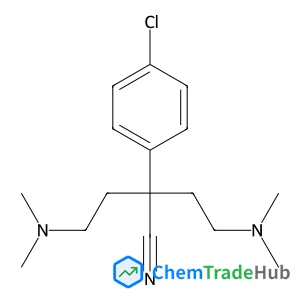
2-(4-Chlorophenyl)-4-(dimethylamino)-2-(2-(dimethylamino)ethyl)butanenitrile
CAS番号:
1246816-57-8
分子式:
C16H24ClN3
おすすめサプライヤー





免責事項
このページに表示される学術雑誌情報は、参考および研究目的のみを目的としています。当社は雑誌出版社とは提携しておらず、投稿の取り扱いも行っておりません。出版に関するお問い合わせは、各雑誌出版社に直接ご連絡ください。
表示されている情報に誤りがある場合は、support@chemtradehub.com までご連絡ください。迅速に確認し、対応いたします。