












Proton transfer and polarity changes in ionic liquid–water mixtures: a perspective on hydrogen bonds from ab initio molecular dynamics at the example of 1-ethyl-3-methylimidazolium acetate–water mixtures—Part 1
文献情報
出版日
2012-03-02
DOI
10.1039/C2CP23983C
インパクトファクター
3.676
著者
Martin Brehm, Henry Weber, Alfonso S. Pensado, Annegret Stark, Barbara Kirchner
原文を見る
要旨
The ionic liquid 1-ethyl-3-methylimidazolium acetate [C2C1Im][OAc] shows a great potential to dissolve strongly hydrogen bonded materials, related with the presence of a strong hydrogen bond network in the pure liquid. A first step towards understanding the solvation process is characterising the hydrogen bonding ability of the ionic liquid. The description of hydrogen bonds in ionic liquids is a question under debate, given the complex nature of this media. The purpose of the present article is to rationalise not only the existence of hydrogen bonds in ionic liquids, but also to analyse their influence on the structure of the pure liquid and how the presence of water, an impurity inherent to ionic liquids, affects this type of interaction. We perform an extensive study using ab initio molecular dynamics on the structure of mixtures of the ionic liquid 1-ethyl-3-methylimidazolium acetate with water, at different water contents. Hydrogen bonds are present in the pure liquid, and the presence of water modifies and largely disturbs the hydrogen bond network of the ionic liquid, and also affects the formation of other impurities (carbenes) and the dipole moment of the ions. The use of ab initio molecular dynamics is the recommended tool to explore hydrogen bonding in ionic liquids, as an explicit electronic structure calculation is combined with the study of the condensed phase.
おすすめジャーナル
関連文献
Chiral Co(iii)(salen)-catalysed hydrolytic kinetic resolution of racemic epoxides in ionic liquids
Dong Joon Choo, Woo Ho Shim, Dong Hoon Lee, Eun Joo Roh, Sang-gi Lee, Choong Eui Song
2003-04-02
Communication
DOI: 10.1039/B301490H
Reactivity of a N-heterocyclic carbene, 1,3-di-(1-adamantyl) imidazol-2-ylidene, with a pseudo-acid: structural characterization of Claisen condensation adduct
Gabriela A. Grasa, Rohit Singh, Natalie M. Scott, Edwin D. Stevens, Steven P. Nolan
2004-11-04
Communication
DOI: 10.1039/B410986D
Chemistry of materials under extreme high pressure-high-temperature conditions
2003-03-27
Focus
DOI: 10.1039/B300963G
The dynamic desorption of krypton from the zeolite chabazite
S. P. Cork, G. Cressey, R. H. Jones, S. J. Teat, V. L. Zholobenko
2004-11-05
Communication
DOI: 10.1039/B410366C
Total synthesis of (+)-belactosin A
Alan Armstrong, James N. Scutt
2004-01-27
Communication
DOI: 10.1039/B316142K
A neutral self-assembled coordination cage organized for inclusion of aromatic guests
Amir H. Mahmoudkhani, Adrien P. Côté, George K. H. Shimizu
2004-10-15
Communication
DOI: 10.1039/B412325E
Photoactive dimesogen having different pathways of light driven phase transitions at different temperatures
V. Ajay Mallia, Nobuyuki Tamaoki
2004-10-01
Communication
DOI: 10.1039/B410902C
CoII5(OH)6(SO4)2(H2O)4: the first ferromagnet based on a layered cobalt–hydroxide pillared by inorganic ⋯OSO3–Co(H2O)4–O3SO⋯
Serge Vilminot, Mireille Richard-Plouet, Gilles André, Tahar Mhiri, Mohamedally Kurmoo
2004-10-06
Communication
DOI: 10.1039/B411304G
Reduction of nitroaromatics to arylnitrenium ions by vinyl halide cations
Hao Chen, Xubin Zheng, Pengxiang Yang, R. Graham Cooks
2004-02-12
Communication
DOI: 10.1039/B314713D
Direct intramolecular arylation of unactivated arenes: application to the synthesis of aporphine alkaloids
Marc Lafrance, Nicole Blaquière, Keith Fagnou
2004-10-25
Communication
DOI: 10.1039/B410394G
こちらもおすすめ
化合物よくある質問
環戊烷-1,3-二甲酸甲酯はどのように合成されますか?
環戊烷-1,3-二甲酸甲酯は、環戊烷と塩酸によるヒンデンブルク反応を経由して合成されます。この反応では、環戊烷が塩酸と作用し、1,3-ジカルボキシ基が導入されま...
2435-36-1Dimethyl 1,3-cyclope...
化合物よくある質問
4-メトキシ-1,2,3-スチアゼ-3,5-ジオンとは何ですか?
4-メトキシ-1,2,3-スチアゼ-3,5-ジオンは、CAS番号107843-77-6の化合物で、(E)-ベンジル3-(3,4-ジヒドロキシフェニル) acry...
107843-77-6(E)-Benzyl 3-(3,4-di...
化合物よくある質問
プロスタグランジンA2について「に適用される法規ガイドラインは何ですか?'
プロスタグランジンA2 (CAS番号: 41691-92-3) は、化学物質の安全管理に関する規制として、GHS (危険物質の国際的ハザード分類・ラベル付けシス...
41691-92-316,16-DIMETHYL PROST...
化合物よくある質問
4-アミノ-1-ナフタレン sulfonic 酸についての物理化学的性質は何ですか?
4-アミノ-1-ナフタレン sulfonic 酸のCAS番号は84-86-6です。この化合物は結晶性で、分子量は212.15 g/molです。アルコールや水など...
84-86-64-Amino-1-naphthalen...
化合物よくある質問
N-GlcNAc-生物素を取り扱う際の実験室安全事項は何ですか?
N-GlcNAc-生物素は吸収性があり、皮膚や目への接触を避けることが重要です。PPE(個体保護具)は使用し、ドラフトチャンバーは必要に応じて使用します。漏洩時...
1272755-69-72-Acetamido-2-deoxy-...
化合物よくある質問
3-アミノメチルフローラノピペリジン-1-カルボニル酸テルブチルエステルとは何ですか?
CAS番号1209781-11-2の3-アミノメチルフローラノピペリジン-1-カルボニル酸テルブチルエステルは、有機化合物の一種で、化学式はC10H17FNO3...
1209781-11-22-Methyl-2-propanyl ...
化合物よくある質問
6-溴-1-甲基-1H-ベンゾ[d][1,2,3]三氮唑はどのように合成されますか?
6- bromo-1-methyl-1H-benzotriazoleは、ブロモフリオリンと1-メチル-1H-ベンゾ[d][1,2,3]三氮唑の反応により合成され...
944718-32-56-Bromo-1-methyl-1H-...
化合物よくある質問
4-硫代尿苷はどのように合成されますか?
4-硫代尿苷は、尿素とD-リボシルヒドロキシアルデヒドを用いてスルホン化反応を経て合成されます。通常は塩酸ヒドロキシチオニルスルホン酸などの触媒を使用し、選択性...
6741-73-71-(4-thio-beta-D-rib...
化合物よくある質問
ブレインナトリユリックペプチド32ラットとは何ですか?
ブレインナトリユリックペプチド32ラット(CAS番号: 133448-20-1)は、心臓で作られるホルモンの一つで、心不全の診断や予後評価に使用されます。
133448-20-1Brain Natriuretic Pe...
化合物よくある質問
1-(3-氮杂啶)-4-羟基哌啶双盐酸盐の物理化学的性質は何ですか?
CAS番号810680-60-5の1-(3-氮杂啶)-4-羟基哌啶双盐酸盐は、白色の結晶性粉末である。分子量は360.84 g/molで、水に溶けやすい。反応活...
810680-60-51-(3-Azetidinyl)-4-p...
掲載誌
Physical Chemistry Chemical Physics

CiteScore:
5.5
自己引用率:
10.3%
年間論文数:
3036
Physical Chemistry Chemical Physics (PCCP) is an international journal co-owned by 19 physical chemistry and physics societies from around the world. This journal publishes original, cutting-edge research in physical chemistry, chemical physics and biophysical chemistry. To be suitable for publication in PCCP, articles must include significant innovation and/or insight into physical chemistry; this is the most important criterion that reviewers and Editors will judge against when evaluating submissions. The journal has a broad scope and welcomes contributions spanning experiment, theory, computation and data science. Topical coverage includes spectroscopy, dynamics, kinetics, statistical mechanics, thermodynamics, electrochemistry, catalysis, surface science, quantum mechanics, quantum computing and machine learning. Interdisciplinary research areas such as polymers and soft matter, materials, nanoscience, energy, surfaces/interfaces, and biophysical chemistry are welcomed if they demonstrate significant innovation and/or insight into physical chemistry. Joined experimental/theoretical studies are particularly appreciated when complementary and based on up-to-date approaches.
おすすめ化合物
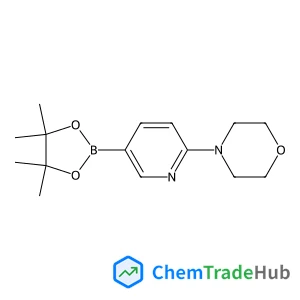
4-(5-(4,4,5,5-tetramethyl-1,3,2-dioxaborolan-2-yl)pyridin-2-yl)morpholine
CAS番号:
485799-04-0
分子式:
C15H23BN2O3
おすすめサプライヤー







免責事項
このページに表示される学術雑誌情報は、参考および研究目的のみを目的としています。当社は雑誌出版社とは提携しておらず、投稿の取り扱いも行っておりません。出版に関するお問い合わせは、各雑誌出版社に直接ご連絡ください。
表示されている情報に誤りがある場合は、support@chemtradehub.com までご連絡ください。迅速に確認し、対応いたします。