












Structural basis for the temperature-induced transition of d-amino acid oxidase from pig kidney revealed by molecular dynamic simulation and photo-induced electron transfer
文献情報
出版日
2012-01-25
DOI
10.1039/C2CP23001A
インパクトファクター
3.676
著者
Arthit Nueangaudom, Kiattisak Lugsanangarm, Nadtanet Nunthaboot
原文を見る
要旨
The structural basis for the temperature-induced transition in the D-amino acid oxidase (DAAO) monomer from pig kidney was studied by means of molecular dynamic simulations (MDS). The center to center (Rc) distances between the isoalloxazine ring (Iso) and all aromatic amino acids (Trp and Tyr) were calculated at 10 °C and 30 °C. Rc was shortest in Tyr224 (0.82 and 0.88 nm at 10 and 30 °C, respectively), and then in Tyr228. Hydrogen bonding (H-bond) formed between the Iso N1 and Gly315 N (peptide), between the Iso N3H and Leu51 O (peptide) and between the Iso N5 and Ala49 N (peptide) at 10 °C, whilst no H-bond was formed at the Iso N1 and Iso N3H at 30 °C. The H-bond of Iso O4 with Leu51 N (peptide) at 10 °C switched to that with Ala49 N (peptide) at 30 °C. The reported fluorescence lifetimes (228 and 182 ps at 10 and 30 °C, respectively) of DAAO were analyzed with Kakitani and Mataga (KM) ET theory. The calculated fluorescence lifetimes displayed an excellent agreement with the observed lifetimes. The ET rate was fastest from Tyr224 to the excited Iso (Iso*) at 10 °C and from Tyr314 at 30 °C, despite the fact that the Rc was shortest between Iso and Tyr224 at both temperatures. This was explained by the electrostatic energy in the protein. The differences in the observed fluorescence lifetimes at 10 and 30 °C were ascribed to the differences in electron affinity of the Iso* at both temperatures, in which the free energies of the electron affinity of Iso* at 10 and 30 °C were −8.69 eV and −8.51 eV respectively. The other physical quantities related to ET did not differ appreciably at both temperatures. The electron affinities at both temperatures were calculated with a semi-empirical molecular orbital method (MO) of PM6. Mean calculated electron affinities over 100 snapshots with 0.1 ps intervals were −7.69 eV at 10 °C and −7.59 eV at 30 °C. The difference in the calculated electron affinities, −0.11 eV, was close to the observed difference in the free energies, −0.18 eV. The present quantitative analysis predicts that the highest ET rate can occur from a donor with longer donor–acceptor distance, which was explained by differences in electrostatic energy.
関連文献
Photo-electrochemical properties of quantum rods studied by scanning electrochemical microscopy
Sébastien Lhenry, Benoît Boichard, Yann R. Leroux, Pascale Even-Hernandez, Valérie Marchi, Philippe Hapiot
2017-01-05
Paper
DOI: 10.1039/C6CP07143K
Silver–gold alloy nanoparticles as tunable substrates for systematic control of ion-desorption efficiency and heat transfer in surface-assisted laser desorption/ionization
Samuel Kin-Man Lai, Yu-Hong Cheng, Ho-Wai Tang, Kwan-Ming Ng
2017-07-12
Paper
DOI: 10.1039/C7CP04033D
BN nanoflake quantum-dot arrays: structural stability, and electronic and half-metallic properties
R. Hu, Z. H. Zhang, Z. Q. Fan
2017-07-03
Paper
DOI: 10.1039/C7CP02391J
Crystalline structure and thermotropic behavior of alkyltrimethylphosphonium amphiphiles
Ana Gamarra, Lourdes Urpí, Antxon Martínez de Ilarduya, Sebastián Muñoz-Guerra
2017-01-05
Paper
DOI: 10.1039/C6CP08304H
Accelerated molecular dynamics simulation analysis of MSI-594 in a lipid bilayer‡
Shruti Mukherjee, Rajiv K. Kar, Kamal H. Mroue, Ayyalusamy Ramamoorthy, Anirban Bhunia
2017-06-29
Paper
DOI: 10.1039/C7CP01941F
Excellent absorption properties of BaFe12−xNbxO19 controlled by multi-resonance permeability, enhanced permittivity, and the order of matching thickness
Chuyang Liu, Yujing Zhang, Yu Tang, Zongrong Wang, Haichao Tang, Yang Ou, Le Yu, Ning Ma, Piyi Du
2017-08-08
Paper
DOI: 10.1039/C7CP03014B
Two-step adsorption kinetics of malachite green on anionic polystyrene microspheres in aqueous solution probed by second harmonic generation
2017-08-08
Paper
DOI: 10.1039/C7CP03088F
Initiation of wetting, filmwise condensation and condensate drainage from a surface in a gravity field
Sima Yaghoubian, C. A. Ward
2017-07-26
Paper
DOI: 10.1039/C7CP03039H
Electronic structure and time-dependent description of rotational predissociation of LiH
P. Jasik, J. E. Sienkiewicz, J. Domsta, N. E. Henriksen
2017-06-06
Paper
DOI: 10.1039/C7CP02097J
こちらもおすすめ
化合物よくある質問
2-メトキシ-4-(メチルスルフィニル)アミンの主な用途は何ですか?
2-メトキシ-4-(メチルスルフィニル)アミンは、主に医薬品および農薬の製造に使用されます。また、合成化学の一部として研究用材料としても利用されます。
41608-73-52-Methoxy-4-(methyls...
118684-13-24-(Bromomethyl)-3-me...
化合物よくある質問
4,6-二氯-N-甲基ピラミジンアミンの代替品はありますか?
代替品としては、4,6-二クロロピラミジンアミンや他のピラミジン系化合物が考えられます。ただし、目的と用途によって最適な代替品は異なります。
10397-15-64,6-Dichloro-N-methy...
化合物よくある質問
6-氯-4-甲基-1H-吲哚を含む廃棄物はどのように処理すべきですか?
6-氯-4-甲基-1H-吲哚の廃棄物は、適切な容器に収集し、密閉して保管します。温度は常温、湿度は低く、直射日光を避けて保管することを推奨します。廃棄処理は専門...
885520-84-36-chloro-4-methyl-1H...
化合物よくある質問
2-フローユロ-4-(トリフルオロメチル)ベンゾイドについて「に適用される法規ガイドラインは何ですか」
2-フローユロ-4-(トリフルオロメチル)ベンゾイドのCAS番号は207974-08-1です。この化合物はGHS分類で毒性物質と有害な反応物質として分類されます...
207974-08-1[2-Fluoro-4-(trifluo...
化合物よくある質問
4-ニトロフェニルN-[(ベンゼルオキシルカーボンイル]グリシングリシングリシン酸はどのように保存すればよいですか?
4-ニトロフェニルN-[(ベンゼルオキシルカーボンイル]グリシングリシングリシン酸は、室温で暗所に保管し、乾燥した環境で保存することを推奨します。容器は密閉性の...
19811-64-44-Nitrophenyl N-[(be...
化合物よくある質問
イソデスロラタドリンの代替品はありますか?
イソデスロラタドリンの代替品としては、デスロラタドリンや他の抗ヒスタミン薬が挙げられます。具体的には、デスロラタドリン、ラセカミド、フェルタドリンなどが、症状や...
183198-49-4Iso Desloratadine
化合物よくある質問
5-甲氧基-1,2,3,4-四氢异喹啉盐酸盐はどのように合成されますか?
5-甲氧基-1,2,3,4-四氢异喹啉盐酸盐の一般的な合成方法は、メタノール中で5-メトキシ-1,2,3,4-四ヒュドロイソキシンを塩酸で塩化します。この反応で...
103030-69-95-Methoxy-1,2,3,4-te...
化合物よくある質問
4-アミノ-5-メトキシ-2-トルエンサルホニック酸についての法規ガイドラインは何ですか?
CAS番号6471-78-9の4-アミノ-5-メトキシ-2-トルエンサルホニック酸は、GHS分類では corrosive(腐食性)と識別されます。EUのREAC...
6471-78-94-Amino-5-Methoxy-2-...
化合物よくある質問
甲基孕酮を取り扱う際の実験室安全事項は何ですか?
甲基孕酮の取り扱いは、PPE(個人保護具)の使用が必要な重要な安全事項を伴います。防塵マスク、ゴーグル、手袋を着用することが推奨されます。ドラフトチャンバーを使...
204063-33-22-[(Diphenylmethyl)a...
掲載誌
Physical Chemistry Chemical Physics

CiteScore:
5.5
自己引用率:
10.3%
年間論文数:
3036
Physical Chemistry Chemical Physics (PCCP) is an international journal co-owned by 19 physical chemistry and physics societies from around the world. This journal publishes original, cutting-edge research in physical chemistry, chemical physics and biophysical chemistry. To be suitable for publication in PCCP, articles must include significant innovation and/or insight into physical chemistry; this is the most important criterion that reviewers and Editors will judge against when evaluating submissions. The journal has a broad scope and welcomes contributions spanning experiment, theory, computation and data science. Topical coverage includes spectroscopy, dynamics, kinetics, statistical mechanics, thermodynamics, electrochemistry, catalysis, surface science, quantum mechanics, quantum computing and machine learning. Interdisciplinary research areas such as polymers and soft matter, materials, nanoscience, energy, surfaces/interfaces, and biophysical chemistry are welcomed if they demonstrate significant innovation and/or insight into physical chemistry. Joined experimental/theoretical studies are particularly appreciated when complementary and based on up-to-date approaches.
おすすめ化合物
![[5-fluoro-2-(morpholine-4-carbonyl)phenyl]boronic acid structure](https://static.chemtradehub.com/structs/121/1217501-26-2-505c.webp "[5-fluoro-2-(morpholine-4-carbonyl)phenyl]boronic acid structure")
![tert-Butyl 6-chloro-4-oxospiro[chroman-2,4'-piperidine]-1'-carboxylate structure](https://static.chemtradehub.com/structs/101/1011482-37-3-88a5.webp "tert-Butyl 6-chloro-4-oxospiro[chroman-2,4'-piperidine]-1'-carboxylate structure")
tert-Butyl 6-chloro-4-oxospiro[chroman-2,4'-piperidine]-1'-carboxylate
CAS番号:
1011482-37-3
分子式:
C18H22ClNO4
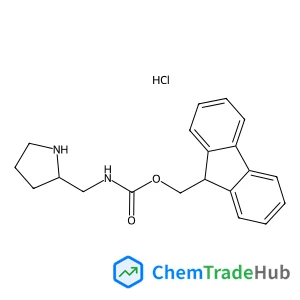
(S)-(9H-Fluoren-9-yl)methyl (pyrrolidin-2-ylmethyl)carbamate hydrochloride
CAS番号:
1217813-15-4
分子式:
C20H23ClN2O2
おすすめサプライヤー



免責事項
このページに表示される学術雑誌情報は、参考および研究目的のみを目的としています。当社は雑誌出版社とは提携しておらず、投稿の取り扱いも行っておりません。出版に関するお問い合わせは、各雑誌出版社に直接ご連絡ください。
表示されている情報に誤りがある場合は、support@chemtradehub.com までご連絡ください。迅速に確認し、対応いたします。