












![Ethyl 2-[(3-bromo-4-pyridinyl)sulfanyl]-2-methylpropanoate structure](https://static.chemtradehub.com/structs/135/1352794-86-5-a8aa.webp "Ethyl 2-[(3-bromo-4-pyridinyl)sulfanyl]-2-methylpropanoate structure")
Synthesis and characterization of a biodegradable polymer prepared viaradical copolymerization of 2-(acetoacetoxy)ethyl methacrylate and molecular oxygen
文献情報
出版日
2011-10-26
DOI
10.1039/C1PY00419K
インパクトファクター
5.582
著者
Sunirmal Pal, Amit Das, Sankar Maiti, Priyadarsi De
原文を見る
要旨
2-(Acetoacetoxy)ethyl methacrylate and oxygen react at 50 °C under high pressure in the presence of a radical initiator to give poly[2-(acetoacetoxy)ethyl methacrylate]peroxide (PAEMAP). Elemental analysis, mass spectral fragmentation analysis, FTIR and NMR spectroscopy have been used to confirm the alternating copolymer structure with peroxy (–O–O–) bonds in the copolymer main chain. Thermal degradation studies of PAEMAP by using differential scanning calorimetry (DSC) reveal that PAEMAP degrades highly exothermically and the heat of degradation, −40.5 kcal mol−1, is of the same order as that reported for other vinyl polyperoxides. The thermal degradation of PAEMAP is also investigated by thermogravimetric analysis (TGA). The mechanism of the primary exothermic degradation has been supported by thermochemical calculations. Biodegradation using horseradish peroxidaseenzyme and in vitro biocompatibility to HeLa cells have been studied for PAEMAP. These results indicate that incorporation of –O–O– links in the main chain favours enzymatic degradation of PAEMAP.
関連文献
Multi-scale modeling of electronic spectra of three aromatic amino acids: importance of conformational averaging and explicit solute–solvent interactions
Petr Bouř
2014-08-12
Paper
DOI: 10.1039/C4CP02668C
Porphyrin-based sensor nanoarchitectonics in diverse physical detection modes
Shinsuke Ishihara, Jan Labuta, Wim Van Rossom, Kosuke Minami
2014-02-24
Perspective
DOI: 10.1039/C3CP55431G
Ab initio and semi-empirical Molecular Dynamics simulations of chemical reactions in isolated molecules and in clusters
D. Shemesh, M. E. Varner, J. Kalinowski, B. Hirshberg
2014-02-10
Perspective
DOI: 10.1039/C3CP55239J
Boron-nitride nanotube triggered self-assembly of hexagonal boron-nitride nanostructure
2014-07-29
Paper
DOI: 10.1039/C4CP02578D
Performance and durability of Pt/C cathode catalysts with different kinds of carbons for polymer electrolyte fuel cells characterized by electrochemical and in situ XAFS techniques
Kensaku Nagasawa, Shinobu Takao, Kotaro Higashi, Shin-ichi Nagamatsu, Gabor Samjeské, Yoshiaki Imaizumi, Oki Sekizawa, Takashi Yamamoto
2013-12-18
Paper
DOI: 10.1039/C3CP54457E
Geometric and electronic properties of graphene modified by “external” N-containing groups
Xinde Wang, Qiuxia Cai, Guilin Zhuang, Xing Zhong, Donghai Mei, Xiaonian Li, Jianguo Wang
2014-08-14
Paper
DOI: 10.1039/C4CP03069A
Morphological effect of gold nanoparticles on the adsorption of bovine serum albumin
Abhishek Chaudhary, Abhishek Gupta, Syamantak Khan, Chayan Kanti Nandi
2014-08-12
Paper
DOI: 10.1039/C4CP01515K
Structure, fragmentation patterns, and magnetic properties of small cobalt oxide clusters
R. H. Aguilera-del-Toro, A. Vega, L. C. Balbás
2014-08-28
Paper
DOI: 10.1039/C4CP03370A
こちらもおすすめ
化合物よくある質問
N-乙酰基-L-精氨酸はどのように合成されますか?
N-乙酰基-L-精氨酸は、L-精氨酸をエタノールと酸化アクリル酸で反応させて得られます。この合成過程では、酸化アクリル酸がL-精氨酸のN-アミノグループに結合す...
155-84-0N~2~-Acetyl-L-argini...
化合物よくある質問
カウウェルパリミタートを含む廃棄物はどのように処理すべきですか?
カウウェルパリミタートの廃棄物は、化学廃棄物として適切に収集し、専門的な廃棄処理業者に委託します。処理には、有害物質の除去と環境への影響最小化が重要です。温度は...
81760-45-4Kahweol palmitate
化合物よくある質問
タテライル1,4,8,11-テトラエチルアセートの代替品はありますか?
タテライル1,4,8,11-テトラエチルアセートの代替品として、他のエチルエステル化合物や、有機窒素化合物が考えられます。ただし、代替品の選択は目的や使用条件に...
126320-57-8Tetraethyl 1,4,8,11-...
化合物よくある質問
異丁卡因を取り扱う際の実験室安全事項は何ですか?
異丁卡因は毒性があり、皮膚や目を刺激する可能性があります。作業中は保護目鏡、防護手袋、防護マスクを使用し、ドラフトチャンバーで扱うべきです。漏えいした場合、その...
94-14-4Isobutamben
化合物よくある質問
4-氯-2-丙基吡啶を取り扱う際の実験室安全事項は何ですか?
4-氯-2-丙基吡啶は有毒で、吸入や皮膚接触を避けることが重要です。PPEとしてゴーグル、マスク、長袖のガウン、手袋を使用し、ドラフトチャンバーを用いて操作しま...
93856-98-54-Chloro-2-propylpyr...
化合物よくある質問
9,10-脱水阿霉素について適用される法規ガイドラインは何ですか?
CAS番号80996-23-2の9,10-脱水阿霉素は、GHS分類においては第3類毒性物質に分類され、REACH規則においてはカテゴリー1の急性毒性物質とされて...
80996-23-29,10-Anhydroadriamyc...
化合物よくある質問
4-(3-溴苯基)噻唑-2-甲酸の物理化学的性質は何ですか?
4-(3-溴苯基)噻唑-2-甲酸の分子量は265.01です。この化合物は水に微溶です。反応性は中程度で、酸性やアルカリ性の条件下で分解する可能性があります。
808128-00-94-(3-Bromophenyl)-1,...
化合物よくある質問
3-(4-塩素フェニル)-3-オキセタニアミン塩酸塩はどの業界で使用されていますか?
3-(4-塩素フェニル)-3-オキセタニアミン塩酸塩は、医薬業界、ポリマー業界、センサー業界、半導体業界などで使用されています。この化合物は薬物開発の一部として...
1245782-61-93-(4-Chlorophenyl)-3...
化合物よくある質問
氮卓斯汀杂质Eを取り扱う際の実験室安全事項は何ですか?
氮卓斯汀杂质E(CAS番号: 20526-97-0)を扱う際は、ゴーグルとシールド付きの手袋を使用し、漏洩がある場合はドラフトチャンバーを使用して処理することを...
20526-97-03-(4-chlorobenzylide...
化合物よくある質問
デシシボチル-n-ブチルボルテゾミブはどのように保存すればよいですか?
デシシボチル-n-ブチルボルテゾミブは室温で保管し、直日光から遠ざけて密栓容器に保管することが推奨されます。
1104011-35-9Desisobutyl-n-butyl ...
掲載誌
Polymer Chemistry

CiteScore:
8.6
自己引用率:
7.3%
年間論文数:
457
Polymer Chemistry welcomes submissions in all areas of polymer science that have a strong focus on macromolecular chemistry. Manuscripts may cover a broad range of fields, yet no direct application focus is required.
おすすめ化合物
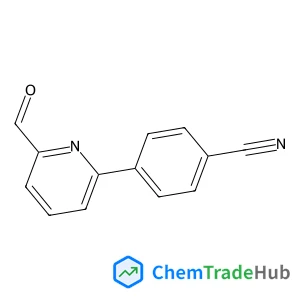
![6-Nitro-2-(4-nitrophenyl)imidazo[1,2-a]pyridine structure](https://static.chemtradehub.com/structs/118/118000-57-0-cb82.webp "6-Nitro-2-(4-nitrophenyl)imidazo[1,2-a]pyridine structure")
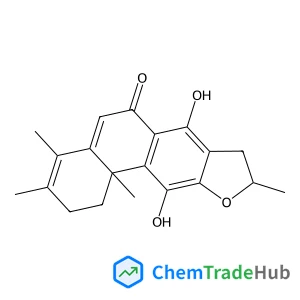
![6-[2-(Trifluoromethoxy)phenyl]-2-pyridinecarboxylic acid structure](https://static.chemtradehub.com/structs/887/887983-48-4-f6ac.webp "6-[2-(Trifluoromethoxy)phenyl]-2-pyridinecarboxylic acid structure")
おすすめサプライヤー




免責事項
このページに表示される学術雑誌情報は、参考および研究目的のみを目的としています。当社は雑誌出版社とは提携しておらず、投稿の取り扱いも行っておりません。出版に関するお問い合わせは、各雑誌出版社に直接ご連絡ください。
表示されている情報に誤りがある場合は、support@chemtradehub.com までご連絡ください。迅速に確認し、対応いたします。