












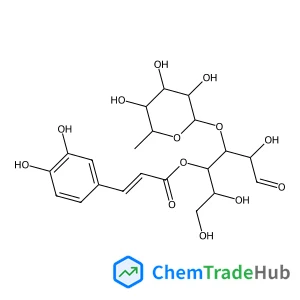
Single site metallorganic polymerization catalysis as a method to probe the properties of polyolefins
文献情報
出版日
2011-06-09
DOI
10.1039/C1PY00129A
インパクトファクター
5.582
著者
Claudio De Rosa, Finizia Auriemma
原文を見る
要旨
Single-site metallorganic catalysts for the polymerization of olefins has allowed the synthesis of new polymeric materials having molecular structures that cannot be obtained with conventional Ziegler–Natta catalysts, with exceptional control over the chain architecture, including control of the concentration of stereo- and regio-defects and efficient uniform placement of comonomeric units along the chains. The cases of isotactic and syndiotactic polypropylenes are illustrated as examples of a fine tuning of the physical and mechanical properties of polymeric materials achieved through the controlled incorporation of stereo- and regio-defects, and the rational choice of the catalytic system. Novel isotactic polypropylenes with controlled properties, intermediate between those of stiff-plastic and elastomeric materials have been produced through the design of the catalysts. For syndiotactic polypropylene, a new class of thermoplastic elastomers with finely controlled mechanical properties have been produced by using metallorganic catalysts of different stereoselectivity. Depending on the concentration of stereodefects, elastomers showing entropic or unconventional enthalpic elasticity, can be produced.
関連文献
Mixed-diphosphine-protected chiral undecagold clusters Au11(S,S-DIOP)4(rac-/R-/S-BINAP): effect of the handedness of BINAP on their chiroptical responses
Yasuhiko Sato, Hiroshi Yao
2021-07-26
Paper
DOI: 10.1039/D1CP02106K
Photochemistry and UV/vis spectroscopy of hydrated vanadium cations, V+(H2O)n, n = 1–41, a model system for photochemical hydrogen evolution
Jakob Heller, Tobias F. Pascher, Dominik Muß, Christian van der Linde, Martin K. Beyer, Milan Ončák
2021-08-06
Paper
DOI: 10.1039/D1CP02382A
Robustness and accuracy improvement of data processing with 2D neural networks for transient absorption dynamics
Ruixuan Zhao, Daxin Wu, Jiao Wen, Qi Zhang, Guanglei Zhang, Jiebo Li
2021-07-16
Paper
DOI: 10.1039/D1CP02521J
Theoretical investigation of the SN2 mechanism of X− [X = SH, PH2] + CH3Y [Y = F, Cl, Br, I] reactions in water
Chen Li, Xin Xin, Dunyou Wang
2021-09-29
Paper
DOI: 10.1039/D1CP03048E
Effects of substituent position on aminobenzoate relaxation pathways in solution
Jack M. Woolley, Konstantina M. Krokidi, Maria A. Tesa-Serrate, Nicholas D. M. Hine, Vasilios G. Stavros
2021-10-06
Paper
DOI: 10.1039/D1CP03759E
Electrically tunable band gap in strained h-BN/silicene van der Waals heterostructures
Douglas D. de Vargas, Rogério J. Baierle
2021-08-03
Paper
DOI: 10.1039/D1CP02012A
Unravelling the nature of a toluene–fumaronitrile complex
Andrzej J. Kałka, Mateusz Z. Brela, Andrzej M. Turek
2021-07-03
Paper
DOI: 10.1039/D1CP01895G
Enhanced photocatalytic activity, transport properties and electronic structure of Mn doped GdFeO3 synthesized using the sol–gel process
Ritwik Maity, Alo Dutta, Saswata Halder, Santiranjan Shannigrahi, Kalyan Mandal, T. P. Sinha
2021-07-22
Paper
DOI: 10.1039/D1CP00621E
Designing nanoscale capacitors based on twin-graphene
Jyotirmoy Deb, Harkishan Dua, Utpal Sarkar
2021-07-12
Paper
DOI: 10.1039/D1CP02680A
こちらもおすすめ
化合物よくある質問
間溴苯甲酰腈の市場動向や研究トレンドはどうですか?
間 brom 苯甲酰腈は、合成化学や薬物化学において重要な Intermediate として使用されています。市場動向としては、その合成性と機能性により、研究開...
24999-51-7(3-Bromophenyl)(oxo)...
287966-62-5Desulfo Glucoraphani...
化合物よくある質問
Methyl 2-amino-5-(trifluoromethyl)benzoateに適用される法規ガイドラインは何ですか?
CAS番号117324-58-0の塩酸メチル2アミノ-5-トリフルオロメチルベンゼートは、GHS分類により腐食性物質と判定されます。REACH規則では、製造、販...
117324-58-0Methyl 2-amino-5-(tr...
化合物よくある質問
3-ブロモ-1,3,4,5-四水化-2H-1-ベンザアゼピン-2-オンは安全ですか?
毒性があるため、適切な安全対策が必須です。皮膚や粘膜への刺激性が強く、吸入や誤飲により健康被害を引き起こす可能性があります。取扱時にはガスマスクや手袋、眼鏡を使...
86499-96-93-Bromo-1,3,4,5-tetr...
化合物よくある質問
三氟甲基ピリジン-2-甲アミン塩酸塩は安全ですか?
三氟甲基ピリジン-2-甲アミン塩酸塩は安全性に注意が必要です。毒性は低レベルですが、直接的接触や吸入は避けるべきです。適切な手袋や防塵マスクを着用し、密閉された...
871826-12-9(5-(Trifluoromethyl)...
化合物よくある質問
1-エチル-4-(4-硝基フェニル)ピペリジンは安全ですか?
1-エチル-4-(4-硝基フェニル)ピペリジンは有毒であり、取扱には注意が必要です。保管や作業中に手袋を着用し、目や皮膚に接触しないように注意する必要があります...
115619-00-61-Ethyl-4-(4-nitroph...
化合物よくある質問
1,1-ジメトキシプロパン-2-オンは安全ですか?
1,1-ジメトキシプロパン-2-オンは一般的に低毒性ですが、皮膚や目への刺激性があるため、取扱いには注意が必要です。蒸気や液体の吸入には有害な可能性があり、適切...
6342-56-91,1-dimethoxypropan-...
化合物よくある質問
コバルト(II) 3,3'-{[(1S,2S)-1,2-ジメチルフENCYCLICALE-1,2-エチエンジイル]ビス[ニトロリルメチルイリデン]}ビス[4-オキソ-2-ペンテン-2-olate]について「に適用される法規ガイドラインは何ですか?
この化合物はCAS番号259259-80-8に対応しています。GHS分類では、毒性、燃焼性、反応性、炎症性を考慮に入れ、適切な危険性分類が行われます。REACH...
259259-80-8Cobalt(2+) (2E,2'E)-...
化合物よくある質問
「カーバミル酸, N-[8-[[2-[[2-(2,6-ジオキソ-3-ピペリジニル)-2,3-ジオキソ-1,3-ジヒドロ-1H-イソイソインドール-4-イルオキシ]アセチル]アミノ]オクチル]-1,1-ジメチレチルエステル」はどのように保存すればよいですか?
この化合物は、冷却庫で-20℃の温度、乾燥した容器に保管し、直日光から保護する必要があります。湿度の高い環境や高温は避けてください。
1950635-34-32-Methyl-2-propanyl ...
1433975-21-3FMoc-D-4-Aph(tBu-CbM...
掲載誌
Polymer Chemistry

CiteScore:
8.6
自己引用率:
7.3%
年間論文数:
457
Polymer Chemistry welcomes submissions in all areas of polymer science that have a strong focus on macromolecular chemistry. Manuscripts may cover a broad range of fields, yet no direct application focus is required.
おすすめ化合物
おすすめサプライヤー





免責事項
このページに表示される学術雑誌情報は、参考および研究目的のみを目的としています。当社は雑誌出版社とは提携しておらず、投稿の取り扱いも行っておりません。出版に関するお問い合わせは、各雑誌出版社に直接ご連絡ください。
表示されている情報に誤りがある場合は、support@chemtradehub.com までご連絡ください。迅速に確認し、対応いたします。