![(2S)-2-({N-[(2S)-2-Ammonio-4-methylpentanoyl]glycyl}amino)-3-phenylpropanoate structure](https://static.chemtradehub.com/structs/429/4294-25-1-0842.webp "(2S)-2-({N-[(2S)-2-Ammonio-4-methylpentanoyl]glycyl}amino)-3-phenylpropanoate structure")
(2S)-2-({N-[(2S)-2-Ammonio-4-methylpentanoyl]glycyl}amino)-3-phenylpropanoate
CAS番号:
4294-25-1
分子式:
C17H25N3O4
Takashi Kinugawa, Akihiro Yabushita, Masahiro Kawasaki, Tetsuya Hama, Naoki Watanabe
Photodissociation of amorphous ice films of carbon dioxide and water co-adsorbed at 90 K was carried out at 157 nm using oxygen-16 and -18 isotopomers with a time-of-flight photofragment mass spectrometer. O(3PJ) atoms, OH (v = 0) radicals, and CO (v = 0,1) molecules were detected as photofragments. CO is produced directly from the photodissociation of CO2. Two different adsorption states of CO2, i.e., physisorbed CO2 on the surface of amorphous solid water and trapped CO2 in the pores of the film, are clearly distinguished by the translational and internal energy distributions of the CO molecules. The O atom and OH radical are produced from the photodissociation of H2O. Since the absorption cross section of CO2 is smaller than that of H2O at 157 nm, the CO2 surface abundance is relatively increased after prolonged photoirradiation of the mixed ice film, resulting in the formation of a heterogeneously layered structure in the mixed ice at low temperatures. Astrophysical implications are discussed.
Kai Töpfer, Jean Christophe Tremblay
DOI: 10.1039/C6CP02339H
Jianguo Wang
DOI: 10.1039/C5CP02486B
Thomas Murphy, Sam K. Callear, Nageshwar Yepuri, Karina Shimizu, Masayoshi Watanabe, José N. Canongia Lopes, Tamim Darwish, Gregory G. Warr, Rob Atkin
DOI: 10.1039/C6CP00176A
Pilar Pertierra, Miguel A. Salvadó, F. Izquierdo-Ruiz, J. M. Recio
DOI: 10.1039/C6CP03876J
Thomas Murphy, Samantha K. Callear, Gregory G. Warr, Rob Atkin
DOI: 10.1039/C5CP06947E
Benedikt Rösner, Ke Ran, Benjamin Butz, Ute Schmidt, Erdmann Spiecker, Rainer H. Fink
DOI: 10.1039/C5CP02207J
Li Liu, Pierre Eisenbrandt, Thomas Roland, Matthias Polkehn, Pierre-Olivier Schwartz, Kirsten Bruchlos, Beatrice Omiecienski, Sabine Ludwigs, Nicolas Leclerc, Elena Zaborova, Jérémie Léonard, Stéphane Méry, Irene Burghardt, Stefan Haacke
DOI: 10.1039/C6CP00644B
Lei Huang, Zhaochi Feng, Xiuli Wang, Can Li
DOI: 10.1039/C6CP02808J
Wojciech Błachucki, Yves Kayser, Jean-Claude Dousse, Joanna Hoszowska, Daniel L. A. Fernandes
DOI: 10.1039/C5CP02950C
5-苄基四氢吡咯并[3,4-c]吡咯-1,3[2H,3ah]-二酮は、主に薬理学的研究と合成化学に使用されます。また、特定の医薬品の合成原材料としても利用されま...
唾液酸路易ス Aの取り扱いでは、個別の防護具(PPE)が必要で、手袋、顔面保護具、防塵マスクを着用します。ドラフトチャンバーを使用し、漏洩時の適切な処理を行うこ...
タルトブチル ((1-(2-クロロアセチル)ピペリジン-4-イルメチル)カーバamatは、医薬品業界、ポリマー業界、センサー技術、半導体業界などで使用されていま...
3-烯丙基-2-羟基苯甲醛のCAS番号は24019-66-7です。物化性質としては、白色結晶性粉末で、分子量は174.22です。この化合物は水に溶けやすく、反応...
乳清酸 Potassium Orotateは、CAS番号24598-73-0の化合物で、乳清酸と Potassium(カリウム)による塩基です。化学式はC7H7...
4-甲基苯磺酸异丙酯は医薬品業界で広く使用されています。また、ポリマーの増塑剤や半導体製造におけるセンサー材料としても使用されることがあります。
6-(3-氟苯基)-N-[1-(2,2,2-三氟乙基)-4-哌啶基]-3-吡啶羧酰胺は医薬品産業で広く使用されており、その特性は抗炎症作用や抗ウイルス作用など、...
左西孟旦は、3-[(2-メチルフェニル)-2-(4-メチルフェニル)-1-オキシエチル]-1,2,4-トリTürkiyeン-5-カルボン酸と4-メチルフェニル-...
CAS番号1159826-79-5の3-乙氧基哌啶盐酸盐は、GHS分類ではイエローカテゴリーに分類され、毒性物質として扱われます。REACH規則では、製造または...
Diethyl (hydroxymethyl)phosphonateは、医薬品の製造や農薬、合成化学の一部として利用されます。

Physical Chemistry Chemical Physics (PCCP) is an international journal co-owned by 19 physical chemistry and physics societies from around the world. This journal publishes original, cutting-edge research in physical chemistry, chemical physics and biophysical chemistry. To be suitable for publication in PCCP, articles must include significant innovation and/or insight into physical chemistry; this is the most important criterion that reviewers and Editors will judge against when evaluating submissions. The journal has a broad scope and welcomes contributions spanning experiment, theory, computation and data science. Topical coverage includes spectroscopy, dynamics, kinetics, statistical mechanics, thermodynamics, electrochemistry, catalysis, surface science, quantum mechanics, quantum computing and machine learning. Interdisciplinary research areas such as polymers and soft matter, materials, nanoscience, energy, surfaces/interfaces, and biophysical chemistry are welcomed if they demonstrate significant innovation and/or insight into physical chemistry. Joined experimental/theoretical studies are particularly appreciated when complementary and based on up-to-date approaches.
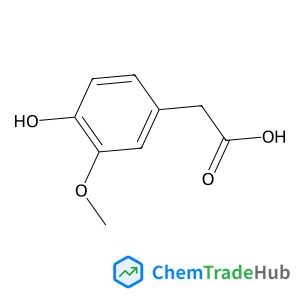
![4-[(2-Fluoro-4-methylphenyl)amino]-6-[4-(2-hydroxyethyl)-1-piperazinyl]-7-methoxy-3-cinnolinecarboxamide structure](https://static.chemtradehub.com/structs/104/1041852-85-0-fb1c.webp "4-[(2-Fluoro-4-methylphenyl)amino]-6-[4-(2-hydroxyethyl)-1-piperazinyl]-7-methoxy-3-cinnolinecarboxamide structure")