












EndoV/DNA ligase mutation scanning assay using microchip capillary electrophoresis and dual-color laser-induced fluorescence detection
文献情報
出版日
2011-10-07
DOI
10.1039/C1AY05366C
インパクトファクター
2.896
著者
Małgorzata A. Witek, John K. Osiri, Hong Wang, Rondedrick Sinville, Hanna Pincas, Francis Barany
原文を見る
要旨
We report the ability to detect with high sensitivity sporadic mutations using a mutation scanning assay, which employs thermostable endonuclease V (EndoV) and DNA ligase. The products of the mutation scanning assay were separated using microchip capillary electrophoresis (μCE) and detected with a dual-color laser-induced fluorescence (LIF) detector. PCR products from mutant and wild-type DNA of p53 exon 8 were generated using Cy3-labeled forward and Cy5-labeled reverse primers to allow LIF detection with μCE. EndoV recognizes and primarily cleaves heteroduplexed DNA one base 3′ to a mismatch and can nick matched sites at low levels as well. DNA ligase is used to reseal nicks generated at matched sites, which creates a highly sensitive and specific assay for analyzing sporadic mutations in genomic DNA. Heteroduplexed DNA samples were treated with EndoV alone and with both EndoV and DNA ligase and separated using a 4% (w/v) linear polyacrylamide gel constituted in 1x TTE buffer, 7 M urea, and 0.05% (w/v) methyl hydroxyethyl cellulose, which was used to suppress the EOF in the microchip. Sizing of the bands appearing in the electropherogram revealed the approximate position of the mutation. In this study, mutations present in p53 exon 8 generated Cy3-labeled cleavage products of 158 nt and Cy5-labeled cleavage products of 195 nt. The DNA fragments were simultaneously monitored at their respective color using a dual-color LIF system with the 158 and 195 nt fragments detected along with heteroduplexed fragments of 350 nt. The microchip separation was completed within 7 min, almost ten-fold shorter time compared to conventional capillary gel electrophoresis.
関連文献
Droplet nucleation in miniemulsion thiol–ene step photopolymerization
Marc Schmutz
2021-03-08
Paper
DOI: 10.1039/D1PY00139F
Visible light-degradable supramolecular gels comprising cross-linked polyrotaxanes capped with trithiocarbonate groups
Tae Woong Kang, Atsushi Tamura, Yoshinori Arisaka, Nobuhiko Yui
2021-06-09
Paper
DOI: 10.1039/D1PY00569C
A quinine-based quaternized polymer: a potent scaffold with bactericidal properties without resistance
Huan-Huan Ding, Mu-Han Zhao, Le Zhai, Jian-Bin Zhen, Le-Yun Sun, Jia-Zhu Chigan, Cheng Chen, Jia-Qi Li, Han Gao, Ke-Wu Yang
2021-03-25
Paper
DOI: 10.1039/D0PY01751E
Efficient synthesis of discrete oligo(fluorenediacetylene)s toward chain-length-dependent optical and structural properties
Xianheng Shi, Min Liu, Lishan Li, Jiandong Zhang, Haiyan Li, Zhihao Huang, Wei Zhang, Zhengbiao Zhang, Nianchen Zhou, Xiulin Zhu
2021-03-31
Paper
DOI: 10.1039/D1PY00165E
Mediating covalent crosslinking of single-chain nanoparticles through solvophobicity in organic solvents
Georg M. Scheutz, Justine Elgoyhen, Kyle C. Bentz, Hao Sun, Junpeng Zhao, Daniel A. Savin, Brent S. Sumerlin
2021-07-27
Communication
DOI: 10.1039/D1PY00780G
The effect of alkyl chain lengths on the red-to-near-infrared emission of boron-fused azomethine conjugated polymers and their film-state stimuli-responsivities
Shunsuke Ohtani, Natsumi Yamada, Masayuki Gon, Kazuo Tanaka, Yoshiki Chujo
2021-04-19
Paper
DOI: 10.1039/D1PY00213A
Novel imino- and aryl-sulfonate based photoacid generators for the cationic ring-opening polymerization of ε-caprolactone
Xabier Lopez de Pariza, Nicolas Zivic, Fernando Ruipérez, Timothy E. Long, Haritz Sardon
2021-06-30
Paper
DOI: 10.1039/D1PY00734C
こちらもおすすめ
化合物よくある質問
環戊烷-1,3-二甲酸甲酯はどのように合成されますか?
環戊烷-1,3-二甲酸甲酯は、環戊烷と塩酸によるヒンデンブルク反応を経由して合成されます。この反応では、環戊烷が塩酸と作用し、1,3-ジカルボキシ基が導入されま...
2435-36-1Dimethyl 1,3-cyclope...
化合物よくある質問
4-メトキシ-1,2,3-スチアゼ-3,5-ジオンとは何ですか?
4-メトキシ-1,2,3-スチアゼ-3,5-ジオンは、CAS番号107843-77-6の化合物で、(E)-ベンジル3-(3,4-ジヒドロキシフェニル) acry...
107843-77-6(E)-Benzyl 3-(3,4-di...
化合物よくある質問
プロスタグランジンA2について「に適用される法規ガイドラインは何ですか?'
プロスタグランジンA2 (CAS番号: 41691-92-3) は、化学物質の安全管理に関する規制として、GHS (危険物質の国際的ハザード分類・ラベル付けシス...
41691-92-316,16-DIMETHYL PROST...
化合物よくある質問
4-アミノ-1-ナフタレン sulfonic 酸についての物理化学的性質は何ですか?
4-アミノ-1-ナフタレン sulfonic 酸のCAS番号は84-86-6です。この化合物は結晶性で、分子量は212.15 g/molです。アルコールや水など...
84-86-64-Amino-1-naphthalen...
化合物よくある質問
N-GlcNAc-生物素を取り扱う際の実験室安全事項は何ですか?
N-GlcNAc-生物素は吸収性があり、皮膚や目への接触を避けることが重要です。PPE(個体保護具)は使用し、ドラフトチャンバーは必要に応じて使用します。漏洩時...
1272755-69-72-Acetamido-2-deoxy-...
化合物よくある質問
3-アミノメチルフローラノピペリジン-1-カルボニル酸テルブチルエステルとは何ですか?
CAS番号1209781-11-2の3-アミノメチルフローラノピペリジン-1-カルボニル酸テルブチルエステルは、有機化合物の一種で、化学式はC10H17FNO3...
1209781-11-22-Methyl-2-propanyl ...
化合物よくある質問
6-溴-1-甲基-1H-ベンゾ[d][1,2,3]三氮唑はどのように合成されますか?
6- bromo-1-methyl-1H-benzotriazoleは、ブロモフリオリンと1-メチル-1H-ベンゾ[d][1,2,3]三氮唑の反応により合成され...
944718-32-56-Bromo-1-methyl-1H-...
化合物よくある質問
4-硫代尿苷はどのように合成されますか?
4-硫代尿苷は、尿素とD-リボシルヒドロキシアルデヒドを用いてスルホン化反応を経て合成されます。通常は塩酸ヒドロキシチオニルスルホン酸などの触媒を使用し、選択性...
6741-73-71-(4-thio-beta-D-rib...
化合物よくある質問
ブレインナトリユリックペプチド32ラットとは何ですか?
ブレインナトリユリックペプチド32ラット(CAS番号: 133448-20-1)は、心臓で作られるホルモンの一つで、心不全の診断や予後評価に使用されます。
133448-20-1Brain Natriuretic Pe...
化合物よくある質問
1-(3-氮杂啶)-4-羟基哌啶双盐酸盐の物理化学的性質は何ですか?
CAS番号810680-60-5の1-(3-氮杂啶)-4-羟基哌啶双盐酸盐は、白色の結晶性粉末である。分子量は360.84 g/molで、水に溶けやすい。反応活...
810680-60-51-(3-Azetidinyl)-4-p...
掲載誌
Analytical Methods

CiteScore:
5.1
自己引用率:
3.7%
年間論文数:
655
Analytical Methods welcomes early applications of new analytical and bioanalytical methods and technology demonstrating the potential for societal impact. We require that methods and technology reported in the journal are sufficiently innovative, robust, accurate, and compared to other available methods for the intended application. Developments with interdisciplinary approaches are particularly welcome. Systems should be proven with suitably complex and analytically challenging samples. We encourage developments within, but not limited to, the following technologies and applications: global health, point-of-care and molecular diagnostics biosensors and bioengineering drug development and pharmaceutical analysis applied microfluidics and nanotechnology omics studies, such as proteomics, metabolomics or glycomics environmental, agricultural and food science neuroscience biochemical and clinical analysis forensic analysis industrial process and method development
おすすめ化合物
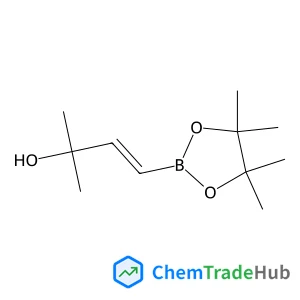
(E)-2-methyl-4-(4,4,5,5-tetramethyl-1,3,2-dioxaborolan-2-yl)but-3-en-2-ol
CAS番号:
581802-26-8
分子式:
C11H21BO3
![4-[(3-Chloro-2-fluorophenyl)amino]-7-methoxy-6-quinazolinyl acetate structure](https://static.chemtradehub.com/structs/740/740081-22-5-f58f.webp "4-[(3-Chloro-2-fluorophenyl)amino]-7-methoxy-6-quinazolinyl acetate structure")
4-[(3-Chloro-2-fluorophenyl)amino]-7-methoxy-6-quinazolinyl acetate
CAS番号:
740081-22-5
分子式:
C17H13ClFN3O3
おすすめサプライヤー



免責事項
このページに表示される学術雑誌情報は、参考および研究目的のみを目的としています。当社は雑誌出版社とは提携しておらず、投稿の取り扱いも行っておりません。出版に関するお問い合わせは、各雑誌出版社に直接ご連絡ください。
表示されている情報に誤りがある場合は、support@chemtradehub.com までご連絡ください。迅速に確認し、対応いたします。