












![Benzyl spiro[indole-3,4'-piperidine]-1(2H)-carboxylate hydrochloride (1:1) structure](https://static.chemtradehub.com/structs/159/159635-46-8-8de0.webp "Benzyl spiro[indole-3,4'-piperidine]-1(2H)-carboxylate hydrochloride (1:1) structure")
Benzyl spiro[indole-3,4'-piperidine]-1(2H)-carboxylate hydrochloride (1:1)
CAS番号:
159635-46-8
分子式:
C20H23ClN2O2
Hsun-Lien Lin, Tzong-Yuan Juang, Li-Hsin Chan, Rong-Ho Lee, Shenghong A. Dai, Ying-Ling Liu, Wen-Chiung Su, Ru-Jong Jeng
A sequential self-repetitive reaction (SSRR) based on carbodiimide (CDI) chemistry was utilized for preparing a high-yield wholly aromatic polyimide. The polyimide was synthesized with 4,4′-methylene-diphenylisocyanate (MDI) and a di(acid-ester) compound which was derived from the ring-opening reaction of 3,3′,4,4′-oxydiphthalic dianhydride (ODPA) at room temperature by the addition of equimolar methanol. Poly-CDI was first synthesized from MDI. The di(acid-ester) compound was then reacted with poly-CDI to form poly(N-acylurea). After curing process, N-acylurea moiety was converted to di(ester-amide) structure viaSSRR and further subjected to a ring-closure reaction to form the wholly aromatic polyimide with a Tg of 247 °C. This approach was further taken to prepare thermally stable nonlinear optical (NLO) materials. Similarly a diimide-diacid containing chromophore was reacted with poly-CDI to obtain an intermediate, poly(N-acylurea). The poly(N-acylurea) with the ester side groups would exhibit excellent organosolubility, which enabled the fabrication of high quality optical thin films. After in situ poling and curing processes, N-acylurea moiety was converted to di(ester-amide) structure viaSSRR and further subjected to a ring-closure reaction to form the wholly aromatic NLO polyimide with an electro-optical coefficient, r33 of 25 pm/V (830 nm). Excellent temporal stability at elevated temperatures (200 °C) and a waveguide optical loss of 2.5 dB cm−1 at 1310 nm were also obtained.
Monica Kosa, Hannah Noa Barad, Vijay Singh, David A. Keller, Klimentiy Shimanovich, Sven Rühle, Assaf Y. Anderson, Arie Zaban, Dan Thomas Major
DOI: 10.1039/C5CP05987A
Yuanhui Sun, Guangtao Yu, Jingwei Liu, Xiaopeng Shen, Xuri Huang, Wei Chen
DOI: 10.1039/C5CP06069A
P. Vaqueiro, R. A. R. Al Orabi, G. Guélou, A. V. Powell, R. I. Smith, J.-P. Song, D. Wee, M. Fornari
DOI: 10.1039/C5CP06192J
Anita Dawes, Nigel John Mason, Helen Jane Fraser
DOI: 10.1039/C5CP05299H
Anne Knorr, Koichi Fumino, Anne-Marie Bonsa
DOI: 10.1039/C5CP03412D
Guokui Liu, Heng Zhang, Gang Liu, Shiling Yuan, Chengbu Liu
DOI: 10.1039/C5CP05639J
Biswajit Biswas, Prashant Chandra Singh
DOI: 10.1039/C5CP04744G
Guojing Wang, Jiecui Liao, Chienhua Chen, Shasha Lv, Chuanqing Shi
DOI: 10.1039/C5CP05036G
Rui-Ning Wang, Xin-Ran Zhang, Shu-Fang Wang, Guang-Sheng Fu, Jiang-Long Wang
DOI: 10.1039/C5CP05313G
Yicong Ma, Sajal K. Ghosh, Sambhunath Bera, Zhang Jiang, Christian M. Schlepütz, Evguenia Karapetrova, Laurence B. Lurio, Sunil K. Sinha
DOI: 10.1039/C5CP04703J
間 brom 苯甲酰腈は、合成化学や薬物化学において重要な Intermediate として使用されています。市場動向としては、その合成性と機能性により、研究開...
CAS番号117324-58-0の塩酸メチル2アミノ-5-トリフルオロメチルベンゼートは、GHS分類により腐食性物質と判定されます。REACH規則では、製造、販...
毒性があるため、適切な安全対策が必須です。皮膚や粘膜への刺激性が強く、吸入や誤飲により健康被害を引き起こす可能性があります。取扱時にはガスマスクや手袋、眼鏡を使...
三氟甲基ピリジン-2-甲アミン塩酸塩は安全性に注意が必要です。毒性は低レベルですが、直接的接触や吸入は避けるべきです。適切な手袋や防塵マスクを着用し、密閉された...
1-エチル-4-(4-硝基フェニル)ピペリジンは有毒であり、取扱には注意が必要です。保管や作業中に手袋を着用し、目や皮膚に接触しないように注意する必要があります...
1,1-ジメトキシプロパン-2-オンは一般的に低毒性ですが、皮膚や目への刺激性があるため、取扱いには注意が必要です。蒸気や液体の吸入には有害な可能性があり、適切...
この化合物はCAS番号259259-80-8に対応しています。GHS分類では、毒性、燃焼性、反応性、炎症性を考慮に入れ、適切な危険性分類が行われます。REACH...
この化合物は、冷却庫で-20℃の温度、乾燥した容器に保管し、直日光から保護する必要があります。湿度の高い環境や高温は避けてください。

Polymer Chemistry welcomes submissions in all areas of polymer science that have a strong focus on macromolecular chemistry. Manuscripts may cover a broad range of fields, yet no direct application focus is required.
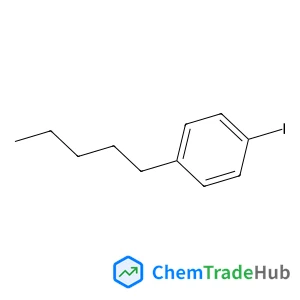
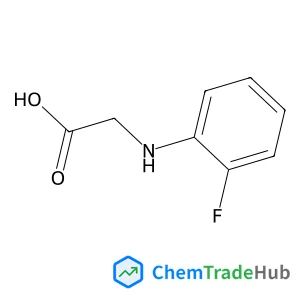
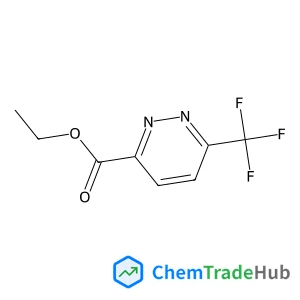
![4-[(2,4-Dihydroxyphenyl)diazenyl]-5-hydroxy-2,7-naphthalenedisulfonic acid structure](https://static.chemtradehub.com/structs/362/3627-01-8-79ac.webp "4-[(2,4-Dihydroxyphenyl)diazenyl]-5-hydroxy-2,7-naphthalenedisulfonic acid structure")





