![4-[(2,4-Dihydroxyphenyl)diazenyl]-5-hydroxy-2,7-naphthalenedisulfonic acid structure](https://static.chemtradehub.com/structs/362/3627-01-8-79ac.webp "4-[(2,4-Dihydroxyphenyl)diazenyl]-5-hydroxy-2,7-naphthalenedisulfonic acid structure")
4-[(2,4-Dihydroxyphenyl)diazenyl]-5-hydroxy-2,7-naphthalenedisulfonic acid
CAS番号:
3627-01-8
分子式:
C16H12N2O9S2
Leena Nurmi, Hui Peng, Jukka Seppälä, David M. Haddleton, Idriss Blakey, Andrew K. Whittaker
A series of partly fluorinated polyelectrolytes were synthesized by transition metal mediated living radical polymerization and evaluated for their applicability as corona-forming components in 19F MRI-detectable nanoparticles in aqueous solutions. The polymers were statistical and block copolymers of trifluoroethyl methacrylate (TFEMA) and 2-(dimethylamino)ethyl methacrylate (DMAEMA). The polymers were either directly dissolved in water (statistical copolymers), or assembled into aqueous nanoparticles with PTFEMA cores and P(TFEMA-co-DMAEMA) coronas (block copolymers). The polymer composition, polymer charge density, solution ionic strength and solution pH were varied. The 19F spin–lattice (T1) and spin–spin (T2) relaxation times and 19F image intensities of solutions of the polymers were measured and related to polymer structure and aqueous conformation. The 19F NMR T2 relaxation times were found to be highly indicative of the 19F imaging performance. Maintaining sufficient mobility of the 19F nuclei was important for obtaining images of high intensity. 19F mobility could be increased by preventing their aggregation in water by exploiting electrostatic repulsion between monomer units.
Takatoshi Fujita, Md. Khorshed Alam, Takeo Hoshi
DOI: 10.1039/C8CP05574B
Nacer Boudjemia, Kari Jänkälä, Kenji Tamasaku, Marko Huttula, Masaki Oura
DOI: 10.1039/C8CP07307D
Junhui Weng, Shang-Peng Gao
DOI: 10.1039/C8CP04743J
Mauro Boero, Kazuki Tamai
DOI: 10.1039/C8CP04314K
Mohammed Abdel-Rahman, Xu Feng, Mark Muir, Kushal Ghale, Ye Xu, Michael Trenary
DOI: 10.1039/C8CP07548D
Xi-Ling Xu, Bin Yang, Zhi-You Wei, Guo-Jin Cao, Hong-Guang Xu
DOI: 10.1039/C8CP03302A
S. Sekar, J. George Muller
DOI: 10.1039/C8CP02954G
Fehmi Khadri, Kamel Hammami
DOI: 10.1039/C8CP07409G
Xifeng Yang, Fangxin Tan, Yaojun Dong, Hailin Yu, Yushen Liu
DOI: 10.1039/C8CP07049K
3-(2-オキサプロピル)ベンzoic酸は、ベンzoic酸とプロパノ酸をヒドロキシム化合物として反応させて生成します。具体的には、ベンzoic酸とプロパノ酸を反...
4-メチル-4-ピペリジニル-1-ピロリドイン甲酸は、主に医薬品の合成材料や研究用物質として使用されます。さらに、一部の薬理学的研究にも応用されています。
Biotin-PEG3-oxyamine HCl塩は、GHS( Globally Harmonized System of Classification and...
N-(4-イソチオシアネートフェニル)-2-メトキシアリニンは、4-イソチオシアノフェノールと2-メトキシアリニルアミンのアミニド反応を用いて合成されます。この...
金粉蕨亭2'-O-葡萄糖甙は主に薬理研究や医薬品製造に使用され、抗炎症作用や抗がん作用などがあります。また、その構造や性質から、合成化学や化学生理学の研究にも用...
2-(2-ニトロフェニル)酢酸ヒドライドのCAS番号は114953-81-0です。この化合物は白色結晶性粉末で、分子量は244.12です。水溶性は限られており、...
この化合物は高活性のため、取り扱いには注意が必要です。PPE(個人保護具)としてゴーグル、ガントリー、および防滴シールドを着用することが推奨されます。ドラフトチ...
11-脱氢血栓烷 b2は、血栓溶解・抗凝固作用に関する研究で注目を集めています。特に心血管疾患の治療法開発において、市場の需要が高まっています。研究トレンドとし...
3,3-二甲基哌啶-4-酮は避光、常温、乾燥した場所で保存してください。容器は密閉し、遠くから火源を離して保管することを確認してください。

Polymer Chemistry welcomes submissions in all areas of polymer science that have a strong focus on macromolecular chemistry. Manuscripts may cover a broad range of fields, yet no direct application focus is required.
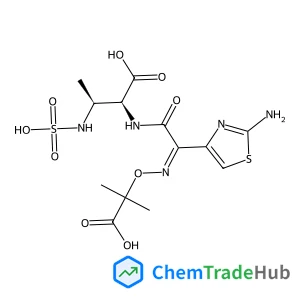
![(2E)-4-[(1R,2S,8R,19S,21R)-14-Hydroxy-11-isopropenyl-8,23,23-trimethyl-5-(3-methyl-2-buten-1-yl)-16,20-dioxo-3,7,22-trioxaheptacyclo[17.4.1.1~8,12~.0~2,17~.0~2,21~.0~4,15~.0~6,13~]pentacosa-4(15),5,13
,17-tetraen-21-yl]-2-methyl-2-butenoic acid structure](https://static.chemtradehub.com/structs/173/173867-04-4-d2d3.webp "(2E)-4-[(1R,2S,8R,19S,21R)-14-Hydroxy-11-isopropenyl-8,23,23-trimethyl-5-(3-methyl-2-buten-1-yl)-16,20-dioxo-3,7,22-trioxaheptacyclo[17.4.1.1~8,12~.0~2,17~.0~2,21~.0~4,15~.0~6,13~]pentacosa-4(15),5,13
,17-tetraen-21-yl]-2-methyl-2-butenoic acid structure")