












Back matter
文献情報
出版日
DOI
10.1039/C0CP90138E
インパクトファクター
3.676
著者
原文を見る
要旨
The first page of this article is displayed as the abstract.
関連文献
A comparison of the chemical, optical and electrocatalytic properties of water-oxidation catalysts for use in integrated solar-fuel generators
Ke Sun, Ivan A. Moreno-Hernandez, William C. Schmidt, Jr., Xinghao Zhou, J. Chance Crompton, Rui Liu, Fadl H. Saadi, Yikai Chen, Kimberly M. Papadantonakis
2017-03-09
Paper
DOI: 10.1039/C6EE03563A
Transition-metal-free C–C bond forming reactions of aryl, alkenyl and alkynylboronic acids and their derivatives
S. Roscales, A. G. Csákÿ
2014-09-03
Tutorial Review
DOI: 10.1039/C4CS00195H
Fluorine-free ionic liquid electrolytes for sustainable neodymium recovery using an electrochemical approach
Kalani Periyapperuma, Jennifer M. Pringle, Laura Sanchez-Cupido, Maria Forsyth, Cristina Pozo-Gonzalo
2021-04-21
Paper
DOI: 10.1039/D1GC00361E
Anion-induced self-assembly of positively charged polycyclic aromatic hydrocarbons towards nanostructures with controllable two-dimensional morphologies
Chongqing Yang, Dongqing Wu, Wuxue Zhao, Weizhen Ye, Zhixiao Xu, Fan Zhang
2016-01-04
Communication
DOI: 10.1039/C5CE02171E
Self-sacrificial templated synthesis of a three-dimensional hierarchical macroporous honeycomb-like ZnO/ZnCo2O4 hybrid for carbon monoxide sensing
Yusuf Valentino Kaneti, Ni Luh Wulan Septiani, Xuchuan Jiang, Brian Yuliarto, Muhammad J. A. Shiddiky, Nobuyoshi Fukumitsu, Yong-Mook Kang
2019-01-09
Paper
DOI: 10.1039/C8TA11380G
Proton delivery through a dynamic 3D H-bond network constructed from dense hydroxyls for advanced ion-selective membranes
Lei Hu, Li Gao, Wenji Zheng, Yan Dai, Ce Hao, Xuemei Wu
2019-05-24
Paper
DOI: 10.1039/C9TA04423J
Advances and challenges in electrochemical CO2 reduction processes: an engineering and design perspective looking beyond new catalyst materials
Sahil Garg, Mengran Li, Adam Z. Weber, Liye Li, Victor Rudolph, Guoxiong Wang, Thomas E. Rufford
2019-12-12
Review Article
DOI: 10.1039/C9TA13298H
Freestanding interconnected nanocluster textiles for efficient oxygen evolution reaction
Shougo Higashi, Takashi Tachikawa, Keiichiro Oh-ishi, Keisuke Shigetoh, Kensuke Takechi, Atsushi Beniya
2020-09-24
Paper
DOI: 10.1039/D0TA07707K
The impact of oxygen evolution and cation migration on the cycling stability of a Li-rich Li[Li0.2Mn0.6Ni0.1Co0.1]O2 positive electrode
Katarzyna Redel, Andrzej Kulka, Katarzyna Walczak, Camelia N. Borca, Janina Molenda
2020-08-07
Paper
DOI: 10.1039/D0TA05556E
こちらもおすすめ
化合物よくある質問
オステニ二甲磺酸塩に適用される法規ガイドラインは何ですか?
オステニ二甲磺酸塩は、GHS分類に基づき corrosive 物質として分類されます。REACH規則では、該当物質の登録が要求される可能性があります。また、FD...
2070014-82-1N-(2-{[2-(Dimethylam...
化合物よくある質問
環丁基肼盐酸盐は安全ですか?
環丁基肼盐酸盐は毒性があり、吸入や皮膚接触は有害です。使用時の安全対策として、密閉システムを使用し、適切な排気設備を備えた場所で作業することが推奨されます。
1156980-49-2Cyclobutylhydrazine ...
化合物よくある質問
N-(4-パリドン基ソニルフェニル)硫代イソシアネートを取り扱う際の実験室安全事項は何ですか?
N-(4-パリドン基ソニルフェニル)硫代イソシアネートは高毒性で、皮膚や吸入による毒性があります。取り扱う際は防毒マスク、保護用手袋、保護眼鏡などのPPEを着用...
7356-55-01-[(4-Isothiocyanato...
化合物よくある質問
5-ヒドロキシ-1,3-ジヒドロ-2H-インドン-2-酮の物理化学的性質は何ですか?
CAS番号3416-18-0の5-ヒドロキシ-1,3-ジヒドロ-2H-インドン-2-酮は、結晶性の白色粉末です。分子量は228.25であり、 aqueous m...
3416-18-05-Hydroxy-1,3-dihydr...
化合物よくある質問
O-苄基-D-丝氨醇はどのように合成されますか?
O-苄基-D-丝氨醇は、D-アミノ酸とベンゼン環の経由で合成されます。触媒としてジメチルアミノピリジンが使用され、選択性は高いです。一般的な収率は約90%です。
58577-88-1(s)-2-Amino-3-benzyl...
化合物よくある質問
ナトリウム3-ヒドロキシbutano酸とは何ですか?
ナトリウム3-ヒドロキシbutano酸は、CAS番号13613-65-5で登録されている化合物です。この化合物は、(3R)-3-ヒドロキシbutano酸とナトリ...
13613-65-5sodium;(3R)-3-hydrox...
化合物よくある質問
1-(二苯甲基)-4-甲基ベンゼンの物理化学的性質は何ですか?
CAS番号603-37-2の1-(二苯甲基)-4-甲基ベンゼンは、結晶性の固体で、分子量は244.28であり、水中的には微溶です。この化合物は有機反応において中...
603-37-21-(Diphenylmethyl)-4...
化合物よくある質問
ネアミン塩酸塩の物理化学的性質は何ですか?
ネアミン塩酸塩の分子量は321.19であり、結晶性の白色粉末です。この化合物は水に溶けやすく、pHが低くなると不溶性になります。反応活性は高く、水溶液中の酸化還...
15446-43-2NEAMINE HYDROCHLORID...
化合物よくある質問
偶氮二甲酰二哌啶の主な用途は何ですか?
偶氮二甲酰二哌啶は、医薬品、染料、高 Então 剤、触媒、溶媒、量論試薬など、様々な分野で使用されています。特に、高 Enough 反応において、グリコール酸...
10465-81-3(E)-1,2-Diazenediylb...
664969-54-44-[(2E)-3-Phenyl-2-p...
掲載誌
Physical Chemistry Chemical Physics

CiteScore:
5.5
自己引用率:
10.3%
年間論文数:
3036
Physical Chemistry Chemical Physics (PCCP) is an international journal co-owned by 19 physical chemistry and physics societies from around the world. This journal publishes original, cutting-edge research in physical chemistry, chemical physics and biophysical chemistry. To be suitable for publication in PCCP, articles must include significant innovation and/or insight into physical chemistry; this is the most important criterion that reviewers and Editors will judge against when evaluating submissions. The journal has a broad scope and welcomes contributions spanning experiment, theory, computation and data science. Topical coverage includes spectroscopy, dynamics, kinetics, statistical mechanics, thermodynamics, electrochemistry, catalysis, surface science, quantum mechanics, quantum computing and machine learning. Interdisciplinary research areas such as polymers and soft matter, materials, nanoscience, energy, surfaces/interfaces, and biophysical chemistry are welcomed if they demonstrate significant innovation and/or insight into physical chemistry. Joined experimental/theoretical studies are particularly appreciated when complementary and based on up-to-date approaches.
おすすめ化合物
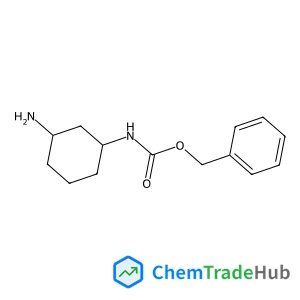
![4,4-Difluoro-2-methyl-1-{[(2-methyl-2-propanyl)oxy]carbonyl}-L-proline structure](https://static.chemtradehub.com/structs/119/1194032-23-9-f426.webp "4,4-Difluoro-2-methyl-1-{[(2-methyl-2-propanyl)oxy]carbonyl}-L-proline structure")
4,4-Difluoro-2-methyl-1-{[(2-methyl-2-propanyl)oxy]carbonyl}-L-proline
CAS番号:
1194032-23-9
分子式:
C11H17F2NO4
おすすめサプライヤー




免責事項
このページに表示される学術雑誌情報は、参考および研究目的のみを目的としています。当社は雑誌出版社とは提携しておらず、投稿の取り扱いも行っておりません。出版に関するお問い合わせは、各雑誌出版社に直接ご連絡ください。
表示されている情報に誤りがある場合は、support@chemtradehub.com までご連絡ください。迅速に確認し、対応いたします。