


Spectroelectrochemical studies of hole percolation on functionalised nanocrystalline TiO2 films: a comparison of two different ruthenium complexes
文献情報
出版日
2010-11-16
DOI
10.1039/C0CP01013H
インパクトファクター
3.676
著者
Xiaoe Li, Mohammad K. Nazeeruddin, Mukundan Thelakkat, Piers R. F. Barnes, Ramón Vilar, James R. Durrant
原文を見る
要旨
We report the application of spectroelectrochemical techniques to compare the hole percolation dynamics of molecular networks of two ruthenium bipyridyl complexes adsorbed onto mesoporous, nanocrystalline TiO2 films. The percolation dynamics of the ruthenium complex cis-di(thiocyanato)(2,2′-bipyridyl-4,4′-dicarboxylic acid)-(2,2′-bipyridyl-4,4′-tridecyl) ruthenium(II), N621, is compared with those observed for an analogous dye with an additional tri-phenyl amine (TPA) donor moiety, cis-di(thiocyanato)(2,2′-bipyridyl-4,4′-dicarboxylic acid)-(2,2′-bipyridyl-4,4′-bis(vinyltriphenylamine)) ruthenium(II), HW456. The in situoxidation of these ruthenium complexes adsorbed to the TiO2 films is monitored by cyclic voltammetry and voltabsorptometry, whilst the dynamics of hole (cation) percolation between adsorbed ruthenium complexes is monitored by potentiometric spectroelectrochemistry and chronoabsorptometry. The hole diffusion coefficient, Deff, is shown to be dependent on the dye loading on the nanocrystalline TiO2 film, with a threshold observed at ∼60% monolayer surface coverage for both dyes. The hole diffusion coefficient of HW456 is estimated to be 2.6 × 10⁻⁸ cm2/s, 20-fold higher than that obtained for the control N621, attributed to stronger electronic coupling between the TPA moieties of HW456 accelerating the hole percolation dynamics. The presence of mercuric ions, previously shown to bind to the thiocyanates of analogous ruthenium complexes, resulted in a quenching of the hole percolation for N621/TiO2 films and an enhancement for HW456/TiO2 films. These results strongly suggest that the hole percolation pathway is along the overlapped neighbouring -NCS groups for the N621 molecules, whereas in HW456 molecules cation percolation proceeds between intermolecular TPA ligands. These results are discussed in the context of their relevance to the process of dye regeneration in dye sensitised solar cells, and to the molecular wiring of wide bandgap inorganic materials for battery and sensing applications.
おすすめジャーナル

Bioorganic & Medicinal Chemistry Letters

Atomization and Sprays

Biocatalysis and Biotransformation

Acta Metallurgica Sinica-English Letters

Topics in Catalysis

Critical Reviews in Solid State and Materials Sciences

Polycyclic Aromatic Compounds

NDT & E International

Chinese Journal of Chemistry

Electroanalysis
関連文献
Decoding the role of encapsulated ions in the electronic and magnetic properties of mixed-valence polyoxovanadate capsules {X@V22O54} (X = ClO4−, SCN−, VO2F2−): a combined theoretical approach
Almudena Notario-Estévez, Piotr Kozłowski, Oliver Linnenberg, Xavier López, Kirill Yu. Monakhov
2018-06-08
Paper
DOI: 10.1039/C8CP02669F
Clathrate ice sL: a new crystalline phase of ice with ultralow density predicted by first-principles phase diagram computations
Lars Ojamäe
2018-02-28
Paper
DOI: 10.1039/C8CP00699G
Visible-light-driven CO2 photoreduction over ZnxCd1−xS solid solution coupling with tetra(4-carboxyphenyl)porphyrin iron(iii) chloride
Xuehua Zhang, Chunchao Hou, Lin Lin
2018-05-25
Paper
DOI: 10.1039/C8CP02774A
Interaction of gas phase copper(ii) acetylacetonate with slow electrons
Janina Kopyra
2018-03-05
Paper
DOI: 10.1039/C7CP08149A
Optical spectroscopy of isolated flavins: photodissociation of protonated lumichrome
Alexander Sheldrick, David Müller, Alan Günther, Pablo Nieto, Otto Dopfer
2018-02-21
Communication
DOI: 10.1039/C8CP00590G
Influence of graphene thickness and grain boundaries on MoS2 wrinkle nanostructures
Seon Joon Kim, Ohmin Kwon, Dae Woo Kim
2018-05-31
Paper
DOI: 10.1039/C8CP02460J
Bright, stable, and tunable solid-state luminescence of carbon nanodot organogels
Lizhe Liu, Li Wang, Guangsheng Luo, Chunlan Mo, Chenliang Chang
2018-06-11
Paper
DOI: 10.1039/C8CP02069H
An accurate full-dimensional potential energy surface and quasiclassical trajectory dynamics of the H + H2O2 two-channel reaction
Kejie Shao, Bina Fu, Xingan Wang, Dong H. Zhang
2018-08-15
Paper
DOI: 10.1039/C8CP04045A
Seawater desalination using pillared graphene as a novel nano-membrane in reverse osmosis process: nonequilibrium MD simulation study
Sayyed Jalil Mahdizadeh, Golnoosh Akhlamadi
2018-08-04
Paper
DOI: 10.1039/C8CP02820F
こちらもおすすめ
化合物よくある質問
2-メトキシ-4-(メチルスルフィニル)アミンの主な用途は何ですか?
2-メトキシ-4-(メチルスルフィニル)アミンは、主に医薬品および農薬の製造に使用されます。また、合成化学の一部として研究用材料としても利用されます。
41608-73-52-Methoxy-4-(methyls...
118684-13-24-(Bromomethyl)-3-me...
化合物よくある質問
4,6-二氯-N-甲基ピラミジンアミンの代替品はありますか?
代替品としては、4,6-二クロロピラミジンアミンや他のピラミジン系化合物が考えられます。ただし、目的と用途によって最適な代替品は異なります。
10397-15-64,6-Dichloro-N-methy...
化合物よくある質問
6-氯-4-甲基-1H-吲哚を含む廃棄物はどのように処理すべきですか?
6-氯-4-甲基-1H-吲哚の廃棄物は、適切な容器に収集し、密閉して保管します。温度は常温、湿度は低く、直射日光を避けて保管することを推奨します。廃棄処理は専門...
885520-84-36-chloro-4-methyl-1H...
化合物よくある質問
2-フローユロ-4-(トリフルオロメチル)ベンゾイドについて「に適用される法規ガイドラインは何ですか」
2-フローユロ-4-(トリフルオロメチル)ベンゾイドのCAS番号は207974-08-1です。この化合物はGHS分類で毒性物質と有害な反応物質として分類されます...
207974-08-1[2-Fluoro-4-(trifluo...
化合物よくある質問
4-ニトロフェニルN-[(ベンゼルオキシルカーボンイル]グリシングリシングリシン酸はどのように保存すればよいですか?
4-ニトロフェニルN-[(ベンゼルオキシルカーボンイル]グリシングリシングリシン酸は、室温で暗所に保管し、乾燥した環境で保存することを推奨します。容器は密閉性の...
19811-64-44-Nitrophenyl N-[(be...
化合物よくある質問
イソデスロラタドリンの代替品はありますか?
イソデスロラタドリンの代替品としては、デスロラタドリンや他の抗ヒスタミン薬が挙げられます。具体的には、デスロラタドリン、ラセカミド、フェルタドリンなどが、症状や...
183198-49-4Iso Desloratadine
化合物よくある質問
5-甲氧基-1,2,3,4-四氢异喹啉盐酸盐はどのように合成されますか?
5-甲氧基-1,2,3,4-四氢异喹啉盐酸盐の一般的な合成方法は、メタノール中で5-メトキシ-1,2,3,4-四ヒュドロイソキシンを塩酸で塩化します。この反応で...
103030-69-95-Methoxy-1,2,3,4-te...
化合物よくある質問
4-アミノ-5-メトキシ-2-トルエンサルホニック酸についての法規ガイドラインは何ですか?
CAS番号6471-78-9の4-アミノ-5-メトキシ-2-トルエンサルホニック酸は、GHS分類では corrosive(腐食性)と識別されます。EUのREAC...
6471-78-94-Amino-5-Methoxy-2-...
化合物よくある質問
甲基孕酮を取り扱う際の実験室安全事項は何ですか?
甲基孕酮の取り扱いは、PPE(個人保護具)の使用が必要な重要な安全事項を伴います。防塵マスク、ゴーグル、手袋を着用することが推奨されます。ドラフトチャンバーを使...
204063-33-22-[(Diphenylmethyl)a...
掲載誌
Physical Chemistry Chemical Physics

CiteScore:
5.5
自己引用率:
10.3%
年間論文数:
3036
Physical Chemistry Chemical Physics (PCCP) is an international journal co-owned by 19 physical chemistry and physics societies from around the world. This journal publishes original, cutting-edge research in physical chemistry, chemical physics and biophysical chemistry. To be suitable for publication in PCCP, articles must include significant innovation and/or insight into physical chemistry; this is the most important criterion that reviewers and Editors will judge against when evaluating submissions. The journal has a broad scope and welcomes contributions spanning experiment, theory, computation and data science. Topical coverage includes spectroscopy, dynamics, kinetics, statistical mechanics, thermodynamics, electrochemistry, catalysis, surface science, quantum mechanics, quantum computing and machine learning. Interdisciplinary research areas such as polymers and soft matter, materials, nanoscience, energy, surfaces/interfaces, and biophysical chemistry are welcomed if they demonstrate significant innovation and/or insight into physical chemistry. Joined experimental/theoretical studies are particularly appreciated when complementary and based on up-to-date approaches.
おすすめ化合物

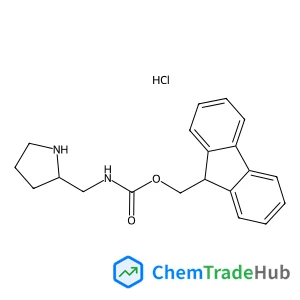
(S)-(9H-Fluoren-9-yl)methyl (pyrrolidin-2-ylmethyl)carbamate hydrochloride
CAS番号:
1217813-15-4
分子式:
C20H23ClN2O2

おすすめサプライヤー






免責事項
このページに表示される学術雑誌情報は、参考および研究目的のみを目的としています。当社は雑誌出版社とは提携しておらず、投稿の取り扱いも行っておりません。出版に関するお問い合わせは、各雑誌出版社に直接ご連絡ください。
表示されている情報に誤りがある場合は、support@chemtradehub.com までご連絡ください。迅速に確認し、対応いたします。