












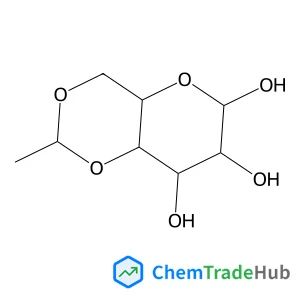
A theoretical investigation of inositol 1,3,4,5-tetrakisphosphate
文献情報
出版日
2010-11-12
DOI
10.1039/C0CP00956C
インパクトファクター
3.676
著者
Sarah A. J. Rosen, Piers R. J. Gaffney, Ian R. Gould
原文を見る
要旨
This paper describes the parameterization of inositol 1,3,4,5-tetrakisphosphate [Ins(1,3,4,5)P4] for use in molecular dynamics (MD) simulations. For this theoretical investigation, eleven isomers of Ins(1,3,4,5)P4, with different levels and arrangements of protonation, have been considered. Herein we report accurate quantum mechanics (QM) calculations offering a detailed description of the energetic and structural properties of the Ins(1,3,4,5)P4 isomers and subsequent development of parameters for these isomers for application in the AMBER force field. QM calculations were employed to geometry optimize the Ins(1,3,4,5)P4 isomers, using the DFT-B3LYP level of theory in gas phase. In subsequent steps, charge parameters were generated for each isomer. These charge parameters, plus assigned atom-types from the AMBER ff99SB force field, were then applied to the optimized isomers for energy minimization in AMBER. The quality of the parameters was evaluated by comparing the structural, energetic and spectroscopic properties of the Ins(1,3,4,5)P4 isomers between the QM geometry optimization stage, from which the parameters were generated, and the energy minimization stage, in which the parameters were applied. The results were shown to be in strong qualitative agreement between these stages, suggesting good quality parameters have been obtained. Additionally, adaptations to the gas phase protocol, investigating the use of the MP2 method for the geometry optimization stage and GAFF atom-types for the energy minimization stage, were tested. These results confirmed the initial protocol applied was the most appropriate. Calculations for the Ins(1,3,4,5)P4 isomers were also carried out in the presence of implicit solvent, allowing comparison and validation of the theoretical calculations with experimental data. The computed energetic properties of the Ins(1,3,4,5)P4 isomers were assessed against their experimental probabilities based on 31P-NMR titration data. The computational and experimental results were shown to be in strong agreement, with the lower energy isomers corresponding to those more probable. This paper reports a clearly-defined algorithmic approach to generate parameters for the highly charged Ins(1,3,4,5)P4 ligand, permitting their use in future MD studies.
関連文献
Synthesis of chroman-annulated cyclopropanols via photoinduced intramolecular [2 + 1]-cycloaddition of 2-allyloxybenzaldehydes
Elvira R. Zaitseva, Victoria E. Opryshko, Dmitrii S. Ivanov, Andrey A. Mikhaylov
2023-11-02
Paper
DOI: 10.1039/D3OB01520C
Synthesis of acyl fluorides through deoxyfluorination of carboxylic acids
Mengjie Cen, Xi Yang, Shanshan Zhang, Liguang Gan, Long Liu, Tieqiao Chen
2023-11-10
Paper
DOI: 10.1039/D3OB01557B
Oxa-azabenzobenzocyclooctynes (O-ABCs): heterobiarylcyclooctynes bearing an endocyclic heteroatom
Eshani Das, Pavel Yamanushkin, Xinsong Lin
2023-10-18
Paper
DOI: 10.1039/D3OB01559A
Synthesis of disulfide-rich C-terminal Cys-containing peptide acids through a photocleavable side-chain anchoring strategy
Jie Luo, Yuan Gao, Rui Zhao, Jing Shi, Yi-Ming Li
2023-10-20
Paper
DOI: 10.1039/D3OB01597A
Base-promoted tandem synthesis of 2-azaaryl indoline
Shuguang Chen, Jiahong Tan, Hao Wu, Quansheng Zhao, Yongjia Shang
2023-11-07
Communication
DOI: 10.1039/D3OB01444D
Z-Selective access to α-trifluoromethyl arylenes through Pd-catalysed fluoroarylation of 1,1-difluoroallenes
Lei Chen, Ze-Feng Luo, Peng Ye, Yang-Jie Mao, Zhen-Yuan Xu, Dan-Qian Xu, Shao-Jie Lou
2023-11-01
Communication
DOI: 10.1039/D3OB01574B
Intracellular Zn(ii) induced turn-on fluorescence of an l-phenylalanine-derived pseudopeptide
Arpna Tamrakar, Praveen Kumar, Neha Garg, Santiago V. Luis, Mrituanjay D. Pandey
2023-10-19
Communication
DOI: 10.1039/D3OB01337E
Ball milling synthesis of S-quinolyl xanthates via coupling of haloquinolines with potassium O-alkyl xanthates
Sha Peng, Meng-Yang Zhao, Jia-Jun Tang, Long-Yong Xie
2023-11-07
Paper
DOI: 10.1039/D3OB01688A
こちらもおすすめ
化合物よくある質問
6-苄基-6,7-二氢-5H-吡咯并3,4-b吡啶とは何ですか?
6-苄基-6,7-二氢-5H-吡咯并3,4-b吡啶は、CAS番号109966-30-5の化合物です。これは、6-ベンジル基を持つ6,7-二氢-5H-吡咯並みの化...
109966-30-56-Benzyl-6,7-dihydro...
化合物よくある質問
半硫酸奎宁单水水合物はどのように保存すればよいですか?
半硫酸奎宁单水水合物は、乾燥した涼しい場所に保管し、直射日光や湿気を避ける必要があります。保存温度は常温(15〜25℃)が適切で、湿度は40%以下を維持すること...
6119-70-6Quinine sulfate hydr...
化合物よくある質問
D-核糖-5-リン酸二ナトリウムとは何ですか?
D-核糖-5-リン酸二ナトリウムは、CAS番号18265-46-8を有する化合物で、D-核糖の5位付加部位にリン酸基が結合した化合物です。この化合物は、水溶性で...
18265-46-8Disodium (2R,3R,4R)-...
2257-52-5Isopropylhydrazine
化合物よくある質問
3-乙酰基-4-羟基喹啉-2(1H)-酮はどのように合成されますか?
3-乙酰基-4-羟基喹啉-2(1H)-酮は、ハイドロキノンと酢酸アセトイルアミドのアミド化反応により合成されます。この反応は塩基触媒を用いて行われ、選択性は良好...
26138-64-73-Acetyl-4-hydroxyqu...
2280037-51-44-Amino-1-(3-bipheny...
化合物よくある質問
5-溴-4-甲基-1H-吲唑とは何ですか?
5-溴-4-甲基-1H-吲唑は、CAS番号1082041-34-6の化学物質で、化学式はC10H9BrNです。この化合物は淡黄色の結晶性粉末で、吸湿性があります...
1082041-34-65-Bromo-4-methyl-1H-...
化合物よくある質問
3-(4メトキシフェニル)オキテナン-3カーボイル酸の代替品はありますか?
3-(4メトキシフェニル)オキテナン-3カーボイル酸の代替品は、その用途により異なりますが、例えば4-(メトキシフェニル)オキテナン-3カーボイル酸や、他のオキ...
1416323-25-53-(4-Methoxyphenyl)-...
化合物よくある質問
3-イリドオキシピロロ[2,3-b]ピリジン-5-カルボキシlic酸は安全ですか?
3-イリドオキシピロロ[2,3-b]ピリジン-5-カルボキシlic酸は危険な化合物ではありませんが、適切な手袋や保護眼鏡の使用を推奨します。誤って摂取または接触...
1060816-80-93-Iodo-1H-pyrrolo[2,...
化合物よくある質問
3-氟-4- iodobenolを取り扱う際の実験室安全事項は何ですか?
3-氟-4- iodobenolは可燃性を有し、強力な反応性を持つため、取り扱いには注意が必要です。PPE(個人保護具)の着用、ドラフトチャンバーの使用、漏洩時...
122927-84-83-Fluoro-4-iodopheno...
掲載誌
Physical Chemistry Chemical Physics

CiteScore:
5.5
自己引用率:
10.3%
年間論文数:
3036
Physical Chemistry Chemical Physics (PCCP) is an international journal co-owned by 19 physical chemistry and physics societies from around the world. This journal publishes original, cutting-edge research in physical chemistry, chemical physics and biophysical chemistry. To be suitable for publication in PCCP, articles must include significant innovation and/or insight into physical chemistry; this is the most important criterion that reviewers and Editors will judge against when evaluating submissions. The journal has a broad scope and welcomes contributions spanning experiment, theory, computation and data science. Topical coverage includes spectroscopy, dynamics, kinetics, statistical mechanics, thermodynamics, electrochemistry, catalysis, surface science, quantum mechanics, quantum computing and machine learning. Interdisciplinary research areas such as polymers and soft matter, materials, nanoscience, energy, surfaces/interfaces, and biophysical chemistry are welcomed if they demonstrate significant innovation and/or insight into physical chemistry. Joined experimental/theoretical studies are particularly appreciated when complementary and based on up-to-date approaches.
おすすめ化合物

おすすめサプライヤー






免責事項
このページに表示される学術雑誌情報は、参考および研究目的のみを目的としています。当社は雑誌出版社とは提携しておらず、投稿の取り扱いも行っておりません。出版に関するお問い合わせは、各雑誌出版社に直接ご連絡ください。
表示されている情報に誤りがある場合は、support@chemtradehub.com までご連絡ください。迅速に確認し、対応いたします。