![4-[(1-Methyl-1H-pyrrol-2-yl)methylene]-1,3(2H,4H)-isoquinolinedione structure](https://static.chemtradehub.com/structs/110/1104546-89-5-a600.webp "4-[(1-Methyl-1H-pyrrol-2-yl)methylene]-1,3(2H,4H)-isoquinolinedione structure")
4-[(1-Methyl-1H-pyrrol-2-yl)methylene]-1,3(2H,4H)-isoquinolinedione
CAS番号:
1104546-89-5
分子式:
C15H12N2O2
U. B. Demirci, P. Miele
Cobalt-catalyzed hydrolysis of sodium borohydride (NaBH4) has attracted great attention since the hydride is believed to be promising hydrogen storage material. Cobalt is an efficient metal catalyst and has already proven to be a potential alternative to noble metals. Nevertheless it is not stable. Indeed it transforms into a Co- and B-based material when on contact with NaBH4. Through ex situ characterizations (e.g. ICP, XRD, XPS and SEM), the Co- and B-based material has been supposed to be either a cobalt boride CoxB (with x from 1 to 3) or a Co–B alloy. This contradiction is the topic of the present paper. Herein, the literature dedicated to the Co-catalyzed NaBH4 hydrolysis is exhaustively surveyed. The results of the ex situ characterizations are largely discussed, for example that: (i) the ex situ characterized CoxB or Co–B might be different from the in situ formed Co- and B-based catalyst; (ii) there is no clear evidence of the formation of either CoxB or Co–B; (iii) the in situ formed catalyst would change in accordance with a cycle in the course of the hydrolysis; and (iv) in situ characterizations are clearly required but their setting up is a challenge. These conclusions, among others, are argued.
Masayoshi Naito, Hiroshi Okamoto, Naoki Tanaka
DOI: 10.1039/A908490H
Qian Ma, Kewen Lei, Jian Ding, Lin Yu, Jiandong Ding
DOI: 10.1039/C7PY01411B
Abeer A. Alzahrani, Mohand Saed, Christopher M. Yakacki, Han Byul Song, Nancy Sowan, Joshua J. Walston, Parag K. Shah, Matthew K. McBride
DOI: 10.1039/C7PY01121K
Jinfeng Ma, Liandong Deng
DOI: 10.1039/C7PY02021J
Jérémy Demarteau, Julien De Winter, Christophe Detrembleur, Antoine Debuigne
DOI: 10.1039/C7PY01891F
Bingbing Shi, Lina Gao, Yuezhou Liu, Pei-Ren Liu, Liqing Shangguan, Zhengwei Mao, Feihe Huang
DOI: 10.1039/C7PY01669G
Francesco De Bon, Marco Fantin, Abdirisak A. Isse, Armando Gennaro
DOI: 10.1039/C7PY02134H
Chisa Norioka, Kazuma Okita, Miho Mukada
DOI: 10.1039/C7PY01370A
CAS番号168395-26-4の(S)-四氢呋喃-3-羧酸は、白色の結晶が特徴的な性質を持ちます。分子量は128.08であり、水に溶けやすく、アルコールなど...
塩基性硫黄化合物1,3-ジメチル-1-[5-(三氟甲基)-1,3,4-硫杂环己二酮-2-基]尿素を含む廃棄物は、専門的な廃棄処理施設で焼却処理を行うべきです。ま...
インドリジン-2-カルボン酸は一般的に安全ですが、過度に濃い状態では刺激性があります。取り扱いには適切な防護具を使用し、直接触れや吸入を避ける必要があります。
5-甲基-2-(3-ピリジニル)-1,3-テイゾール-4-オールは、医薬品や農薬、および合成化学の分野において研究が進められています。市場動向としては、化学物質...
4,4',4''-(嘧啶-2,4,6-三基)三苯甲醛は、密閉容器に保管し、避けておくことが重要です。室温で保管し、直射日光を避けてください。
(3aR)-1,3,3-トリフェニルテトラヒドロ-3H-ピロロ[1,2-c][1,3,2]-オキザボロロールは、GHS(国際危険物識別ルール)の分類が適用されま...
6-(4-氯苯氧基)吡啶-3-胺の代替品としては、他の芳香族アミン化合物や類似の除草剤が考えられます。ただし、他の化合物と同様に、代替品の選択には安全性と効果性...
3-フェニル-3,4-ジヒドロ-2H-1,4-ベンゾキサジンを取り扱う際は、防塵マスク、ゴーグル、ゴム手袋を使用し、ドラフトチャンバー内で作業することを推奨しま...

Physical Chemistry Chemical Physics (PCCP) is an international journal co-owned by 19 physical chemistry and physics societies from around the world. This journal publishes original, cutting-edge research in physical chemistry, chemical physics and biophysical chemistry. To be suitable for publication in PCCP, articles must include significant innovation and/or insight into physical chemistry; this is the most important criterion that reviewers and Editors will judge against when evaluating submissions. The journal has a broad scope and welcomes contributions spanning experiment, theory, computation and data science. Topical coverage includes spectroscopy, dynamics, kinetics, statistical mechanics, thermodynamics, electrochemistry, catalysis, surface science, quantum mechanics, quantum computing and machine learning. Interdisciplinary research areas such as polymers and soft matter, materials, nanoscience, energy, surfaces/interfaces, and biophysical chemistry are welcomed if they demonstrate significant innovation and/or insight into physical chemistry. Joined experimental/theoretical studies are particularly appreciated when complementary and based on up-to-date approaches.
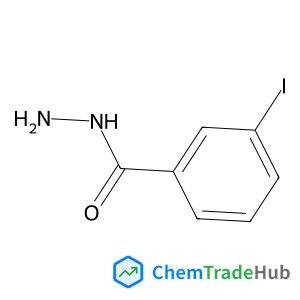
![9H-Fluoren-9-ylmethyl [(2S)-1-hydroxy-3-(1H-indol-3-yl)-2-propanyl]carbamate structure](https://static.chemtradehub.com/structs/153/153815-60-2-a67d.webp "9H-Fluoren-9-ylmethyl [(2S)-1-hydroxy-3-(1H-indol-3-yl)-2-propanyl]carbamate structure")