












Muon spin spectroscopy of the discotic liquid crystal HAT6
文献情報
出版日
2010-06-09
DOI
10.1039/C004161K
インパクトファクター
3.676
著者
Iain McKenzie, Andrew N. Cammidge, Herbert Dilger, Hemant Gopee, Robert Scheuermann, Alexey Stoykov, Upali A. Jayasooriya
原文を見る
要旨
Avoided level crossing muon spin resonance (ALC-μSR) has been used to study the cyclohexadienyl-type radicals produced by the addition of muonium (Mu) to the discotic liquid crystal HAT6 (2,3,6,7,10,11-hexahexyloxytriphenylene) in the crystalline (Cr) phase, the hexagonal columnar mesophase (Colh) and isotropic (I) phase. In the Cr phase unpaired electron spin density can be transferred from the radical to neighboring HAT6 molecules depending on the overlap of their π-systems and hence on the relative orientation of the triphenylene rings. The two Δ1 resonances in the ALC-μSR spectra of the Cr phase indicate that the neighboring HAT6 molecules have two preferred orientations with respect to the radical: one which results in negligible spin density transfer and a second where 17% of the unpaired spin density is transferred. The ALC-μSR spectra in Colh and I phases are substantially different from those of the Cr phase in that there are two narrow resonances superimposed on an extremely broad and intense resonance. The narrow resonances are due to highly mobile radicals located in the aliphatic region between the columns and the broad resonance is due to radicals incorporated within the columns of HAT6 molecules. The large width and amplitude of this resonance indicates that the radicals within the columns are undergoing rapid electron spin relaxation but the mechanism that causes this relaxation is unknown.
関連文献
Overall control of the quality consistency of Citri Retriculatae Pericapium by combining HPLC fingerprint, terahertz time-domain spectroscopy and chemometrics
Xinyi Wang, Jiajia Fan, Yong Guo, Lili Lan, Qian Li, Guoxiang Sun
2024-01-10
Paper
DOI: 10.1039/D3NJ04725C
Structural insights into the diverse prenylating capabilities of DMATS prenyltransferases
Evan T. Miller, Oleg V. Tsodikov, Sylvie Garneau-Tsodikova
2023-11-06
Review Article
DOI: 10.1039/D3NP00036B
Chemistry, biosynthesis and biology of floral volatiles: roles in pollination and other functions
Stefan Dötterl, Jonathan Gershenzon
2023-09-04
Review Article
DOI: 10.1039/D3NP00024A
Mechanistic understanding of 3d-metal phthalocyanine catalysts: heterostructure regulation of dz2 orbitals for efficient CO2 reduction
Jiayong Xiao, Hao Dong, Hui Zhang, Haolan Yang, Ming Qiu, Ying Yu
2023-10-24
Paper
DOI: 10.1039/D3TA05834D
Industrial total synthesis of natural medicines
Xiao-Yu Liu, Yong Qin
2023-08-09
Viewpoint
DOI: 10.1039/D3NP00020F
Optical imaging probes for selective detection of butyrylcholinesterase
Musa Dirak, Jefferson Chan, Safacan Kolemen
2024-01-02
Review Article
DOI: 10.1039/D3TB02468G
Halogen-engineered metal–organic frameworks enable high-performance electrochemical glucose sensing
Le Wang, Yong-Shuang Li, Yu Cao
2023-12-16
Paper
DOI: 10.1039/D3NJ05053J
A multimodal PDMS triboelectric nanogenerator sensor based on anodised aluminium oxide template preparation for object recognition
Hongde Zhu, Junlan Liang, Sanlong Wang
2023-10-17
Paper
DOI: 10.1039/D3TA04690G
こちらもおすすめ
化合物よくある質問
2-メトキシ-4-(メチルスルフィニル)アミンの主な用途は何ですか?
2-メトキシ-4-(メチルスルフィニル)アミンは、主に医薬品および農薬の製造に使用されます。また、合成化学の一部として研究用材料としても利用されます。
41608-73-52-Methoxy-4-(methyls...
118684-13-24-(Bromomethyl)-3-me...
化合物よくある質問
4,6-二氯-N-甲基ピラミジンアミンの代替品はありますか?
代替品としては、4,6-二クロロピラミジンアミンや他のピラミジン系化合物が考えられます。ただし、目的と用途によって最適な代替品は異なります。
10397-15-64,6-Dichloro-N-methy...
化合物よくある質問
6-氯-4-甲基-1H-吲哚を含む廃棄物はどのように処理すべきですか?
6-氯-4-甲基-1H-吲哚の廃棄物は、適切な容器に収集し、密閉して保管します。温度は常温、湿度は低く、直射日光を避けて保管することを推奨します。廃棄処理は専門...
885520-84-36-chloro-4-methyl-1H...
化合物よくある質問
2-フローユロ-4-(トリフルオロメチル)ベンゾイドについて「に適用される法規ガイドラインは何ですか」
2-フローユロ-4-(トリフルオロメチル)ベンゾイドのCAS番号は207974-08-1です。この化合物はGHS分類で毒性物質と有害な反応物質として分類されます...
207974-08-1[2-Fluoro-4-(trifluo...
化合物よくある質問
4-ニトロフェニルN-[(ベンゼルオキシルカーボンイル]グリシングリシングリシン酸はどのように保存すればよいですか?
4-ニトロフェニルN-[(ベンゼルオキシルカーボンイル]グリシングリシングリシン酸は、室温で暗所に保管し、乾燥した環境で保存することを推奨します。容器は密閉性の...
19811-64-44-Nitrophenyl N-[(be...
化合物よくある質問
イソデスロラタドリンの代替品はありますか?
イソデスロラタドリンの代替品としては、デスロラタドリンや他の抗ヒスタミン薬が挙げられます。具体的には、デスロラタドリン、ラセカミド、フェルタドリンなどが、症状や...
183198-49-4Iso Desloratadine
化合物よくある質問
5-甲氧基-1,2,3,4-四氢异喹啉盐酸盐はどのように合成されますか?
5-甲氧基-1,2,3,4-四氢异喹啉盐酸盐の一般的な合成方法は、メタノール中で5-メトキシ-1,2,3,4-四ヒュドロイソキシンを塩酸で塩化します。この反応で...
103030-69-95-Methoxy-1,2,3,4-te...
化合物よくある質問
4-アミノ-5-メトキシ-2-トルエンサルホニック酸についての法規ガイドラインは何ですか?
CAS番号6471-78-9の4-アミノ-5-メトキシ-2-トルエンサルホニック酸は、GHS分類では corrosive(腐食性)と識別されます。EUのREAC...
6471-78-94-Amino-5-Methoxy-2-...
化合物よくある質問
甲基孕酮を取り扱う際の実験室安全事項は何ですか?
甲基孕酮の取り扱いは、PPE(個人保護具)の使用が必要な重要な安全事項を伴います。防塵マスク、ゴーグル、手袋を着用することが推奨されます。ドラフトチャンバーを使...
204063-33-22-[(Diphenylmethyl)a...
掲載誌
Physical Chemistry Chemical Physics

CiteScore:
5.5
自己引用率:
10.3%
年間論文数:
3036
Physical Chemistry Chemical Physics (PCCP) is an international journal co-owned by 19 physical chemistry and physics societies from around the world. This journal publishes original, cutting-edge research in physical chemistry, chemical physics and biophysical chemistry. To be suitable for publication in PCCP, articles must include significant innovation and/or insight into physical chemistry; this is the most important criterion that reviewers and Editors will judge against when evaluating submissions. The journal has a broad scope and welcomes contributions spanning experiment, theory, computation and data science. Topical coverage includes spectroscopy, dynamics, kinetics, statistical mechanics, thermodynamics, electrochemistry, catalysis, surface science, quantum mechanics, quantum computing and machine learning. Interdisciplinary research areas such as polymers and soft matter, materials, nanoscience, energy, surfaces/interfaces, and biophysical chemistry are welcomed if they demonstrate significant innovation and/or insight into physical chemistry. Joined experimental/theoretical studies are particularly appreciated when complementary and based on up-to-date approaches.
おすすめ化合物
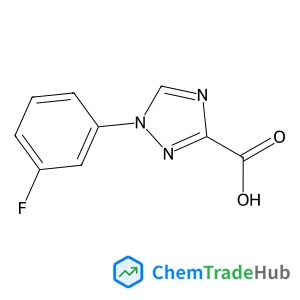

![2-Methyl-2-propanyl {3-[4-(4,4,5,5-tetramethyl-1,3,2-dioxaborolan-2-yl)phenyl]-3-oxetanyl}carbamate structure](https://static.chemtradehub.com/structs/127/1279090-25-3-1b84.webp "2-Methyl-2-propanyl {3-[4-(4,4,5,5-tetramethyl-1,3,2-dioxaborolan-2-yl)phenyl]-3-oxetanyl}carbamate structure")
おすすめサプライヤー



免責事項
このページに表示される学術雑誌情報は、参考および研究目的のみを目的としています。当社は雑誌出版社とは提携しておらず、投稿の取り扱いも行っておりません。出版に関するお問い合わせは、各雑誌出版社に直接ご連絡ください。
表示されている情報に誤りがある場合は、support@chemtradehub.com までご連絡ください。迅速に確認し、対応いたします。