












The halogen bond: an interim perspective
文献情報
出版日
2010-05-21
DOI
10.1039/C002129F
インパクトファクター
3.676
著者
Anthony C. Legon
原文を見る
要旨
There has been an upsurge of interest in the halogen bond during the last decade. This non-covalent interaction is less familiar than the hydrogen bond, but is similar to it in several respects. In this article, we first discuss the nature of the halogen bond in the gas phase, as established by systematic investigations of the rotational spectra of complexes B⋯XY, where B is a simple Lewis base and XY is a dihalogen molecule. The geometry of a given B⋯XY is found to be isomorphic with that of the corresponding hydrogen-bonded system B⋯HX, an observation that leads an interim definition of the halogen bond similar to that recently proposed for the hydrogen bond. Selected novel applications of the halogen bond made in the last decade in various areas of chemistry/materials (namely crystal engineering, liquid crystals, nano-materials, polymer chemistry and inorganic chemistry) are then reviewed. These applications generally involve molecules of the type XR (where R is an electron-withdrawing group) acting as the electron donor, rather than dihalogens XY.
関連文献
Chemistry, biosynthesis and biology of floral volatiles: roles in pollination and other functions
Stefan Dötterl, Jonathan Gershenzon
2023-09-04
Review Article
DOI: 10.1039/D3NP00024A
A low cost Zn2+/I− redox active electrolyte for a high energy and long cycle-life zinc hybrid battery–capacitor
Balamurugan Selvaraj, Balaji Sambandam, Sungjin Kim, Vinod Mathew, Sehong Seo, Moonsu Song, Jaekook Kim
2023-11-01
Paper
DOI: 10.1039/D3TA03912A
Synergy of oxygen vacancies and Bi nanoparticles on BiOBr nanosheets for enhanced photocatalytic H2O2 production
Li Feng, Hanping Fu, Tianxiang Zhang, Qing Zhang, Shufen Ren, Jiayun Cheng, Qingshuang Liang, Xiufeng Xiao
2023-12-25
Paper
DOI: 10.1039/D3NJ03815G
Remarkable thermoelectric efficiency of cubic antiperovskites Rb3X(Se & Te)I with strong anharmonicity
Shuming Zeng, Qian Shen, Lina Guo, Yinchang Zhao, Hao Huang, Yusong Tu
2023-10-16
Paper
DOI: 10.1039/D3TA04338J
Natural products as anthelmintics: safeguarding animal health
Angela A. Salim, Mark S. Butler, Mark A. T. Blaskovich, Ian R. Henderson, Robert J. Capon
2023-08-09
Review Article
DOI: 10.1039/D3NP00019B
Enhancing Li+ transport efficiency in solid-state Li-ion batteries with a ceramic-array-based composite electrolyte
Shu-Ming Yeh, Chia-Chen Li
2023-10-16
Paper
DOI: 10.1039/D3TA05329F
Organophotoredox-catalyzed stereoselective reductive dimerization of chromone-2-carboxylic esters
Tanaya Manna, Subhas Chandra Debnath, Syed Masood Husain
2024-01-09
Communication
DOI: 10.1039/D3NJ05659G
こちらもおすすめ
化合物よくある質問
2-メトキシ-4-(メチルスルフィニル)アミンの主な用途は何ですか?
2-メトキシ-4-(メチルスルフィニル)アミンは、主に医薬品および農薬の製造に使用されます。また、合成化学の一部として研究用材料としても利用されます。
41608-73-52-Methoxy-4-(methyls...
118684-13-24-(Bromomethyl)-3-me...
化合物よくある質問
4,6-二氯-N-甲基ピラミジンアミンの代替品はありますか?
代替品としては、4,6-二クロロピラミジンアミンや他のピラミジン系化合物が考えられます。ただし、目的と用途によって最適な代替品は異なります。
10397-15-64,6-Dichloro-N-methy...
化合物よくある質問
6-氯-4-甲基-1H-吲哚を含む廃棄物はどのように処理すべきですか?
6-氯-4-甲基-1H-吲哚の廃棄物は、適切な容器に収集し、密閉して保管します。温度は常温、湿度は低く、直射日光を避けて保管することを推奨します。廃棄処理は専門...
885520-84-36-chloro-4-methyl-1H...
化合物よくある質問
2-フローユロ-4-(トリフルオロメチル)ベンゾイドについて「に適用される法規ガイドラインは何ですか」
2-フローユロ-4-(トリフルオロメチル)ベンゾイドのCAS番号は207974-08-1です。この化合物はGHS分類で毒性物質と有害な反応物質として分類されます...
207974-08-1[2-Fluoro-4-(trifluo...
化合物よくある質問
4-ニトロフェニルN-[(ベンゼルオキシルカーボンイル]グリシングリシングリシン酸はどのように保存すればよいですか?
4-ニトロフェニルN-[(ベンゼルオキシルカーボンイル]グリシングリシングリシン酸は、室温で暗所に保管し、乾燥した環境で保存することを推奨します。容器は密閉性の...
19811-64-44-Nitrophenyl N-[(be...
化合物よくある質問
イソデスロラタドリンの代替品はありますか?
イソデスロラタドリンの代替品としては、デスロラタドリンや他の抗ヒスタミン薬が挙げられます。具体的には、デスロラタドリン、ラセカミド、フェルタドリンなどが、症状や...
183198-49-4Iso Desloratadine
化合物よくある質問
5-甲氧基-1,2,3,4-四氢异喹啉盐酸盐はどのように合成されますか?
5-甲氧基-1,2,3,4-四氢异喹啉盐酸盐の一般的な合成方法は、メタノール中で5-メトキシ-1,2,3,4-四ヒュドロイソキシンを塩酸で塩化します。この反応で...
103030-69-95-Methoxy-1,2,3,4-te...
化合物よくある質問
4-アミノ-5-メトキシ-2-トルエンサルホニック酸についての法規ガイドラインは何ですか?
CAS番号6471-78-9の4-アミノ-5-メトキシ-2-トルエンサルホニック酸は、GHS分類では corrosive(腐食性)と識別されます。EUのREAC...
6471-78-94-Amino-5-Methoxy-2-...
化合物よくある質問
甲基孕酮を取り扱う際の実験室安全事項は何ですか?
甲基孕酮の取り扱いは、PPE(個人保護具)の使用が必要な重要な安全事項を伴います。防塵マスク、ゴーグル、手袋を着用することが推奨されます。ドラフトチャンバーを使...
204063-33-22-[(Diphenylmethyl)a...
掲載誌
Physical Chemistry Chemical Physics

CiteScore:
5.5
自己引用率:
10.3%
年間論文数:
3036
Physical Chemistry Chemical Physics (PCCP) is an international journal co-owned by 19 physical chemistry and physics societies from around the world. This journal publishes original, cutting-edge research in physical chemistry, chemical physics and biophysical chemistry. To be suitable for publication in PCCP, articles must include significant innovation and/or insight into physical chemistry; this is the most important criterion that reviewers and Editors will judge against when evaluating submissions. The journal has a broad scope and welcomes contributions spanning experiment, theory, computation and data science. Topical coverage includes spectroscopy, dynamics, kinetics, statistical mechanics, thermodynamics, electrochemistry, catalysis, surface science, quantum mechanics, quantum computing and machine learning. Interdisciplinary research areas such as polymers and soft matter, materials, nanoscience, energy, surfaces/interfaces, and biophysical chemistry are welcomed if they demonstrate significant innovation and/or insight into physical chemistry. Joined experimental/theoretical studies are particularly appreciated when complementary and based on up-to-date approaches.
おすすめ化合物

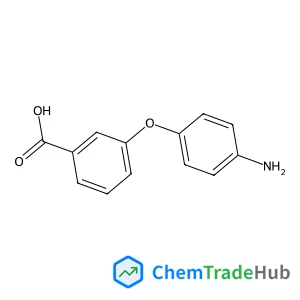
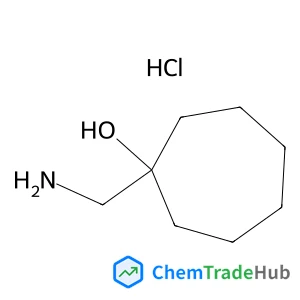

おすすめサプライヤー






免責事項
このページに表示される学術雑誌情報は、参考および研究目的のみを目的としています。当社は雑誌出版社とは提携しておらず、投稿の取り扱いも行っておりません。出版に関するお問い合わせは、各雑誌出版社に直接ご連絡ください。
表示されている情報に誤りがある場合は、support@chemtradehub.com までご連絡ください。迅速に確認し、対応いたします。