












![Sodium 6-amino-3-[(E)-{4-[(E)-(4-aminophenyl)diazenyl]-2-methoxy-5-methylphenyl}diazenyl]-4-hydroxy-2-naphthalenesulfonate structure](https://static.chemtradehub.com/structs/294/2945-96-2-092f.webp "Sodium 6-amino-3-[(E)-{4-[(E)-(4-aminophenyl)diazenyl]-2-methoxy-5-methylphenyl}diazenyl]-4-hydroxy-2-naphthalenesulfonate structure")
Analysis and improvement of rate constant determination of reactions involving charged reactants
文献情報
出版日
2010-06-08
DOI
10.1039/B927266F
インパクトファクター
3.676
著者
Keith M. Krise, Angela A. Hwang, Bratoljub H. Milosavljevic
原文を見る
要旨
Kinetics of tris(2,2′-bipyridine)ruthenium(II), Ru(bpy)32+, luminescence quenching by copper(II) (in the form of chloride, nitrate, sulfate and perchlorate salt) was studied using pulse laser photolysis technique. The pseudo-first order rate constant versus quencher concentration plots obtained were found to be nonlinear, bending upward. The ionic strength effect contribution was evaluated by applying the Debye–Hückel extended law and was found to be as important as other effects such as cation-counter anion complex and ion-pairing complex formation which were all found to be dependent on the counter anion. It is shown that the slope of the tangent line to the pseudo-first order curve at zero quencher concentration is equal to the quenching rate constants at zero ionic strength. Also, this value corresponds to quenching solely by Cu2+ and is free from contributions from other species that are present at higher concentrations. This method produced a value, (1.6 ± 0.2) × 107 M−1 s−1, (lower than previously published ones) which is in agreement with the quenching rate constant measurement analysis presented. Comparison between Stern–Volmer plots obtained using steady-state fluorimetry data and laser photolysis data showed that in 50 mM CuCl2 and CuSO4 aqueous solutions about 5% of Ru(bpy)32+ is in the form of ion-pairing complexes. Our method was also applied to quenching by another divalent cation, methyl viologen, where it was found that charge transfer complexation effect contribution was about 50% of that of ionic strength effect, while ion-pairing complexation was not significant in the concentration range used. The quenching rate constant at zero ionic strength was found to be (2.3 ± 0.2) × 108 M−1 s−1. The method proposed is also applicable to pulse radiolysis and stopped flow measurements.
関連文献
Fundamental aspects in surface self-assembly: theoretical implications of molecular polarity and shape
Emilian Tuca, Irina Paci
2016-02-03
Paper
DOI: 10.1039/C5CP04479K
Soft X-ray absorption spectroscopy of Ar2 and ArNe dimers and small Ar clusters
Ghazal Jabbari, Tsveta Miteva, Vasili Stumpf, Kirill Gokhberg, Patrick O'Keeffe, Alessandra Ciavardini, Paola Bolognesi, Marcello Coreno, Lorenzo Avaldi, Elham Keshavarz, Maryam Ghandehari, Manijeh Tozihi, Carlo Callegari, Michele Alagia, Antti Kivimäki, Robert Richter
2015-07-22
Paper
DOI: 10.1039/C5CP03276H
A near field optical image of a gold surface: a luminescence study
A. Merlen, J. Plathier, A. Ruediger
2014-12-10
Paper
DOI: 10.1039/C4CP05000B
Strong electron donation induced differential nonradiative decay pathways for para and meta GFP chromophore analogues
Tanmay Chatterjee, Mrinal Mandal, Venkatesh Gude, Partha Pratim Bag, Prasun K. Mandal
2015-06-25
Paper
DOI: 10.1039/C5CP03086B
Unusual Mn coordination and redox chemistry in the high capacity borate cathode Li7Mn(BO3)3
Christopher Eames, Stephen M. Wood, M. Saiful Islam
2015-07-29
Paper
DOI: 10.1039/C5CP02711J
Local environments of boron heteroatoms in non-crystalline layered borosilicates
Mounesha N. Garaga, Ming-Feng Hsieh, Zalfa Nour, Michael Deschamps, Dominique Massiot, Bradley F. Chmelka, Sylvian Cadars
2015-07-15
Paper
DOI: 10.1039/C5CP03448E
Predictions of the physicochemical properties of amino acid side chain analogs using molecular simulation
Alauddin Ahmed, Stanley I. Sandler
2016-01-12
Paper
DOI: 10.1039/C5CP05393E
Tuning the charge state of Ag and Au atoms and clusters deposited on oxide surfaces by doping: a DFT study of the adsorption properties of nitrogen- and niobium-doped TiO2 and ZrO2
Philomena Schlexer, Antonio Ruiz Puigdollers, Gianfranco Pacchioni
2015-07-31
Paper
DOI: 10.1039/C5CP03834K
Direct observation of structural properties and fluorescent trapping sites in macrocyclic porphyrin arrays at the single-molecule level
Sujin Ham, Ji-Eun Lee, Suhwan Song, Xiaobin Peng, Takaaki Hori, Naoki Aratani, Atsuhiro Osuka, Eunji Sim, Dongho Kim
2016-01-08
Paper
DOI: 10.1039/C5CP06859B
こちらもおすすめ
化合物よくある質問
2,5-二羧基氟苯の市場動向や研究トレンドはどうですか?
2,5-二羧基氟苯の市場は、主に医薬品および農薬の研究開発において伸長しています。一方、環境への影響や安全性の懸念から、その使用は一定の制限が置かれています。今...
3906-87-42-Fluoroterephthalic...
化合物よくある質問
8-甲基-2-噻吩-2-基-喹啉-4-羧酸を含む廃棄物はどのように処理すべきですか?
8-甲基-2-噻吩-2-基-喹啉-4-羧酸を含む廃棄物は専門的な廃棄処理が必要です。具体的には、廃棄物は密閉の容器に収集し、適切な危険物対策を講じて専門業者に引...
33289-45-18-Methyl-2-(2-thieny...
933686-24-92,4-Dichloro-6-methy...
917389-32-3Letermovir
化合物よくある質問
2-(1,3-二氧杂烷-2-基)噻唑の物理化学的性質は何ですか?
CAS番号24295-04-3の2-(1,3-二氧杂烷-2-基)噻唑は、結晶形態により白色粉末を呈します。分子量は208.23 g/molであり、水に溶けにくい...
24295-04-32-(1,3-Dioxolan-2-yl...
化合物よくある質問
L-beta-高酪氨酸塩酸塩は安全ですか?
L-beta-高酪氨酸塩酸塩自体は毒性は低く、しかし使用する際は適切な個人保護具を使用し、誤飲や皮膚への接触を避けることが推奨されます。
336182-13-9(3S)-3-Amino-4-(4-hy...
化合物よくある質問
睡茄灯笼草素Cはどのように合成されますか?
睡茄灯笼草素Cは、シクラメンケチャナfromaceaeから抽出する方法や、化学合成法で合成することができます。典型的な化学合成法では、3β,22-二オキシエクス...
81644-34-0(6beta,17alpha,22R)-...
化合物よくある質問
4-(嘧啶-2-基)哌嗪-1-羧酸叔丁酯はどのように保存すればよいですか?
4-(嘧啶-2-基)哌嗪-1-羧酸叔丁酯は直射日光を避けて、室温で保存するのが良いです。湿度を避けて密閉容器に入れて保管し、未使用の状態で長期保存することができ...
780705-64-82-Methyl-2-propanyl ...
化合物よくある質問
NBI-74330の主な用途は何ですか?
NBI-74330は主に薬理学研究および医療用途に使用されています。その主な用途は抗がん作用を有するため、がん治療の研究に使用されています。
855527-92-3N-{(1R)-1-[3-(4-Etho...
化合物よくある質問
6-トリフルオロメチル-2-クロロピリジン-4-ボリリック酸はどのように合成されますか?
6-トリフルオロメチル-2-クロロピリジン-4-ボリリック酸は、6-トリフルオロメチル-2-クロロピリジンとボリルリチウムを触媒なしで反応させることで合成するこ...
1446486-10-7[2-Chloro-6-(trifluo...
掲載誌
Physical Chemistry Chemical Physics

CiteScore:
5.5
自己引用率:
10.3%
年間論文数:
3036
Physical Chemistry Chemical Physics (PCCP) is an international journal co-owned by 19 physical chemistry and physics societies from around the world. This journal publishes original, cutting-edge research in physical chemistry, chemical physics and biophysical chemistry. To be suitable for publication in PCCP, articles must include significant innovation and/or insight into physical chemistry; this is the most important criterion that reviewers and Editors will judge against when evaluating submissions. The journal has a broad scope and welcomes contributions spanning experiment, theory, computation and data science. Topical coverage includes spectroscopy, dynamics, kinetics, statistical mechanics, thermodynamics, electrochemistry, catalysis, surface science, quantum mechanics, quantum computing and machine learning. Interdisciplinary research areas such as polymers and soft matter, materials, nanoscience, energy, surfaces/interfaces, and biophysical chemistry are welcomed if they demonstrate significant innovation and/or insight into physical chemistry. Joined experimental/theoretical studies are particularly appreciated when complementary and based on up-to-date approaches.
おすすめ化合物
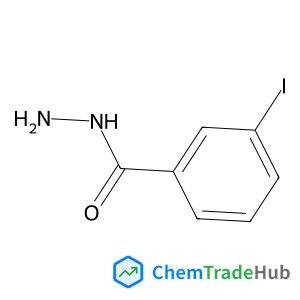
![2-(Methylsulfonyl)-2,4,5,6-tetrahydropyrrolo[3,4-c]pyrazole structure](https://static.chemtradehub.com/structs/122/1226781-80-1-09d5.webp "2-(Methylsulfonyl)-2,4,5,6-tetrahydropyrrolo[3,4-c]pyrazole structure")
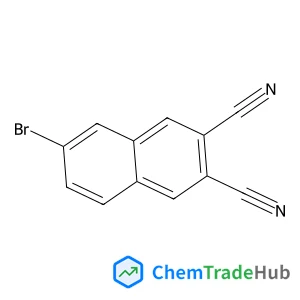
![[2-(Benzyloxy)-3-bromo-5-methylphenyl]boronic acid structure](https://static.chemtradehub.com/structs/870/870777-20-1-24ac.webp "[2-(Benzyloxy)-3-bromo-5-methylphenyl]boronic acid structure")
おすすめサプライヤー





免責事項
このページに表示される学術雑誌情報は、参考および研究目的のみを目的としています。当社は雑誌出版社とは提携しておらず、投稿の取り扱いも行っておりません。出版に関するお問い合わせは、各雑誌出版社に直接ご連絡ください。
表示されている情報に誤りがある場合は、support@chemtradehub.com までご連絡ください。迅速に確認し、対応いたします。