



Tuneable white fluorescence from intramolecular exciplexes
文献情報
出版日
2010-06-07
DOI
10.1039/B927232A
インパクトファクター
3.676
著者
Jerzy Karpiuk, Ewelina Karolak, Jacek Nowacki
原文を見る
要旨
Crystal violet lactone (CVL) in solution displays unusually broad (FWHM > 9100 cm−1) dual fluorescence with the characteristics of white light. The emission combines a blue CT band from a local chromophore with an orange CT band from an intramolecular exciplex formed adiabatically at appropriate medium polarity. The fluorescence spectrum can be controlled by solvent polarity to yield tuneable emission colours in a broad range of coordinates in the CIE chromaticity diagram including the white region. We show that such dual emission is a general property of CVL-like D–A structures built on sp3 carbon atoms. The dependence of excited state energetics on molecular structure allows the prediction of width, shape and other parameters of the dual fluorescence spectrum, and so enables the engineering and customised design of white fluorophores. The photophysics–structure relationship found for CVL and its analogues can be generalized into a novel concept of white light generation by small molecules. These D–A systems are studied as a template basis for design and development of white fluorophores.
おすすめジャーナル

Crystallography Reports

Drug Discovery Today

Current Opinion in Solid State & Materials Science

Organic Process Research & Development

Russian Journal of General Chemistry

Chemistry Education Research and Practice

Acta Materialia

Russian Chemical Bulletin

Russian Journal of Bioorganic Chemistry

Journal of Peptide Science
関連文献
Unconventional stable stoichiometry of vanadium peroxide
Xin Du, Jing Zhang, Hong Yu, Jianyan Lin, Shoutao Zhang, Guochun Yang
2020-04-28
Paper
DOI: 10.1039/D0CP01337D
Probing the dynamics and structure of confined benzene in MCM-41 based catalysts
A. J. O'Malley, Marta Falkowska, Sarayute Chansai, Ian P. Silverwood
2020-05-11
Paper
DOI: 10.1039/D0CP01196G
Direct magnetic-field dependence of NMR chemical shift
Anu M. Kantola, Perttu Lantto, Ivo Heinmaa, Juha Vaara, Jukka Jokisaari
2020-04-06
Paper
DOI: 10.1039/D0CP01372B
Discovery of stable and intrinsic antiferromagnetic iron oxyhalide monolayers
2020-04-20
Paper
DOI: 10.1039/D0CP01767A
Electron paramagnetic resonance study of ferroelectric phase transition and dynamic effects in a Mn2+ doped [NH4][Zn(HCOO)3] hybrid formate framework
Marius Navickas, Laisvydas Giriūnas, Vidmantas Kalendra, Timur Biktagirov, Uwe Gerstmann, Wolf Gero Schmidt, Mirosław Mączka, Andreas Pöppl, Jūras Banys, Mantas Šimėnas
2020-04-08
Paper
DOI: 10.1039/D0CP01612H
Kinetics of the benzyl + HO2 and benzoxyl + OH barrierless association reactions: fate of the benzyl hydroperoxide adduct under combustion and atmospheric conditions
M. Monge-Palacios, Edwing Grajales-González, Goutham Kukkadapu, S. Mani Sarathy
2020-03-30
Paper
DOI: 10.1039/D0CP00752H
The viscosity of dilute carbon nanotube (1D) and graphene oxide (2D) nanofluids
A. Ansón-Casaos, J. C. Ciria, O. Sanahuja-Parejo, S. Víctor-Román, J. M. González-Domínguez, E. García-Bordejé, A. M. Benito, W. K. Maser
2020-04-27
Paper
DOI: 10.1039/D0CP00468E
Electric field modulation in the auxetic effect of BP-analog monolayer As and Sb by first-principles calculations
Ximing Rong, Yu Li, Sun Han, Peijiang Cao, Yuxiang Zeng, Wangying Xu, Ming Fang, Wenjun Liu, Deliang Zhu, Youming Lu
2020-03-25
Paper
DOI: 10.1039/C9CP06933J
こちらもおすすめ
化合物よくある質問
2-メトキシ-4-(メチルスルフィニル)アミンの主な用途は何ですか?
2-メトキシ-4-(メチルスルフィニル)アミンは、主に医薬品および農薬の製造に使用されます。また、合成化学の一部として研究用材料としても利用されます。
41608-73-52-Methoxy-4-(methyls...
118684-13-24-(Bromomethyl)-3-me...
化合物よくある質問
4,6-二氯-N-甲基ピラミジンアミンの代替品はありますか?
代替品としては、4,6-二クロロピラミジンアミンや他のピラミジン系化合物が考えられます。ただし、目的と用途によって最適な代替品は異なります。
10397-15-64,6-Dichloro-N-methy...
化合物よくある質問
6-氯-4-甲基-1H-吲哚を含む廃棄物はどのように処理すべきですか?
6-氯-4-甲基-1H-吲哚の廃棄物は、適切な容器に収集し、密閉して保管します。温度は常温、湿度は低く、直射日光を避けて保管することを推奨します。廃棄処理は専門...
885520-84-36-chloro-4-methyl-1H...
化合物よくある質問
2-フローユロ-4-(トリフルオロメチル)ベンゾイドについて「に適用される法規ガイドラインは何ですか」
2-フローユロ-4-(トリフルオロメチル)ベンゾイドのCAS番号は207974-08-1です。この化合物はGHS分類で毒性物質と有害な反応物質として分類されます...
207974-08-1[2-Fluoro-4-(trifluo...
化合物よくある質問
4-ニトロフェニルN-[(ベンゼルオキシルカーボンイル]グリシングリシングリシン酸はどのように保存すればよいですか?
4-ニトロフェニルN-[(ベンゼルオキシルカーボンイル]グリシングリシングリシン酸は、室温で暗所に保管し、乾燥した環境で保存することを推奨します。容器は密閉性の...
19811-64-44-Nitrophenyl N-[(be...
化合物よくある質問
イソデスロラタドリンの代替品はありますか?
イソデスロラタドリンの代替品としては、デスロラタドリンや他の抗ヒスタミン薬が挙げられます。具体的には、デスロラタドリン、ラセカミド、フェルタドリンなどが、症状や...
183198-49-4Iso Desloratadine
化合物よくある質問
5-甲氧基-1,2,3,4-四氢异喹啉盐酸盐はどのように合成されますか?
5-甲氧基-1,2,3,4-四氢异喹啉盐酸盐の一般的な合成方法は、メタノール中で5-メトキシ-1,2,3,4-四ヒュドロイソキシンを塩酸で塩化します。この反応で...
103030-69-95-Methoxy-1,2,3,4-te...
化合物よくある質問
4-アミノ-5-メトキシ-2-トルエンサルホニック酸についての法規ガイドラインは何ですか?
CAS番号6471-78-9の4-アミノ-5-メトキシ-2-トルエンサルホニック酸は、GHS分類では corrosive(腐食性)と識別されます。EUのREAC...
6471-78-94-Amino-5-Methoxy-2-...
化合物よくある質問
甲基孕酮を取り扱う際の実験室安全事項は何ですか?
甲基孕酮の取り扱いは、PPE(個人保護具)の使用が必要な重要な安全事項を伴います。防塵マスク、ゴーグル、手袋を着用することが推奨されます。ドラフトチャンバーを使...
204063-33-22-[(Diphenylmethyl)a...
掲載誌
Physical Chemistry Chemical Physics

CiteScore:
5.5
自己引用率:
10.3%
年間論文数:
3036
Physical Chemistry Chemical Physics (PCCP) is an international journal co-owned by 19 physical chemistry and physics societies from around the world. This journal publishes original, cutting-edge research in physical chemistry, chemical physics and biophysical chemistry. To be suitable for publication in PCCP, articles must include significant innovation and/or insight into physical chemistry; this is the most important criterion that reviewers and Editors will judge against when evaluating submissions. The journal has a broad scope and welcomes contributions spanning experiment, theory, computation and data science. Topical coverage includes spectroscopy, dynamics, kinetics, statistical mechanics, thermodynamics, electrochemistry, catalysis, surface science, quantum mechanics, quantum computing and machine learning. Interdisciplinary research areas such as polymers and soft matter, materials, nanoscience, energy, surfaces/interfaces, and biophysical chemistry are welcomed if they demonstrate significant innovation and/or insight into physical chemistry. Joined experimental/theoretical studies are particularly appreciated when complementary and based on up-to-date approaches.
おすすめ化合物
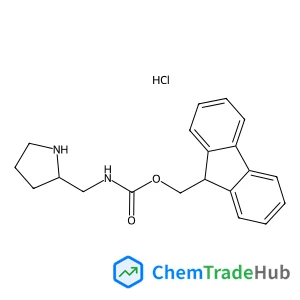
(S)-(9H-Fluoren-9-yl)methyl (pyrrolidin-2-ylmethyl)carbamate hydrochloride
CAS番号:
1217813-15-4
分子式:
C20H23ClN2O2
おすすめサプライヤー




免責事項
このページに表示される学術雑誌情報は、参考および研究目的のみを目的としています。当社は雑誌出版社とは提携しておらず、投稿の取り扱いも行っておりません。出版に関するお問い合わせは、各雑誌出版社に直接ご連絡ください。
表示されている情報に誤りがある場合は、support@chemtradehub.com までご連絡ください。迅速に確認し、対応いたします。