












Chiral oxorhenium(v) complexes as candidates for the experimental observation of molecular parity violation: a structural, synthetic and theoretical study
文献情報
出版日
2010-06-07
DOI
10.1039/B925050F
インパクトファクター
3.676
著者
Frederic De Montigny, Radovan Bast, Andre Severo Pereira Gomes, Guillaume Pilet, Nicolas Vanthuyne, Christian Roussel, Laure Guy, Peter Schwerdtfeger, Trond Saue, Jeanne Crassous
原文を見る
要旨
We report the synthesis and resolution of a series of new chiral “3 + 1” oxorhenium(V) complexes, designed for high-resolution laser spectroscopy experiments probing molecular parity-violation (PV) effects in the ReO stretching mode frequency. These complexes display a particularly simple chemical structure, with the rhenium atom as the stereogenic center, and show large PV energy differences according to our calculations. They were obtained in the racemic and enantioenriched forms, in the latter case by using either semi-preparative chiral HPLC resolution or enantioselective synthesis. The vibrational transition frequency differences between the enantiomeric pairs due to PV have been calculated with two- and four-component relativistic Hamiltonians using Hartree–Fock (HF) and density functional theory (DFT). For three complexes, including one synthesized in enantioenriched form, our HF calculations predict frequency differences above the present resolution limit of 1 Hz. These results confirm the order of magnitude for the calculated HF PV vibrational frequency differences reported earlier for this class of compounds [P. Schwerdtfeger and R. Bast, J. Am. Chem. Soc., 2004, 126, 1652]. However, at the DFT level the PV vibrational frequency differences are in some cases reduced by an order of magnitude, but are still within the sensitivity of 0.01 Hz, which is the anticipated sensitivity in a new proposed experiment. We therefore believe that the present study represents an important step towards the experimental observation of PV in molecular systems, and emphasizes the extreme sensitivity of the PV vibrational frequency difference to the chemical environment around the rhenium center.
関連文献
Shape-dependent two-photon absorption in two-dimensionally extended benzoporphyrin arrays
Pyosang Kim, Sujin Ham, Juwon Oh, Hiroki Uoyama, Hajime Watanabe, Kazunari Tagawa, Hidemitsu Uno, Dongho Kim
2013-04-04
Communication
DOI: 10.1039/C3CP50166C
Glassy dynamics of sorbitol solutions at terahertz frequencies
Juraj Sibik, Evgenyi Y. Shalaev, J. Axel Zeitler
2013-05-31
Paper
DOI: 10.1039/C3CP51936H
Marine natural products from the deep Pacific as potential non-linear optical chromophores
Bruce F. Milne, Patrick Norman, Fernando Nogueira, Cláudia Cardoso
2013-07-24
Paper
DOI: 10.1039/C3CP52528G
Double-hybrid density functionals: merging wavefunction and density approaches to get the best of both worlds
2013-06-18
Perspective
DOI: 10.1039/C3CP50907A
Binding energy determination in a π-stacked aromatic cluster: the anisole dimer
2013-05-02
Paper
DOI: 10.1039/C3CP50191D
Miniaturized biological and electrochemical fuel cells: challenges and applications
Jie Yang, Sasan Ghobadian, Payton J. Goodrich, Reza Montazami, Nastaran Hashemi
2013-02-26
Perspective
DOI: 10.1039/C3CP50804H
QM/MM surface-hopping dynamics of a bridged azobenzene derivative
2013-07-08
Paper
DOI: 10.1039/C3CP50606A
Evidence of confinement of the π plasmon in periodically rippled graphene on Ru(0001)
Antonio Politano, Davide Campi
2013-05-14
Paper
DOI: 10.1039/C3CP51954F
Multidimensional local mode calculations for the vibrational spectra of OH−(H2O)2 and OH−(H2O)2·Ar
Masato Morita, Kaito Takahashi
2013-07-01
Paper
DOI: 10.1039/C3CP51903A
Chemically synthesised atomically precise gold clusters deposited and activated on titania. Part II
David P. Anderson, Jason F. Alvino, Oliver Shipper, Baira Donoeva, Jan-Yves Ruzicka, Hassan Al Qahtani, Hugh H. Harris, Bruce Cowie, Jade B. Aitken, Vladimir B. Golovko, Gregory F. Metha, Gunther G. Andersson
2013-07-24
Paper
DOI: 10.1039/C3CP52497C
こちらもおすすめ
化合物よくある質問
2-メトキシ-4-(メチルスルフィニル)アミンの主な用途は何ですか?
2-メトキシ-4-(メチルスルフィニル)アミンは、主に医薬品および農薬の製造に使用されます。また、合成化学の一部として研究用材料としても利用されます。
41608-73-52-Methoxy-4-(methyls...
118684-13-24-(Bromomethyl)-3-me...
化合物よくある質問
4,6-二氯-N-甲基ピラミジンアミンの代替品はありますか?
代替品としては、4,6-二クロロピラミジンアミンや他のピラミジン系化合物が考えられます。ただし、目的と用途によって最適な代替品は異なります。
10397-15-64,6-Dichloro-N-methy...
化合物よくある質問
6-氯-4-甲基-1H-吲哚を含む廃棄物はどのように処理すべきですか?
6-氯-4-甲基-1H-吲哚の廃棄物は、適切な容器に収集し、密閉して保管します。温度は常温、湿度は低く、直射日光を避けて保管することを推奨します。廃棄処理は専門...
885520-84-36-chloro-4-methyl-1H...
化合物よくある質問
2-フローユロ-4-(トリフルオロメチル)ベンゾイドについて「に適用される法規ガイドラインは何ですか」
2-フローユロ-4-(トリフルオロメチル)ベンゾイドのCAS番号は207974-08-1です。この化合物はGHS分類で毒性物質と有害な反応物質として分類されます...
207974-08-1[2-Fluoro-4-(trifluo...
化合物よくある質問
4-ニトロフェニルN-[(ベンゼルオキシルカーボンイル]グリシングリシングリシン酸はどのように保存すればよいですか?
4-ニトロフェニルN-[(ベンゼルオキシルカーボンイル]グリシングリシングリシン酸は、室温で暗所に保管し、乾燥した環境で保存することを推奨します。容器は密閉性の...
19811-64-44-Nitrophenyl N-[(be...
化合物よくある質問
イソデスロラタドリンの代替品はありますか?
イソデスロラタドリンの代替品としては、デスロラタドリンや他の抗ヒスタミン薬が挙げられます。具体的には、デスロラタドリン、ラセカミド、フェルタドリンなどが、症状や...
183198-49-4Iso Desloratadine
化合物よくある質問
5-甲氧基-1,2,3,4-四氢异喹啉盐酸盐はどのように合成されますか?
5-甲氧基-1,2,3,4-四氢异喹啉盐酸盐の一般的な合成方法は、メタノール中で5-メトキシ-1,2,3,4-四ヒュドロイソキシンを塩酸で塩化します。この反応で...
103030-69-95-Methoxy-1,2,3,4-te...
化合物よくある質問
4-アミノ-5-メトキシ-2-トルエンサルホニック酸についての法規ガイドラインは何ですか?
CAS番号6471-78-9の4-アミノ-5-メトキシ-2-トルエンサルホニック酸は、GHS分類では corrosive(腐食性)と識別されます。EUのREAC...
6471-78-94-Amino-5-Methoxy-2-...
化合物よくある質問
甲基孕酮を取り扱う際の実験室安全事項は何ですか?
甲基孕酮の取り扱いは、PPE(個人保護具)の使用が必要な重要な安全事項を伴います。防塵マスク、ゴーグル、手袋を着用することが推奨されます。ドラフトチャンバーを使...
204063-33-22-[(Diphenylmethyl)a...
掲載誌
Physical Chemistry Chemical Physics

CiteScore:
5.5
自己引用率:
10.3%
年間論文数:
3036
Physical Chemistry Chemical Physics (PCCP) is an international journal co-owned by 19 physical chemistry and physics societies from around the world. This journal publishes original, cutting-edge research in physical chemistry, chemical physics and biophysical chemistry. To be suitable for publication in PCCP, articles must include significant innovation and/or insight into physical chemistry; this is the most important criterion that reviewers and Editors will judge against when evaluating submissions. The journal has a broad scope and welcomes contributions spanning experiment, theory, computation and data science. Topical coverage includes spectroscopy, dynamics, kinetics, statistical mechanics, thermodynamics, electrochemistry, catalysis, surface science, quantum mechanics, quantum computing and machine learning. Interdisciplinary research areas such as polymers and soft matter, materials, nanoscience, energy, surfaces/interfaces, and biophysical chemistry are welcomed if they demonstrate significant innovation and/or insight into physical chemistry. Joined experimental/theoretical studies are particularly appreciated when complementary and based on up-to-date approaches.
おすすめ化合物
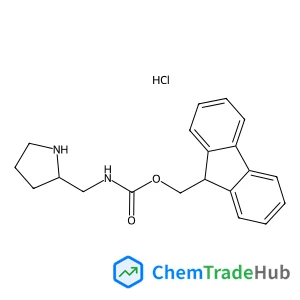
(S)-(9H-Fluoren-9-yl)methyl (pyrrolidin-2-ylmethyl)carbamate hydrochloride
CAS番号:
1217813-15-4
分子式:
C20H23ClN2O2
![[(5-Methyl-1,3,4-thiadiazol-2-yl)sulfanyl]acetic acid structure](https://static.chemtradehub.com/structs/509/50918-26-8-4ce8.webp "[(5-Methyl-1,3,4-thiadiazol-2-yl)sulfanyl]acetic acid structure")
おすすめサプライヤー





免責事項
このページに表示される学術雑誌情報は、参考および研究目的のみを目的としています。当社は雑誌出版社とは提携しておらず、投稿の取り扱いも行っておりません。出版に関するお問い合わせは、各雑誌出版社に直接ご連絡ください。
表示されている情報に誤りがある場合は、support@chemtradehub.com までご連絡ください。迅速に確認し、対応いたします。