












![[5-fluoro-2-(morpholine-4-carbonyl)phenyl]boronic acid structure](https://static.chemtradehub.com/structs/121/1217501-26-2-505c.webp "[5-fluoro-2-(morpholine-4-carbonyl)phenyl]boronic acid structure")
Shell and ligand-dependent blinking of CdSe-based core/shell nanocrystals
文献情報
出版日
2010-07-07
DOI
10.1039/B924917F
インパクトファクター
3.676
著者
Bonghwan Chon, Sung Jun Lim, Wonjung Kim, Jongcheol Seo, Hyeonggon Kang, Taiha Joo, Jeeseong Hwang, Seung Koo Shin
原文を見る
要旨
Blinking of zinc blende CdSe-based core/shell nanocrystals is studied as a function of shell materials and surface ligands. CdSe/ZnS, CdSe/ZnSe/ZnS and CdSe/CdS/ZnS core/shell nanocrystals are prepared by colloidal synthesis and six monolayers of larger bandgap shell materials are grown over the CdSe core. Organic-soluble nanocrystals covered with stearate are made water-soluble by ligand exchange with 3-mercaptopropionic acid. The light-emitting states of nanocrystals are characterized by absorption and emission spectroscopy as well as photoluminescence lifetime measurements in solution. The blinking time trace is recorded for single nanocrystals on a glass coverslip. Both on- and off-time distributions are fitted to the power law. The power-law exponents vary, depending on shell materials and surface ligands. The off-time exponents for organic and water-soluble nanocrystals are measured in the range of 1.36–1.55 and 1.25–1.37, respectively, while their on-time exponents are spread in the range of 1.53–1.86 and 1.85–2.17, respectively. Water-soluble surface passivation with thiolate prolongs the dark period regardless of shell materials and core/shell structures. Of the core/shell structures, CdSe/CdS/ZnS exhibits the longest bright state. The on/off-time exponents are inversely correlated, although the successive on/off events are not individually correlated. A two competing charge-tunneling model is presented to describe the variation of on- and off-time exponents with shell materials and surface ligands.
関連文献
Simple and quick chemical aminoacylation of tRNA in cationic micellar solution under ultrasonic agitation
Naoto Hashimoto, Keiko Ninomiya, Takamasa Endo, Masahiko Sisido
2005-08-09
Communication
DOI: 10.1039/B508194G
Enclathration of morpholinium cations by Dianin's compound: salt formation by partial host-to-guest proton transfer
Gareth O. Lloyd, Martin W. Bredenkamp, Leonard J. Barbour
2005-07-13
Communication
DOI: 10.1039/B507726E
PNA C–C+i-motif: superior stability of PNA TC8 tetraplexes compared to DNA TC8 tetraplexes at low pH
Nagendra K. Sharma, Krishna N. Ganesh
2005-07-13
Communication
DOI: 10.1039/B506870C
Shape-dependent magnetic properties of low-dimensional nanoscale Prussian blue (PB) analogue SmFe(CN)6·4H2O
Hao-Ling Sun, Hongtao Shi, Fei Zhao, Limin Qi, Song Gao
2005-07-28
Communication
DOI: 10.1039/B507240A
Demethylation of the [Me3Sn(PhN2O2)]4 tetramer into dimeric [Me2Sn(PhN2O2)2]2: a thermally induced methyl-transfer between supramolecules‡
Andrea Deák, Gábor Tárkányi
2005-07-15
Communication
DOI: 10.1039/B506728F
Dynamic helicity inversion in an octahedral cobalt(ii) complex system via solvato-diastereomerism
Hiroyuki Miyake, Hideki Sugimoto, Hitoshi Tamiaki, Hiroshi Tsukube
2005-08-02
Communication
DOI: 10.1039/B506130J
Comb-shaped poly(ethylene glycol)-modified subtilisin Carlsberg is soluble and highly active in ionic liquids
Kazunori Nakashima, Tatsuo Maruyama, Noriho Kamiya, Masahiro Goto
2005-08-02
Communication
DOI: 10.1039/B505479F
Enantioselective allylation of ketones catalyzed by chiral In(iii)-PYBOX complexes
Mei-Ling Hong, Shun-Jun Ji, Yong-Chua Teo
2005-07-25
Communication
DOI: 10.1039/B507768K
Gold supported on a mesoporous CeO2matrix as an efficient catalyst in the selective aerobic oxidation of aldehydes in the liquid phase
Avelino Corma, Marcelo E. Domine
2005-07-19
Communication
DOI: 10.1039/B506685A
こちらもおすすめ
化合物よくある質問
2-メトキシ-4-(メチルスルフィニル)アミンの主な用途は何ですか?
2-メトキシ-4-(メチルスルフィニル)アミンは、主に医薬品および農薬の製造に使用されます。また、合成化学の一部として研究用材料としても利用されます。
41608-73-52-Methoxy-4-(methyls...
118684-13-24-(Bromomethyl)-3-me...
化合物よくある質問
4,6-二氯-N-甲基ピラミジンアミンの代替品はありますか?
代替品としては、4,6-二クロロピラミジンアミンや他のピラミジン系化合物が考えられます。ただし、目的と用途によって最適な代替品は異なります。
10397-15-64,6-Dichloro-N-methy...
化合物よくある質問
6-氯-4-甲基-1H-吲哚を含む廃棄物はどのように処理すべきですか?
6-氯-4-甲基-1H-吲哚の廃棄物は、適切な容器に収集し、密閉して保管します。温度は常温、湿度は低く、直射日光を避けて保管することを推奨します。廃棄処理は専門...
885520-84-36-chloro-4-methyl-1H...
化合物よくある質問
2-フローユロ-4-(トリフルオロメチル)ベンゾイドについて「に適用される法規ガイドラインは何ですか」
2-フローユロ-4-(トリフルオロメチル)ベンゾイドのCAS番号は207974-08-1です。この化合物はGHS分類で毒性物質と有害な反応物質として分類されます...
207974-08-1[2-Fluoro-4-(trifluo...
化合物よくある質問
4-ニトロフェニルN-[(ベンゼルオキシルカーボンイル]グリシングリシングリシン酸はどのように保存すればよいですか?
4-ニトロフェニルN-[(ベンゼルオキシルカーボンイル]グリシングリシングリシン酸は、室温で暗所に保管し、乾燥した環境で保存することを推奨します。容器は密閉性の...
19811-64-44-Nitrophenyl N-[(be...
化合物よくある質問
イソデスロラタドリンの代替品はありますか?
イソデスロラタドリンの代替品としては、デスロラタドリンや他の抗ヒスタミン薬が挙げられます。具体的には、デスロラタドリン、ラセカミド、フェルタドリンなどが、症状や...
183198-49-4Iso Desloratadine
化合物よくある質問
5-甲氧基-1,2,3,4-四氢异喹啉盐酸盐はどのように合成されますか?
5-甲氧基-1,2,3,4-四氢异喹啉盐酸盐の一般的な合成方法は、メタノール中で5-メトキシ-1,2,3,4-四ヒュドロイソキシンを塩酸で塩化します。この反応で...
103030-69-95-Methoxy-1,2,3,4-te...
化合物よくある質問
4-アミノ-5-メトキシ-2-トルエンサルホニック酸についての法規ガイドラインは何ですか?
CAS番号6471-78-9の4-アミノ-5-メトキシ-2-トルエンサルホニック酸は、GHS分類では corrosive(腐食性)と識別されます。EUのREAC...
6471-78-94-Amino-5-Methoxy-2-...
化合物よくある質問
甲基孕酮を取り扱う際の実験室安全事項は何ですか?
甲基孕酮の取り扱いは、PPE(個人保護具)の使用が必要な重要な安全事項を伴います。防塵マスク、ゴーグル、手袋を着用することが推奨されます。ドラフトチャンバーを使...
204063-33-22-[(Diphenylmethyl)a...
掲載誌
Physical Chemistry Chemical Physics

CiteScore:
5.5
自己引用率:
10.3%
年間論文数:
3036
Physical Chemistry Chemical Physics (PCCP) is an international journal co-owned by 19 physical chemistry and physics societies from around the world. This journal publishes original, cutting-edge research in physical chemistry, chemical physics and biophysical chemistry. To be suitable for publication in PCCP, articles must include significant innovation and/or insight into physical chemistry; this is the most important criterion that reviewers and Editors will judge against when evaluating submissions. The journal has a broad scope and welcomes contributions spanning experiment, theory, computation and data science. Topical coverage includes spectroscopy, dynamics, kinetics, statistical mechanics, thermodynamics, electrochemistry, catalysis, surface science, quantum mechanics, quantum computing and machine learning. Interdisciplinary research areas such as polymers and soft matter, materials, nanoscience, energy, surfaces/interfaces, and biophysical chemistry are welcomed if they demonstrate significant innovation and/or insight into physical chemistry. Joined experimental/theoretical studies are particularly appreciated when complementary and based on up-to-date approaches.
おすすめ化合物
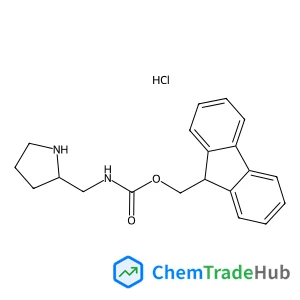
(S)-(9H-Fluoren-9-yl)methyl (pyrrolidin-2-ylmethyl)carbamate hydrochloride
CAS番号:
1217813-15-4
分子式:
C20H23ClN2O2
![[(5-Methyl-1,3,4-thiadiazol-2-yl)sulfanyl]acetic acid structure](https://static.chemtradehub.com/structs/509/50918-26-8-4ce8.webp "[(5-Methyl-1,3,4-thiadiazol-2-yl)sulfanyl]acetic acid structure")
おすすめサプライヤー





免責事項
このページに表示される学術雑誌情報は、参考および研究目的のみを目的としています。当社は雑誌出版社とは提携しておらず、投稿の取り扱いも行っておりません。出版に関するお問い合わせは、各雑誌出版社に直接ご連絡ください。
表示されている情報に誤りがある場合は、support@chemtradehub.com までご連絡ください。迅速に確認し、対応いたします。