












![2-(7,7-Difluorobicyclo[4.1.0]hept-1-yl)ethanamine structure](https://static.chemtradehub.com/structs/209/2098065-08-6-ff24.webp "2-(7,7-Difluorobicyclo[4.1.0]hept-1-yl)ethanamine structure")
The thermodynamics of protein folding: a critique of widely used quasi-thermodynamic interpretations and a restatement based on the Gibbs–Duhem relation and consistent with the Phase Rule
文献情報
出版日
2010-05-17
DOI
10.1039/B920960C
インパクトファクター
3.676
著者
Brian A. Pethica
原文を見る
要旨
Interpretations of data in the extensive literature on the unfolding of proteins in aqueous solution follow a variety of methods involving assumptions leading to estimates of thermodynamic quantities associated with the unfolding transition. Inconsistencies and thermodynamic errors in these methods are identified. Estimates of standard molar free energies and enthalpies of unfolding using incompletely defined equilibrium constants and the van't Hoff relation are unsound, and typically contradict model-free interpretation of the data. A widely used routine for estimating the change in heat capacity associated with unfolding based on changes in the unfolding temperature and enthalpy co-induced by addition of denaturant or protective additives is thermodynamically incorrect by neglect of the Phase Rule. Many models and simulations predicting thermodynamic measures of unfolding are presently making comparisons with insecure quantities derived by incorrect thermodynamic analyses of experimental data. Analysis of unfolding via the Gibbs–Duhem equation with the correct Phase Rule constraints avoids the assumptions associated with incomplete equilibrium constants and misuse of the van't Hoff relation, and applies equally to positive, negative, sitewise or diffuse solute binding to the protein. The method gives the necessary relations between the thermodynamic parameters for thermal and isothermal unfolding and is developed for the case of two-state unfolding. The differences in binding of denaturants or stabilizers to the folded and unfolded forms of the protein are identified as major determinants of the unfolding process. The Phase Rule requires the temperature and enthalpy of unfolding to depend generally on the protein concentration. The available evidence bears out this expectation for thermal unfolding, indicating that protein–protein interactions influence folding. A parallel dependence of the denaturant concentrations for isothermal unfolding on the protein concentration is anticipated. The degree of unfolding as measured by UV, CD, fluorescence and other non-calorimetric methods may not show the same temperature and concentration ranges for unfolding among themselves or as compared to DSC or isothermal calorimetry. Such disparities indicate distinct stages in unfolding detectable by particular methods.
おすすめジャーナル
関連文献
The primary photolysis dynamics of oxalate in aqueous solution: decarboxylation
Jan Thøgersen, Tobias Weidner, Frank Jensen
2021-04-12
Paper
DOI: 10.1039/D1CP00205H
The role of the three body photodissociation channel of water in the evolution of dioxygen in astrophysical applications
Suming An, Kaijun Yuan, Rex T. Skodje
2021-04-06
Paper
DOI: 10.1039/D1CP00565K
Biomimetic CO2 hydration activity of boronic acids
Manju Verma, V. Sai Phani Kumar, Shashi Kumar, Parag A. Deshpande
2021-03-24
Paper
DOI: 10.1039/D0CP06700H
Elucidating the electronic structures of β-Ag2MoO4 and Ag2O nanocrystals via theoretical and experimental approaches towards electrochemical water splitting and CO2 reduction
Afsaneh Zareie-Darmian, Alireza Farrokhi, Reza Sarhaddi, Zhihai Li
2021-03-23
Paper
DOI: 10.1039/D0CP05673A
Canonical and explicitly-correlated coupled cluster correlation energies of sub-kJ mol−1 accuracy via cost-effective hybrid-post-CBS extrapolation
2021-04-07
Paper
DOI: 10.1039/D1CP00357G
Failure of molecular dynamics to provide appropriate structures for quantum mechanical description of the aqueous chloride ion charge-transfer-to-solvent ultraviolet spectrum
Timothy W. Marin, Ireneusz Janik, David M. Bartels, Daniel M. Chipman
2021-03-31
Paper
DOI: 10.1039/D1CP00930C
Nonlinear light absorption in many-electron systems excited by an instantaneous electric field: a non-perturbative approach
Stefano Pittalis, Alice Ruini, Carlo Andrea Rozzi
2021-04-14
Paper
DOI: 10.1039/D0CP04958A
Lifting the lid on the potentiostat: a beginner's guide to understanding electrochemical circuitry and practical operation
Alex W. Colburn, Danny O'Hare, Julie V. Macpherson
2021-03-09
Tutorial Review
DOI: 10.1039/D1CP00661D
Cesium and iodine release from fluoride-based molten salt reactor fuel
O. Beneš, E. Capelli, N. Morelová, J.-Y. Colle, A. Tosolin, T. Wiss, B. Cremer, R. J. M. Konings
2021-04-13
Paper
DOI: 10.1039/D0CP05794K
こちらもおすすめ
化合物よくある質問
2-メトキシ-4-(メチルスルフィニル)アミンの主な用途は何ですか?
2-メトキシ-4-(メチルスルフィニル)アミンは、主に医薬品および農薬の製造に使用されます。また、合成化学の一部として研究用材料としても利用されます。
41608-73-52-Methoxy-4-(methyls...
118684-13-24-(Bromomethyl)-3-me...
化合物よくある質問
4,6-二氯-N-甲基ピラミジンアミンの代替品はありますか?
代替品としては、4,6-二クロロピラミジンアミンや他のピラミジン系化合物が考えられます。ただし、目的と用途によって最適な代替品は異なります。
10397-15-64,6-Dichloro-N-methy...
化合物よくある質問
6-氯-4-甲基-1H-吲哚を含む廃棄物はどのように処理すべきですか?
6-氯-4-甲基-1H-吲哚の廃棄物は、適切な容器に収集し、密閉して保管します。温度は常温、湿度は低く、直射日光を避けて保管することを推奨します。廃棄処理は専門...
885520-84-36-chloro-4-methyl-1H...
化合物よくある質問
2-フローユロ-4-(トリフルオロメチル)ベンゾイドについて「に適用される法規ガイドラインは何ですか」
2-フローユロ-4-(トリフルオロメチル)ベンゾイドのCAS番号は207974-08-1です。この化合物はGHS分類で毒性物質と有害な反応物質として分類されます...
207974-08-1[2-Fluoro-4-(trifluo...
化合物よくある質問
4-ニトロフェニルN-[(ベンゼルオキシルカーボンイル]グリシングリシングリシン酸はどのように保存すればよいですか?
4-ニトロフェニルN-[(ベンゼルオキシルカーボンイル]グリシングリシングリシン酸は、室温で暗所に保管し、乾燥した環境で保存することを推奨します。容器は密閉性の...
19811-64-44-Nitrophenyl N-[(be...
化合物よくある質問
イソデスロラタドリンの代替品はありますか?
イソデスロラタドリンの代替品としては、デスロラタドリンや他の抗ヒスタミン薬が挙げられます。具体的には、デスロラタドリン、ラセカミド、フェルタドリンなどが、症状や...
183198-49-4Iso Desloratadine
化合物よくある質問
5-甲氧基-1,2,3,4-四氢异喹啉盐酸盐はどのように合成されますか?
5-甲氧基-1,2,3,4-四氢异喹啉盐酸盐の一般的な合成方法は、メタノール中で5-メトキシ-1,2,3,4-四ヒュドロイソキシンを塩酸で塩化します。この反応で...
103030-69-95-Methoxy-1,2,3,4-te...
化合物よくある質問
4-アミノ-5-メトキシ-2-トルエンサルホニック酸についての法規ガイドラインは何ですか?
CAS番号6471-78-9の4-アミノ-5-メトキシ-2-トルエンサルホニック酸は、GHS分類では corrosive(腐食性)と識別されます。EUのREAC...
6471-78-94-Amino-5-Methoxy-2-...
化合物よくある質問
甲基孕酮を取り扱う際の実験室安全事項は何ですか?
甲基孕酮の取り扱いは、PPE(個人保護具)の使用が必要な重要な安全事項を伴います。防塵マスク、ゴーグル、手袋を着用することが推奨されます。ドラフトチャンバーを使...
204063-33-22-[(Diphenylmethyl)a...
掲載誌
Physical Chemistry Chemical Physics

CiteScore:
5.5
自己引用率:
10.3%
年間論文数:
3036
Physical Chemistry Chemical Physics (PCCP) is an international journal co-owned by 19 physical chemistry and physics societies from around the world. This journal publishes original, cutting-edge research in physical chemistry, chemical physics and biophysical chemistry. To be suitable for publication in PCCP, articles must include significant innovation and/or insight into physical chemistry; this is the most important criterion that reviewers and Editors will judge against when evaluating submissions. The journal has a broad scope and welcomes contributions spanning experiment, theory, computation and data science. Topical coverage includes spectroscopy, dynamics, kinetics, statistical mechanics, thermodynamics, electrochemistry, catalysis, surface science, quantum mechanics, quantum computing and machine learning. Interdisciplinary research areas such as polymers and soft matter, materials, nanoscience, energy, surfaces/interfaces, and biophysical chemistry are welcomed if they demonstrate significant innovation and/or insight into physical chemistry. Joined experimental/theoretical studies are particularly appreciated when complementary and based on up-to-date approaches.
おすすめ化合物
![4-[(2-{2-[2-(2-Aminoethoxy)ethoxy]ethoxy}ethyl)amino]-2-(2,6-dioxo-3-piperidinyl)-1H-isoindole-1,3(2H)-dione structure](https://static.chemtradehub.com/structs/209/2093416-31-8-3162.webp "4-[(2-{2-[2-(2-Aminoethoxy)ethoxy]ethoxy}ethyl)amino]-2-(2,6-dioxo-3-piperidinyl)-1H-isoindole-1,3(2H)-dione structure")
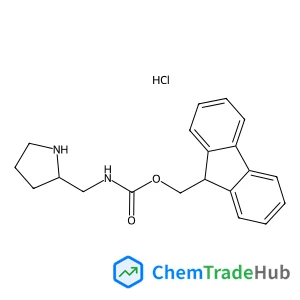
(S)-(9H-Fluoren-9-yl)methyl (pyrrolidin-2-ylmethyl)carbamate hydrochloride
CAS番号:
1217813-15-4
分子式:
C20H23ClN2O2
おすすめサプライヤー




免責事項
このページに表示される学術雑誌情報は、参考および研究目的のみを目的としています。当社は雑誌出版社とは提携しておらず、投稿の取り扱いも行っておりません。出版に関するお問い合わせは、各雑誌出版社に直接ご連絡ください。
表示されている情報に誤りがある場合は、support@chemtradehub.com までご連絡ください。迅速に確認し、対応いたします。