












Endohedral metallofullerenes in self-assembled monolayers
文献情報
出版日
2009-11-11
DOI
10.1039/B915170B
インパクトファクター
3.676
著者
Maria del Carmen Gimenez-Lopez, Jules A. Gardener, Adam Q. Shaw, Agnieszka Iwasiewicz-Wabnig, Kyriakos Porfyrakis, Claire Balmer, Geraldine Dantelle, Maria Hadjipanayi, Alison Crossley, Neil R. Champness, Martin R. Castell, G. Andrew D. Briggs, Andrei N. Khlobystov
原文を見る
要旨
A method has been developed for the attachment of a dithiolane group to endohedral metallofullerenes via a 1,3-dipolar cycloaddition reaction. This sulfur-containing functional group serves as an anchor, enabling efficient immobilisation of endohedral fullerenes on Au(111) surfaces at room temperature, directly from the solution phase. The functionalised fullerenes form disordered monolayers that exhibit no long-range ordering, which is attributed to both the strong bonding of the dithiolane anchor to the surface and to the conformational flexibility of the functional group. Endohedral fullerenes Er3N@C80 and Sc3N@C80 have been used as models for functionalisation and subsequent surface deposition. Their chemical reactivity towards dithiolane functionalisation and their surface behaviour have been compared to that of C60. The endohedral fullerenes appear to be significantly less reactive towards the functionalisation than C60, however they bind in a similar manner to a gold surface as their dithiolane terminated C60 counterparts. The optical activity of Er3N@C80 molecules is preserved after attachment of the functional group. We report a splitting of the endohedral Er3+ emission lines due to the reduction in symmetry of the functionalised fullerene cage, as compared to the highly symmetrical icosahedral C80 cage of pristine Er3N@C80.
関連文献
Unravelling redox processes of Li7MnN4 upon electrochemical Li extraction–insertion using operando XAS
D. Muller-Bouvet, N. Emery, N. Tassali, E. Panabière, C. Cénac-Morthe, A. Michalowicz, J. P. Pereira-Ramos
2017-09-18
Paper
DOI: 10.1039/C7CP05207C
The catalytic effect of H2O on the hydrolysis of CO32− in hydrated clusters and its implication in the humidity driven CO2 air capture
Hang Xiao, Xiaoyang Shi, Xiangbiao Liao, Feng Hao, Klaus S. Lackner
2017-09-15
Paper
DOI: 10.1039/C7CP04218C
Long-lived luminescence of silicon nanocrystals: from principles to applications
Raffaello Mazzaro, Francesco Romano, Paola Ceroni
2017-09-28
Perspective
DOI: 10.1039/C7CP05208A
Distinct oligomerization and fibrillization dynamics of amyloid core sequences of amyloid-beta and islet amyloid polypeptide
Yunxiang Sun, Bo Wang, Xinwei Ge, Feng Ding
2017-10-11
Paper
DOI: 10.1039/C7CP05695H
Divalent ions are potential permeating blockers of the non-selective NaK ion channel: combined QM and MD based investigations
Mahesh Sundararajan
2017-09-21
Paper
DOI: 10.1039/C7CP05586B
Dynamics of the crystal structure of tin-based type-I clathrates with different degrees of disorder in their cationic frameworks
V. V. Novikov, K. S. Pilipenko, A. V. Matovnikov, N. V. Mitroshenkov, B. I. Kornev
2017-09-27
Paper
DOI: 10.1039/C7CP05023B
Light induced oxidation of an indoline derived system triggered spherical aggregates
2017-09-20
Communication
DOI: 10.1039/C7CP04988A
Solid-state dynamics and single-crystal to single-crystal structural transformations in octakis(3-chloropropyl)octasilsesquioxane and octavinyloctasilsesquioxane
A. Kowalewska, M. Nowacka, M. Włodarska, B. Zgardzińska, R. Zaleski, M. Oszajca, J. Krajenta, S. Kaźmierski
2017-09-18
Paper
DOI: 10.1039/C7CP05233B
The duality of UiO-67-Pt MOFs: connecting treatment conditions and encapsulated Pt species by operando XAS
E. Borfecchia, A. Martini, A. V. Soldatov, S. Øien-Ødegaard, B. T. Lønstad-Bleken, U. Olsbye, K. P. Lillerud, M. Manzoli
2017-09-18
Paper
DOI: 10.1039/C7CP05185A
Controlled direct electron transfer kinetics of fructose dehydrogenase at cup-stacked carbon nanofibers
J. Huang, N. Mizushima, S. Ko, T. Tatsuma
2017-09-28
Paper
DOI: 10.1039/C7CP04823H
こちらもおすすめ
化合物よくある質問
環戊烷-1,3-二甲酸甲酯はどのように合成されますか?
環戊烷-1,3-二甲酸甲酯は、環戊烷と塩酸によるヒンデンブルク反応を経由して合成されます。この反応では、環戊烷が塩酸と作用し、1,3-ジカルボキシ基が導入されま...
2435-36-1Dimethyl 1,3-cyclope...
化合物よくある質問
4-メトキシ-1,2,3-スチアゼ-3,5-ジオンとは何ですか?
4-メトキシ-1,2,3-スチアゼ-3,5-ジオンは、CAS番号107843-77-6の化合物で、(E)-ベンジル3-(3,4-ジヒドロキシフェニル) acry...
107843-77-6(E)-Benzyl 3-(3,4-di...
化合物よくある質問
プロスタグランジンA2について「に適用される法規ガイドラインは何ですか?'
プロスタグランジンA2 (CAS番号: 41691-92-3) は、化学物質の安全管理に関する規制として、GHS (危険物質の国際的ハザード分類・ラベル付けシス...
41691-92-316,16-DIMETHYL PROST...
化合物よくある質問
4-アミノ-1-ナフタレン sulfonic 酸についての物理化学的性質は何ですか?
4-アミノ-1-ナフタレン sulfonic 酸のCAS番号は84-86-6です。この化合物は結晶性で、分子量は212.15 g/molです。アルコールや水など...
84-86-64-Amino-1-naphthalen...
化合物よくある質問
N-GlcNAc-生物素を取り扱う際の実験室安全事項は何ですか?
N-GlcNAc-生物素は吸収性があり、皮膚や目への接触を避けることが重要です。PPE(個体保護具)は使用し、ドラフトチャンバーは必要に応じて使用します。漏洩時...
1272755-69-72-Acetamido-2-deoxy-...
化合物よくある質問
3-アミノメチルフローラノピペリジン-1-カルボニル酸テルブチルエステルとは何ですか?
CAS番号1209781-11-2の3-アミノメチルフローラノピペリジン-1-カルボニル酸テルブチルエステルは、有機化合物の一種で、化学式はC10H17FNO3...
1209781-11-22-Methyl-2-propanyl ...
化合物よくある質問
6-溴-1-甲基-1H-ベンゾ[d][1,2,3]三氮唑はどのように合成されますか?
6- bromo-1-methyl-1H-benzotriazoleは、ブロモフリオリンと1-メチル-1H-ベンゾ[d][1,2,3]三氮唑の反応により合成され...
944718-32-56-Bromo-1-methyl-1H-...
化合物よくある質問
4-硫代尿苷はどのように合成されますか?
4-硫代尿苷は、尿素とD-リボシルヒドロキシアルデヒドを用いてスルホン化反応を経て合成されます。通常は塩酸ヒドロキシチオニルスルホン酸などの触媒を使用し、選択性...
6741-73-71-(4-thio-beta-D-rib...
化合物よくある質問
ブレインナトリユリックペプチド32ラットとは何ですか?
ブレインナトリユリックペプチド32ラット(CAS番号: 133448-20-1)は、心臓で作られるホルモンの一つで、心不全の診断や予後評価に使用されます。
133448-20-1Brain Natriuretic Pe...
化合物よくある質問
1-(3-氮杂啶)-4-羟基哌啶双盐酸盐の物理化学的性質は何ですか?
CAS番号810680-60-5の1-(3-氮杂啶)-4-羟基哌啶双盐酸盐は、白色の結晶性粉末である。分子量は360.84 g/molで、水に溶けやすい。反応活...
810680-60-51-(3-Azetidinyl)-4-p...
掲載誌
Physical Chemistry Chemical Physics

CiteScore:
5.5
自己引用率:
10.3%
年間論文数:
3036
Physical Chemistry Chemical Physics (PCCP) is an international journal co-owned by 19 physical chemistry and physics societies from around the world. This journal publishes original, cutting-edge research in physical chemistry, chemical physics and biophysical chemistry. To be suitable for publication in PCCP, articles must include significant innovation and/or insight into physical chemistry; this is the most important criterion that reviewers and Editors will judge against when evaluating submissions. The journal has a broad scope and welcomes contributions spanning experiment, theory, computation and data science. Topical coverage includes spectroscopy, dynamics, kinetics, statistical mechanics, thermodynamics, electrochemistry, catalysis, surface science, quantum mechanics, quantum computing and machine learning. Interdisciplinary research areas such as polymers and soft matter, materials, nanoscience, energy, surfaces/interfaces, and biophysical chemistry are welcomed if they demonstrate significant innovation and/or insight into physical chemistry. Joined experimental/theoretical studies are particularly appreciated when complementary and based on up-to-date approaches.
おすすめ化合物
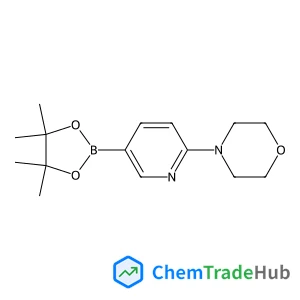
4-(5-(4,4,5,5-tetramethyl-1,3,2-dioxaborolan-2-yl)pyridin-2-yl)morpholine
CAS番号:
485799-04-0
分子式:
C15H23BN2O3
おすすめサプライヤー





免責事項
このページに表示される学術雑誌情報は、参考および研究目的のみを目的としています。当社は雑誌出版社とは提携しておらず、投稿の取り扱いも行っておりません。出版に関するお問い合わせは、各雑誌出版社に直接ご連絡ください。
表示されている情報に誤りがある場合は、support@chemtradehub.com までご連絡ください。迅速に確認し、対応いたします。