












Quantum chemistry of macromolecules and solids
文献情報
出版日
2009-07-27
DOI
10.1039/B905812P
インパクトファクター
3.676
著者
原文を見る
要旨
Two classes of electronic structure methods for macromolecules and nonmetallic solids are reviewed, showcasing their applications to hydrocarbon polymers and organic molecular crystals. One is the crystalline orbital theory for periodic extended systems and the other is a localized-orbital, embedding-field approach for periodic or nonperiodic systems consisting of weakly-interacting subsystems. Both implement rigorous electron-correlation theories such as coupled-cluster and perturbation theories as well as density-functional approximations and can treat not just ground-state energies but also equilibrium structures, phonons (in the harmonic approximation and beyond), excitons, and quasiparticle energy bands (by the crystalline orbital theory only). Three key concepts underlying macromolecular and solid-state electronic structure theories—decay of effective inter-particle interactions, size extensivity, and periodicity—are identified and analyzed in the context of these two closely related approaches.
関連文献
Effects of nanostructuring on the bond strength and disorder in V2O5 cathode material for rechargeable ion-batteries
Irene Isturiz, Carlo Marini, Marta Avila, Masashi Okubo, Huiqiao Li, Haoshen Zhou, Takashi Mizokawa, Naurang Lal Saini, Laura Simonelli
2018-05-14
Paper
DOI: 10.1039/C8CP00716K
Correction: Necessary and sufficient conditions for the successful three-phase photocatalytic reduction of CO2 by H2O over heterogeneous photocatalysts
2018-07-26
Correction
DOI: 10.1039/C8CP91824D
Ordering of lipid membranes altered by boron nitride nanosheets
Yonghui Zhang, Zhen Li, Chun Chan, Jiale Ma, Chunyi Zhi, Xiaolin Cheng
2017-11-22
Paper
DOI: 10.1039/C7CP07136A
Multiionic effects on the capacitance of porous electrodes
M. L. Jiménez, S. Ahualli, P. Arenas-Guerrero, M. M. Fernández, G. Iglesias, A. V. Delgado
2018-01-16
Paper
DOI: 10.1039/C7CP06778J
Manipulating triplet states: tuning energies, absorption, lifetimes, and annihilation rates in anthanthrene derivatives
Jianmin Shi, Tod A. Grusenmeyer, Christopher L. McCleese, Ryan M. O’Donnell, Thomas M. Cooper, William M. Shensky, III, Joy E. Haley
2018-10-31
Paper
DOI: 10.1039/C8CP06048G
Enhancing electrical energy storage capability of dielectric polymer nanocomposites via the room temperature Coulomb blockade effect of ultra-small platinum nanoparticles
Liwei Wang, Xingyi Huang, Yingke Zhu, Pingkai Jiang
2018-01-17
Paper
DOI: 10.1039/C7CP07990G
The nature of frontier orbitals under systematic ligand exchange in (pseudo-)octahedral Fe(ii) complexes
Mattis Fondell, Piter S. Miedema, Jesper Norell, Annette Pietzsch, Wilson Quevedo, Johannes Niskanen, Kristjan Kunnus
2018-09-13
Paper
DOI: 10.1039/C8CP04341H
Solute clustering in undersaturated solutions – systematic dependence on time, temperature and concentration
K. Renuka Devi, Dikshitkumar Khamar, Donal Mealey, Dominic Cheuk, Jacek Zeglinski
2018-05-21
Paper
DOI: 10.1039/C8CP01509K
Triplet electron transfer and spin polarization in a palladium porphyrin–fullerene conjugate
Prashanth K. Poddutoori, Yuri E. Kandrashkin, Christopher O. Obondi, Francis D'Souza, Art van der Est
2018-10-29
Paper
DOI: 10.1039/C8CP04937H
The fold preference and thermodynamic stability of α-synuclein fibrils is encoded in the non-amyloid-β component region
Liang Xu, Shayon Bhattacharya, Damien Thompson
2018-01-22
Paper
DOI: 10.1039/C7CP08321A
こちらもおすすめ
化合物よくある質問
3-(2-オキサプロピル)ベンzoic酸はどのように合成されますか?
3-(2-オキサプロピル)ベンzoic酸は、ベンzoic酸とプロパノ酸をヒドロキシム化合物として反応させて生成します。具体的には、ベンzoic酸とプロパノ酸を反...
205927-63-53-(2-Oxopropyl)benzo...
114873-01-73-Fluoro-N-{[(2-meth...
化合物よくある質問
4-メチル-4-ピペリジニル-1-ピロリドイン甲酸の主な用途は何ですか?
4-メチル-4-ピペリジニル-1-ピロリドイン甲酸は、主に医薬品の合成材料や研究用物質として使用されます。さらに、一部の薬理学的研究にも応用されています。
885523-47-7(4-Methyl-4-piperidi...
化合物よくある質問
Biotin-PEG3-oxyamine HCl塩について、適切な化合物名称に適用される法規ガイドラインは何ですか?
Biotin-PEG3-oxyamine HCl塩は、GHS( Globally Harmonized System of Classification and...
1786206-22-1Biotin-PEG3-oxyamine...
化合物よくある質問
N-(4-イソチオシアネートフェニル)-2-メトキシアリニンはどのように合成されますか?
N-(4-イソチオシアネートフェニル)-2-メトキシアリニンは、4-イソチオシアノフェノールと2-メトキシアリニルアミンのアミニド反応を用いて合成されます。この...
915919-57-2N-(4-Isothiocyanatop...
化合物よくある質問
金粉蕨亭2'-O-葡萄糖甙の主な用途は何ですか?
金粉蕨亭2'-O-葡萄糖甙は主に薬理研究や医薬品製造に使用され、抗炎症作用や抗がん作用などがあります。また、その構造や性質から、合成化学や化学生理学の研究にも用...
76947-60-92-(7-Hydroxy-2,2,4,6...
化合物よくある質問
2-(2-ニトロフェニル)酢酸ヒドライドの物理化学的性質は何ですか?
2-(2-ニトロフェニル)酢酸ヒドライドのCAS番号は114953-81-0です。この化合物は白色結晶性粉末で、分子量は244.12です。水溶性は限られており、...
114953-81-02-(2-Nitrophenyl)ace...
化合物よくある質問
5-(ヒドロキシメチル)-2-チオキソ-2,3-ジヒドロピリミジン-4(1H)-オンを取り扱う際の実験室安全事項は何ですか?
この化合物は高活性のため、取り扱いには注意が必要です。PPE(個人保護具)としてゴーグル、ガントリー、および防滴シールドを着用することが推奨されます。ドラフトチ...
93185-31-05-(Hydroxymethyl)-2-...
化合物よくある質問
11-脱氢血栓烷 b2の市場動向や研究トレンドはどうですか?
11-脱氢血栓烷 b2は、血栓溶解・抗凝固作用に関する研究で注目を集めています。特に心血管疾患の治療法開発において、市場の需要が高まっています。研究トレンドとし...
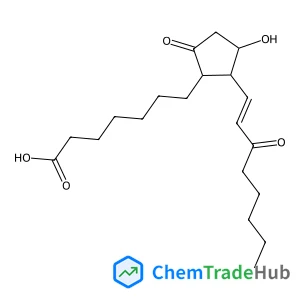
67910-12-77-{(2R,3S,4S)-4-Hydr...
化合物よくある質問
3,3-二甲基哌啶-4-酮はどのように保存すればよいですか?
3,3-二甲基哌啶-4-酮は避光、常温、乾燥した場所で保存してください。容器は密閉し、遠くから火源を離して保管することを確認してください。
150668-82-93,3-Dimethyl-4-piper...
掲載誌
Physical Chemistry Chemical Physics

CiteScore:
5.5
自己引用率:
10.3%
年間論文数:
3036
Physical Chemistry Chemical Physics (PCCP) is an international journal co-owned by 19 physical chemistry and physics societies from around the world. This journal publishes original, cutting-edge research in physical chemistry, chemical physics and biophysical chemistry. To be suitable for publication in PCCP, articles must include significant innovation and/or insight into physical chemistry; this is the most important criterion that reviewers and Editors will judge against when evaluating submissions. The journal has a broad scope and welcomes contributions spanning experiment, theory, computation and data science. Topical coverage includes spectroscopy, dynamics, kinetics, statistical mechanics, thermodynamics, electrochemistry, catalysis, surface science, quantum mechanics, quantum computing and machine learning. Interdisciplinary research areas such as polymers and soft matter, materials, nanoscience, energy, surfaces/interfaces, and biophysical chemistry are welcomed if they demonstrate significant innovation and/or insight into physical chemistry. Joined experimental/theoretical studies are particularly appreciated when complementary and based on up-to-date approaches.
おすすめ化合物
おすすめサプライヤー







免責事項
このページに表示される学術雑誌情報は、参考および研究目的のみを目的としています。当社は雑誌出版社とは提携しておらず、投稿の取り扱いも行っておりません。出版に関するお問い合わせは、各雑誌出版社に直接ご連絡ください。
表示されている情報に誤りがある場合は、support@chemtradehub.com までご連絡ください。迅速に確認し、対応いたします。