













Micro-ionics: next generation power sources
文献情報
出版日
2009-03-25
DOI
10.1039/B901906E
インパクトファクター
3.676
著者
Harry L. Tuller, Scott J. Litzelman, WooChul Jung
原文を見る
要旨
The desire for ever smarter systems-on-a-chip and plug-free portable electronics with longer operating times between recharge has stimulated growing interest in micro-ionic systems. The use of thin film and photolithographic processing techniques, commonly at temperatures considerably below those utilized in conventional ceramics processing methods, leads to ionic or mixed ionic–electronic materials with nanosized dimensions. The implications for nanosized grains on the conductivity of thin film solid oxide electrolytes are examined. Grain boundary engineering, as a means of controlling and ultimately enhancing transport along and across grain boundaries, becomes essential given that such boundaries often dominate the transport properties of such nano-dimensioned materials. Heterogeneous doping by selective in-diffusion along grain boundaries was introduced as a potentially powerful means of achieving this. This is coupled with the modeling of space charge distributions at such boundaries, taking into account possible dopant segregation to the boundaries. The use of lithographic methods for generating geometrically well defined structures is used to illustrate how one can achieve a much improved understanding of electrode processes in SOFC structures. Indeed, the more idealized structures achievable by application of microelectronic processing provide a marvelous opportunity to uncover the science underlying the technology of micro- and ultimately macro-ionics.
関連文献
Feasible structure-modification strategy for inhibiting aggregation-caused quenching effect and constructing exciton conversion channels in acridone-based emitters
Qing Wan, Bing Zhang, Jialin Tong, Yin Li, Haozhong Wu, Han Zhang, Yuyu Pan
2019-04-19
Paper
DOI: 10.1039/C9CP01706B
Novel dehydropeptide-based magnetogels containing manganese ferrite nanoparticles as antitumor drug nanocarriers
Sérgio R. S. Veloso, Carlos A. B. Magalhães, Ana Rita O. Rodrigues, H. Vilaça, Maria-João R. P. Queiroz, J. A. Martins, Paulo J. G. Coutinho, Paula M. T. Ferreira, Elisabete M. S. Castanheira
2019-04-23
Paper
DOI: 10.1039/C9CP00352E
Role of native defects and the effects of metal additives on the kinetics of magnesium borohydride
Di Wang, Fusheng Yang, Zhen Wu, Le Wu, Zaoxiao Zhang
2019-05-06
Paper
DOI: 10.1039/C9CP01467E
Predicting aromatic exciplex fluorescence emission energies
Rachel A. Krueger, Guillaume Blanquart
2019-05-03
Paper
DOI: 10.1039/C9CP02027F
DEER distance measurements on trityl/trityl and Gd(iii)/trityl labelled proteins
Angeliki Giannoulis, Yin Yang, Yan-Jun Gong, Xiaoli Tan, Akiva Feintuch, Raanan Carmieli, Thorsten Bahrenberg, Yangping Liu, Xun-Cheng Su, Daniella Goldfarb
2019-02-27
Paper
DOI: 10.1039/C8CP07249C
J-Aggregates of zinc tetraphenylporphyrin: a new pathway to excellent electrochemiluminescence emitters
Guiqiang Pu, Xingming Ning, Yali Wu, Zhen Zhang, Duoliang Shan
2019-04-29
Paper
DOI: 10.1039/C9CP01278H
A competitive hopping model for carrier transport in disordered organic semiconductors
Chongguang Zhao, Chen Li
2019-04-12
Paper
DOI: 10.1039/C9CP01243E
Sudden polarization and zwitterion formation as a pseudo-Jahn–Teller effect: a new insight into the photochemistry of alkenes
Ya Wang, Yang Liu, Isaac B. Bersuker
2019-04-26
Paper
DOI: 10.1039/C9CP01023H
Response of adhesive polymer interfaces to repeated mechanical loading and the spatial variation of diffusion coefficient and stresses in a deforming polymer film
Jeeno Jose, Narasimhan Swaminathan
2019-04-29
Paper
DOI: 10.1039/C9CP00576E
Improving the accuracy of Cu(ii)–nitroxide RIDME in the presence of orientation correlation in water-soluble Cu(ii)–nitroxide rulers
Irina Ritsch, Henrik Hintz, Gunnar Jeschke, Adelheid Godt, Maxim Yulikov
2019-04-18
Paper
DOI: 10.1039/C8CP06573J
こちらもおすすめ
化合物よくある質問
2-氟-4-イオドベンzo酸エチルエステルを取り扱う際の実験室安全事項は何ですか?
2-氟-4-イオドベンzo酸エチルエステルは有機溶媒を用いた反応であり、ドラフトチャンバーでの操作が必要です。漏洩時にはSDS参照の安全措置を講じ、PPE(防護...
205750-82-9Benzoic acid, 2-fluo...
化合物よくある質問
血根碱の主な用途は何ですか?
血根碱は主に医薬分野で利用され、抗炎症や抗がん剤としての潜在的な効果が研究されています。また、化学研究や薬物開発において、新しい薬剤設計の参考となる化合物として...
2447-54-313-Methyl[1,3]benzod...
化合物よくある質問
Methyl 3-methoxythiophene-2-carboxylateの主な用途は何ですか?
Methyl 3-メトキシスチフェン-2-カルボン酸メチルエステルは、薬品合成、染料製造、以及合成中間体としての用途が広がっています。
62353-75-7Methyl 3-methoxythio...
化合物よくある質問
丹磺酰-L-亮氨酸はどのように保存すればよいですか?
丹磺酰-L-亮氨酸は乾燥した場所で、直射日光から保護し、低温(室温以下)で保存してください。密閉容器に入れて保管することをおすすめします。
1100-22-7N-{[5-(Dimethylamino...
化合物よくある質問
5-(苄氧基)ピラミジン-4-アミンの代替品はありますか?
5-(苄氧基)ピラミジン-4-アミンの代替品として、6-メトキシピラミジンや5-フェニルピラミジンなどが挙げられます。これらの化合物は、5-(苄氧基)ピラミジン...
92289-50-45-benzyloxypyrimidin...
化合物よくある質問
8-ヒドロキシノルデコペントアセートの物理化学的性質は何ですか?
8-ヒドロキシノルデコペントアセートはCAS番号84807-87-4の化合物で、分子量は750.02 uです。これは油溶性で、水に溶けにくい特徴があります。反応...
84807-87-4(5Z,8Z,11Z,13E,15S)-...
化合物よくある質問
tert-ブチル(エス)-1-ヒドロキシペンタ-4-エン-2-イルカルバamateの主な用途は何ですか?
tert-ブチル(エス)-1-ヒドロキシペンタ-4-エン-2-イルカルバamateは主に医薬品の合成材料や分析化学の試薬として使用されます。
116613-81-12-Methyl-2-propanyl ...
化合物よくある質問
ブコール-L-2-フローヨルブリンについて適切な法規ガイドラインは何ですか?
ブコール-L-2-フローヨルブリン(CAS番号: 1196107-73-9)は、GHS(グローバルハザードアサessmentシステム)に基づく危害分類と表示が求...
1196107-73-92-Bromo-13,13-dimeth...
化合物よくある質問
6-ブロモ-N-環丙基-2-ピリジニニメタンの市場動向や研究トレンドはどうですか
6-ブロモ-N-環丙基-2-ピリジニニメタンは、薬理学研究や合成化学に使用される化合物であり、特に抗ウイルス薬や抗がん薬の開発に注目されています。市場では、薬物...
959237-20-86-Bromo-N-cyclopropy...
化合物よくある質問
RS-AMPÀはどのように保存すればよいですか?
RS-AMPÀは、遮光容器に保存し、室温(15〜25℃)で保管することが推奨されます。高湿や熱は物質を劣化させるため、湿度は50%以下に保つことが重要です。また...
74341-63-2(RS)-AMPA
掲載誌
Physical Chemistry Chemical Physics

CiteScore:
5.5
自己引用率:
10.3%
年間論文数:
3036
Physical Chemistry Chemical Physics (PCCP) is an international journal co-owned by 19 physical chemistry and physics societies from around the world. This journal publishes original, cutting-edge research in physical chemistry, chemical physics and biophysical chemistry. To be suitable for publication in PCCP, articles must include significant innovation and/or insight into physical chemistry; this is the most important criterion that reviewers and Editors will judge against when evaluating submissions. The journal has a broad scope and welcomes contributions spanning experiment, theory, computation and data science. Topical coverage includes spectroscopy, dynamics, kinetics, statistical mechanics, thermodynamics, electrochemistry, catalysis, surface science, quantum mechanics, quantum computing and machine learning. Interdisciplinary research areas such as polymers and soft matter, materials, nanoscience, energy, surfaces/interfaces, and biophysical chemistry are welcomed if they demonstrate significant innovation and/or insight into physical chemistry. Joined experimental/theoretical studies are particularly appreciated when complementary and based on up-to-date approaches.
おすすめ化合物

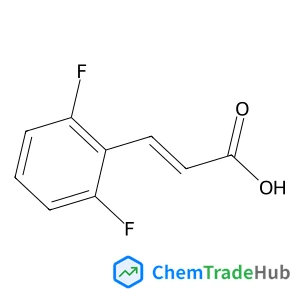
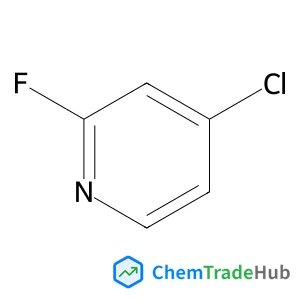
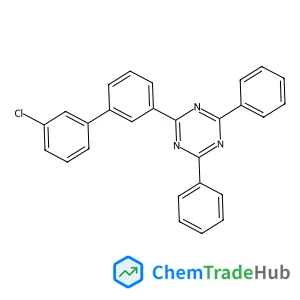
おすすめサプライヤー





免責事項
このページに表示される学術雑誌情報は、参考および研究目的のみを目的としています。当社は雑誌出版社とは提携しておらず、投稿の取り扱いも行っておりません。出版に関するお問い合わせは、各雑誌出版社に直接ご連絡ください。
表示されている情報に誤りがある場合は、support@chemtradehub.com までご連絡ください。迅速に確認し、対応いたします。