![Sodium 4-{[(2R,3R)-2-[(dichloroacetyl)amino]-3-hydroxy-3-(4-nitrophenyl)propyl]oxy}-4-oxobutanoate structure](https://static.chemtradehub.com/structs/982/982-57-0-e747.webp "Sodium 4-{[(2R,3R)-2-[(dichloroacetyl)amino]-3-hydroxy-3-(4-nitrophenyl)propyl]oxy}-4-oxobutanoate structure")
Sodium 4-{[(2R,3R)-2-[(dichloroacetyl)amino]-3-hydroxy-3-(4-nitrophenyl)propyl]oxy}-4-oxobutanoate
CAS番号:
982-57-0
分子式:
C15H15Cl2N2NaO8
Francesco A. Evangelista, Andrew C. Simmonett, Henry F. Schaefer III, Debashis Mukherjee, Wesley D. Allen
A partitioning scheme is applied to the state-specific Mukherjee multireference coupled cluster method to derive a companion perturbation theory (Mk-MRPT2). A production-level implementation of Mk-MRPT2 is reported. The effectiveness of the Mk-MRPT2 method is demonstrated by application to the classic F2 dissociation problem and the lowest-lying electronic states of meta-benzyne, including computations with up to 766 atomic orbitals. We show that Mk-MRPT2 theory is particularly useful in multireference focal point extrapolations to determine ab initio limits.
Virginia W. Manner, Todd F. Markle, John H. Freudenthal, Justine P. Roth, James M. Mayer
DOI: 10.1039/B712872J
Kyohei Matsuo, Rina Okumura, Hironobu Hayashi, Naoki Aratani, Seihou Jinnai, Yutaka Ie, Akinori Saeki, Hiroko Yamada
DOI: 10.1039/D2CC05122B
Dongmei Guo, Yiqun Liu, Xiubin Hou, Xubo Wang, Chenge Fan, Lixia Bao, Xinpeng He, Hongmei Zhang, Yurong Ma
DOI: 10.1039/D3CE00485F
Stéphanie Pican, Annie-Claude Gaumont
DOI: 10.1039/B501078K
R. Bevilacqua, M. Mauricio-Iglesias, S. Balboa, J. M. Lema, M. Carballa
DOI: 10.1039/D2EW00144F
Shinya Kokuryo, Kazuya Tamura, Koji Miyake, Yoshiaki Uchida, Manabu Miyamoto, Yasunori Oumi, Atsushi Mizusawa, Tadashi Kubo, Norikazu Nishiyama
DOI: 10.1039/D2CY00506A
Andreas Dueholm Bertelsen, Alexander Reinhardt Hansen, Nils Lau Nyborg Broge, Aref Mamakhel, Martin Bondesgaard, Bo Brummerstedt Iversen
DOI: 10.1039/D2CC04827B
Woo-Jin Yoo, Shū Kobayashi
DOI: 10.1039/C3GC40482J
Paul D. Miller, David A. Shultz, Joshua Mengell, Lukasz Wojtas
DOI: 10.1039/D3SC02341A
Xi-Meng Chen, Si-Han Jia, Jia-Xin Kang, Yichun Zhang, Yubin Ma, Yiming Ma, Xin Jiang, Xing-Chao Yu, Pengtao Qiu
DOI: 10.1039/D2CC00408A
N-乙酰基-L-精氨酸は、L-精氨酸をエタノールと酸化アクリル酸で反応させて得られます。この合成過程では、酸化アクリル酸がL-精氨酸のN-アミノグループに結合す...
カウウェルパリミタートの廃棄物は、化学廃棄物として適切に収集し、専門的な廃棄処理業者に委託します。処理には、有害物質の除去と環境への影響最小化が重要です。温度は...
タテライル1,4,8,11-テトラエチルアセートの代替品として、他のエチルエステル化合物や、有機窒素化合物が考えられます。ただし、代替品の選択は目的や使用条件に...
異丁卡因は毒性があり、皮膚や目を刺激する可能性があります。作業中は保護目鏡、防護手袋、防護マスクを使用し、ドラフトチャンバーで扱うべきです。漏えいした場合、その...
4-氯-2-丙基吡啶は有毒で、吸入や皮膚接触を避けることが重要です。PPEとしてゴーグル、マスク、長袖のガウン、手袋を使用し、ドラフトチャンバーを用いて操作しま...
CAS番号80996-23-2の9,10-脱水阿霉素は、GHS分類においては第3類毒性物質に分類され、REACH規則においてはカテゴリー1の急性毒性物質とされて...
4-(3-溴苯基)噻唑-2-甲酸の分子量は265.01です。この化合物は水に微溶です。反応性は中程度で、酸性やアルカリ性の条件下で分解する可能性があります。
3-(4-塩素フェニル)-3-オキセタニアミン塩酸塩は、医薬業界、ポリマー業界、センサー業界、半導体業界などで使用されています。この化合物は薬物開発の一部として...
氮卓斯汀杂质E(CAS番号: 20526-97-0)を扱う際は、ゴーグルとシールド付きの手袋を使用し、漏洩がある場合はドラフトチャンバーを使用して処理することを...
デシシボチル-n-ブチルボルテゾミブは室温で保管し、直日光から遠ざけて密栓容器に保管することが推奨されます。

Physical Chemistry Chemical Physics (PCCP) is an international journal co-owned by 19 physical chemistry and physics societies from around the world. This journal publishes original, cutting-edge research in physical chemistry, chemical physics and biophysical chemistry. To be suitable for publication in PCCP, articles must include significant innovation and/or insight into physical chemistry; this is the most important criterion that reviewers and Editors will judge against when evaluating submissions. The journal has a broad scope and welcomes contributions spanning experiment, theory, computation and data science. Topical coverage includes spectroscopy, dynamics, kinetics, statistical mechanics, thermodynamics, electrochemistry, catalysis, surface science, quantum mechanics, quantum computing and machine learning. Interdisciplinary research areas such as polymers and soft matter, materials, nanoscience, energy, surfaces/interfaces, and biophysical chemistry are welcomed if they demonstrate significant innovation and/or insight into physical chemistry. Joined experimental/theoretical studies are particularly appreciated when complementary and based on up-to-date approaches.
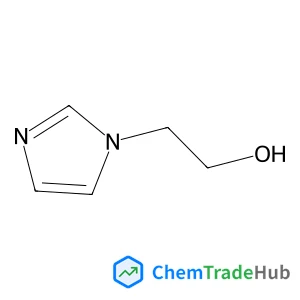
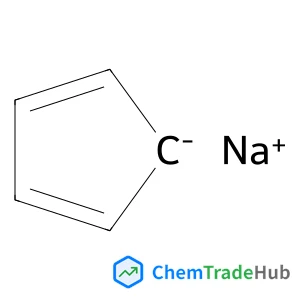
![N-[(9Z)-9-Octadecen-1-yl]-1,3-propanediamine structure](https://static.chemtradehub.com/structs/717/7173-62-8-d43e.webp "N-[(9Z)-9-Octadecen-1-yl]-1,3-propanediamine structure")