












First-principles simulations of hydrogen peroxide formation catalyzed by small neutral gold clusters
文献情報
出版日
2009-05-27
DOI
10.1039/B822765A
インパクトファクター
3.676
著者
Katarzyna A. Kacprzak
原文を見る
要旨
Energetics and dynamical pathways for hydrogen peroxide formation from H2 and O2 bound to neutral gold dimers and tetramers have been investigated by applying several strategies: T = 0 K geometry optimizations, constrained Car–Parrinello molecular dynamics simulations at T = 300 K and metadynamics at T = 300 K. The competing reaction channels for water and hydrogen peroxide formation have been found and characterized. In each case, the reaction barriers for Au cluster catalyzed proton transfer are less than 1 eV. Water formation is a competitive reaction channel, and the relative weight of H2O and H2O2 products may depend on the chosen Au cluster size. Dynamic simulations demonstrate the significance of the geometric fluxionality of small catalytic Au clusters. These results indicate that neutral Au clusters could work as catalysts in aerobic H2O2 formation in ambient conditions.
関連文献
Flowing gas in mass spectrometer: method for characterization and impact on ion processing
Xiaoyu Zhou, Zheng Ouyang
2014-07-24
Paper
DOI: 10.1039/C4AN00982G
UV photodissociation of trapped ions following ion mobility separation in a Q-ToF mass spectrometer
Bruno Bellina, Jeffery. M. Brown, Jakub Ujma, Paul Murray, Kevin Giles, Michael Morris, Perdita. E. Barran
2014-10-09
Communication
DOI: 10.1039/C4AN01656D
Plasmon-enhanced optical sensors: a review
Ming Li, Nianqiang Wu
2014-10-06
Critical Review
DOI: 10.1039/C4AN01079E
Determination of arsenate by sorption pre-concentration on polystyrene beads packed in a microfluidic device with chemiluminescence detection
Waraporn Som-aum, Haifang Li, Jiangjiang Liu, Jin-Ming Lin
2008-06-02
Paper
DOI: 10.1039/B801608A
An electrochemical sensor for pesticide assays based on carbon nanotube-enhanced acetycholinesterase activity‡
Haode Chen, Xiaolei Zuo, Shao Su, Zhuzhao Tang, Aibo Wu, Shiping Song, Dabing Zhang, Chunhai Fan
2008-07-21
Paper
DOI: 10.1039/B805334K
Direct electrical detection of antigen–antibody binding on diamond and silicon substrates using electrical impedance spectroscopy
Wensha Yang, James E. Butler, John N. Russell, Jr., Robert J. Hamers
2007-01-17
Paper
DOI: 10.1039/B612201A
Achromatic–chromatic colorimetric sensors for on–off type detection of analytes
Jun Hyuk Heo, Hui Hun Cho, Jin Woong Lee
2014-10-06
Paper
DOI: 10.1039/C4AN01645A
Room-temperature sensor based on surface-enhanced Raman spectroscopy
Kuang-Hsuan Yang, Chung-Chin Yu
2014-07-21
Paper
DOI: 10.1039/C4AN01037J
A novel molecularly imprinted chitosan–acrylamide, graphene, ferrocene composite cryogel biosensor used to detect microalbumin
2014-09-22
Paper
DOI: 10.1039/C4AN01000K
Label-free fluorescence detection of DNA methylation and methyltransferase activity based on restriction endonuclease HpaII and exonuclease III
Chunyan Gao, Henan Li, Yuanjian Liu, Wei Wei, Yuanjian Zhang, Songqin Liu
2014-09-24
Paper
DOI: 10.1039/C4AN01359J
こちらもおすすめ
化合物よくある質問
2-氟-4-イオドベンzo酸エチルエステルを取り扱う際の実験室安全事項は何ですか?
2-氟-4-イオドベンzo酸エチルエステルは有機溶媒を用いた反応であり、ドラフトチャンバーでの操作が必要です。漏洩時にはSDS参照の安全措置を講じ、PPE(防護...
205750-82-9Benzoic acid, 2-fluo...
化合物よくある質問
血根碱の主な用途は何ですか?
血根碱は主に医薬分野で利用され、抗炎症や抗がん剤としての潜在的な効果が研究されています。また、化学研究や薬物開発において、新しい薬剤設計の参考となる化合物として...
2447-54-313-Methyl[1,3]benzod...
化合物よくある質問
Methyl 3-methoxythiophene-2-carboxylateの主な用途は何ですか?
Methyl 3-メトキシスチフェン-2-カルボン酸メチルエステルは、薬品合成、染料製造、以及合成中間体としての用途が広がっています。
62353-75-7Methyl 3-methoxythio...
化合物よくある質問
丹磺酰-L-亮氨酸はどのように保存すればよいですか?
丹磺酰-L-亮氨酸は乾燥した場所で、直射日光から保護し、低温(室温以下)で保存してください。密閉容器に入れて保管することをおすすめします。
1100-22-7N-{[5-(Dimethylamino...
化合物よくある質問
5-(苄氧基)ピラミジン-4-アミンの代替品はありますか?
5-(苄氧基)ピラミジン-4-アミンの代替品として、6-メトキシピラミジンや5-フェニルピラミジンなどが挙げられます。これらの化合物は、5-(苄氧基)ピラミジン...
92289-50-45-benzyloxypyrimidin...
化合物よくある質問
8-ヒドロキシノルデコペントアセートの物理化学的性質は何ですか?
8-ヒドロキシノルデコペントアセートはCAS番号84807-87-4の化合物で、分子量は750.02 uです。これは油溶性で、水に溶けにくい特徴があります。反応...
84807-87-4(5Z,8Z,11Z,13E,15S)-...
化合物よくある質問
tert-ブチル(エス)-1-ヒドロキシペンタ-4-エン-2-イルカルバamateの主な用途は何ですか?
tert-ブチル(エス)-1-ヒドロキシペンタ-4-エン-2-イルカルバamateは主に医薬品の合成材料や分析化学の試薬として使用されます。
116613-81-12-Methyl-2-propanyl ...
化合物よくある質問
ブコール-L-2-フローヨルブリンについて適切な法規ガイドラインは何ですか?
ブコール-L-2-フローヨルブリン(CAS番号: 1196107-73-9)は、GHS(グローバルハザードアサessmentシステム)に基づく危害分類と表示が求...
1196107-73-92-Bromo-13,13-dimeth...
化合物よくある質問
6-ブロモ-N-環丙基-2-ピリジニニメタンの市場動向や研究トレンドはどうですか
6-ブロモ-N-環丙基-2-ピリジニニメタンは、薬理学研究や合成化学に使用される化合物であり、特に抗ウイルス薬や抗がん薬の開発に注目されています。市場では、薬物...
959237-20-86-Bromo-N-cyclopropy...
化合物よくある質問
RS-AMPÀはどのように保存すればよいですか?
RS-AMPÀは、遮光容器に保存し、室温(15〜25℃)で保管することが推奨されます。高湿や熱は物質を劣化させるため、湿度は50%以下に保つことが重要です。また...
74341-63-2(RS)-AMPA
掲載誌
Physical Chemistry Chemical Physics

CiteScore:
5.5
自己引用率:
10.3%
年間論文数:
3036
Physical Chemistry Chemical Physics (PCCP) is an international journal co-owned by 19 physical chemistry and physics societies from around the world. This journal publishes original, cutting-edge research in physical chemistry, chemical physics and biophysical chemistry. To be suitable for publication in PCCP, articles must include significant innovation and/or insight into physical chemistry; this is the most important criterion that reviewers and Editors will judge against when evaluating submissions. The journal has a broad scope and welcomes contributions spanning experiment, theory, computation and data science. Topical coverage includes spectroscopy, dynamics, kinetics, statistical mechanics, thermodynamics, electrochemistry, catalysis, surface science, quantum mechanics, quantum computing and machine learning. Interdisciplinary research areas such as polymers and soft matter, materials, nanoscience, energy, surfaces/interfaces, and biophysical chemistry are welcomed if they demonstrate significant innovation and/or insight into physical chemistry. Joined experimental/theoretical studies are particularly appreciated when complementary and based on up-to-date approaches.
おすすめ化合物
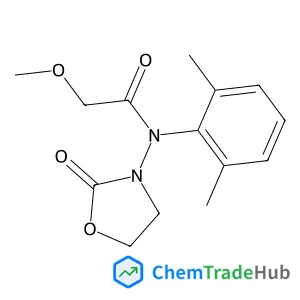
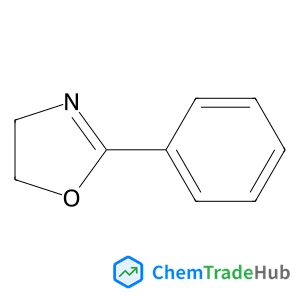
N-(2,6-Dimethylphenyl)-2-methoxy-N-(2-oxo-1,3-oxazolidin-3-yl)acetamide
CAS番号:
77732-09-3
分子式:
C14H18N2O4
おすすめサプライヤー



免責事項
このページに表示される学術雑誌情報は、参考および研究目的のみを目的としています。当社は雑誌出版社とは提携しておらず、投稿の取り扱いも行っておりません。出版に関するお問い合わせは、各雑誌出版社に直接ご連絡ください。
表示されている情報に誤りがある場合は、support@chemtradehub.com までご連絡ください。迅速に確認し、対応いたします。