


In situ investigation of molecular kinetics and particle formation of water-dispersible titania nanocrystals
文献情報
出版日
2009-04-02
DOI
10.1039/B821973G
インパクトファクター
3.676
著者
G. Garnweitner, C. Grote
原文を見る
要旨
Metal oxide nanoparticles can be fabricated under high control via nonaqueous sol–gel synthesis. This route has been shown to lead to highly crystalline, uniform nanostructures, which explains the high and growing interest it is receiving. The underlying mechanisms are, however, so far only rudimentarily understood on a molecular scale. Here, we applied in situ FTIR spectroscopy and other techniques to monitor the nonaqueous synthesis of titania nanoparticles that can be easily stabilised in polar solvents and thus, possess high potential for application. A special focus is put on the kinetics of the organic condensation mechanisms enabling the reaction of the precursor to the inorganic nanoparticles. By comparing these kinetics to the process of nanoparticle formation monitored via complementary methods such as TEM and dynamic light scattering, a detailed insight into the principles and mechanisms of nanoparticle formation via the nonaqueous sol–gel synthesis is achieved.
おすすめジャーナル

Angewandte Chemie International Edition

Photochemical & Photobiological Sciences

Coloration Technology

Journal of Enzyme inhibition and Medicinal Chemistry

Environmental Toxicology and Pharmacology

CrystEngComm

Advanced Engineering Materials

Foundations of Chemistry

Mini-Reviews in Medicinal Chemistry

European Journal of Organic Chemistry
関連文献
An elevated concentration of MoS2 lowers the efficacy of liquid-phase exfoliation and triggers the production of MoOx nanoparticles
Michal Bodík, Jakub Hagara, Matej Mičušík, Mária Omastová, Mário Kotlár, Juraj Chlpík, Július Cirák, Helena Švajdlenková, Michal Anguš, Alicia Marín Roldán, Pavel Veis, Matej Jergel
2019-05-20
Paper
DOI: 10.1039/C9CP01951K
Mixtures of LiTFSI and urea: ideal thermodynamic behavior as key to the formation of deep eutectic solvents?
2019-05-23
Paper
DOI: 10.1039/C9CP01440C
The catalytic mechanism of S-acyltransferases: acylation is triggered on by a loose transition state and deacylation is turned off by a tight transition state
Xia Wang, Grace Mercure Bakanina Kissanga, E. Li, Qiang Li, Jianzhuang Yao
2019-05-17
Paper
DOI: 10.1039/C9CP02248A
ELDOR-detected NMR beyond hyperfine couplings: a case study with Cu(ii)-porphyrin dimers
Nino Wili, Sabine Richert, Bart Limburg, Simon J. Clarke, Harry L. Anderson, Christiane R. Timmel, Gunnar Jeschke
2019-05-21
Paper
DOI: 10.1039/C9CP01760G
Cation diffusion patterns across the magneto-structural transition in Fe7S8
Peter G. Weidler, Michalis Charilaou, Jörg F. Löffler, Andreas U. Gehring
2019-05-30
Paper
DOI: 10.1039/C9CP01387C
Elusive hypervalent phosphorus⋯π interactions: evidence for paradigm transformation from hydrogen to phosphorus bonding at low temperatures
P. K. Sruthi, Shubhra Sarkar, N. Ramanathan, K. Sundararajan
2019-05-14
Paper
DOI: 10.1039/C9CP01925A
Sub-100 nanometer silver doped gold–cysteine supramolecular assemblies with enhanced nonlinear optical properties
Hussein Fakhouri, Martina Perić, Franck Bertorelle, Philippe Dugourd, Xavier Dagany, Isabelle Russier-Antoine, Pierre-François Brevet, Rodolphe Antoine
2019-04-30
Paper
DOI: 10.1039/C9CP00829B
Role of the hydrogen bond lifetimes and rotations at the water/amorphous silica interface on proton transport
Jesse Lentz, Stephen H. Garofalini
2019-05-23
Paper
DOI: 10.1039/C9CP01994D
Causes of ferroelectricity in HfO2-based thin films: an ab initio perspective
2019-05-15
Paper
DOI: 10.1039/C9CP01880H
Tuning the liquid-phase exfoliation of arsenic nanosheets by interaction with various solvents
Zheng-Hang Qi, Yi Hu, Zhong Jin, Jing Ma
2019-05-17
Communication
DOI: 10.1039/C9CP01052A
こちらもおすすめ
化合物よくある質問
噻奈普汀乙酯の物理化学的性質は何ですか?
CAS番号66981-77-9の噻奈普汀乙酯は、結晶性白色粉末であり、分子量は476.9 g/molです。この化合物は水に溶けにくく、一般的には有機溶媒で溶解し...
66981-77-9Ethyl 7-[(3-chloro-6...
化合物よくある質問
アミピシリン不純物Fとは何ですか?
アミピシリン不純物Fは、CAS番号124774-48-7の化合物です。これは、抗生物質アミピシリンの生産過程で生成される不純物の一つであり、(4S)-2-({[...
124774-48-7Ampicillin impurity ...
化合物よくある質問
イリジウム(I)ヘキサフルオロフォスファートの代替品はありますか?
イリジウム(I)ヘキサフルオロフォスファートの代替品として、他の有機金属化合物や非有機金属化合物が使用されることがあります。具体的には、ダイゾニウム塩や他の金属...
870077-94-43-Di-i-propylphosphi...
化合物よくある質問
含有3-(苯氧基甲基)苯硼酸频那醇酯の廃棄物はどのように処理すべきですか?
含有3-(苯氧基甲基)苯硼酸频那醇酯の廃棄物は、安全な方法で処理する必要があります。まず、廃棄物を適切な容器に収集し、避けて保管します。次に、専門の廃棄処理業者...
912569-68-74,4,5,5-Tetramethyl-...
化合物よくある質問
2-甲基辛-1-醇を取り扱う際の実験室安全事項は何ですか?
取り扱う際は、密閉のゴーグルと手袋を着用することが推奨されます。ドラフトチャンバーを使用し、漏洩時には速やかに取り扱いを中止し、適切な排気設備を使用してください...
818-81-52-Methyl-1-octanol
14066-05-8Scandium triperchlor...
化合物よくある質問
3α-アセトキノイドコレステロールエステルはどのように保存すればよいですか?
3α-アセトキノイドコレステロールエステルは、常温から低温(0-5℃)の暗所で保存し、密閉容器に入れることで安定性を保つことが推奨されます。また、湿気や酸素から...
30365-63-0Methyl (3alpha,5beta...
化合物よくある質問
2-ぶンジロキシ-4-(トリフルオロメチル)フェノルビノン酸の主な用途は何ですか?
2-ぶンジロキシ-4-(トリフルオロメチル)フェノルビノン酸は、化学合成の触媒としての使用や、医薬品の合成材料としての役割があります。また、特定の合成路線で使用...
1701435-39-3[2-(Benzyloxy)-4-(tr...
化合物よくある質問
(2S,3R)-2-氨基-3-甲基丁二酸はどのように合成されますか?
(2S,3R)-2-氨基-3-甲基丁二酸は、2-ヒドロキシ-3-メチル丁酸とアミノ化反応を行うことで合成されます。触媒としてジクロロメタンが使用され、選択性と収...
121570-10-3(2S,3R)-2-amino-3-me...
化合物よくある質問
1-Benzyl-2-phenyl-1H-imidazoleはどのように保存すればよいですか?
この化合物は常温で避けてください。直射日光を避け、密閉容器で保存し、湿気を防水の容器に入れて保管してください。
37734-89-71-Benzyl-2-phenyl-1H...
掲載誌
Physical Chemistry Chemical Physics

CiteScore:
5.5
自己引用率:
10.3%
年間論文数:
3036
Physical Chemistry Chemical Physics (PCCP) is an international journal co-owned by 19 physical chemistry and physics societies from around the world. This journal publishes original, cutting-edge research in physical chemistry, chemical physics and biophysical chemistry. To be suitable for publication in PCCP, articles must include significant innovation and/or insight into physical chemistry; this is the most important criterion that reviewers and Editors will judge against when evaluating submissions. The journal has a broad scope and welcomes contributions spanning experiment, theory, computation and data science. Topical coverage includes spectroscopy, dynamics, kinetics, statistical mechanics, thermodynamics, electrochemistry, catalysis, surface science, quantum mechanics, quantum computing and machine learning. Interdisciplinary research areas such as polymers and soft matter, materials, nanoscience, energy, surfaces/interfaces, and biophysical chemistry are welcomed if they demonstrate significant innovation and/or insight into physical chemistry. Joined experimental/theoretical studies are particularly appreciated when complementary and based on up-to-date approaches.
おすすめ化合物
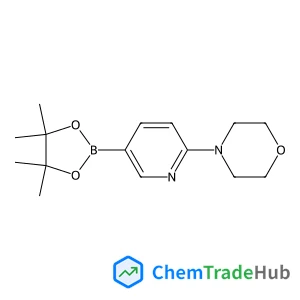
4-(5-(4,4,5,5-tetramethyl-1,3,2-dioxaborolan-2-yl)pyridin-2-yl)morpholine
CAS番号:
485799-04-0
分子式:
C15H23BN2O3
![N-[(5,6-Dichloro-1H-benzimidazol-2-yl)methyl]-9-(1-methyl-1H-pyrazol-4-yl)-2-(4-morpholinyl)-9H-purin-6-amine structure](https://static.chemtradehub.com/structs/238/2387704-62-1-25f4.webp "N-[(5,6-Dichloro-1H-benzimidazol-2-yl)methyl]-9-(1-methyl-1H-pyrazol-4-yl)-2-(4-morpholinyl)-9H-purin-6-amine structure")
![N-[(1S,2R,4S)-2-Amino-4-(dimethylcarbamoyl)cyclohexyl]-N'-(5-chloro-2-pyridinyl)ethanediamide structure](https://static.chemtradehub.com/structs/480/480452-37-7-0898.webp "N-[(1S,2R,4S)-2-Amino-4-(dimethylcarbamoyl)cyclohexyl]-N'-(5-chloro-2-pyridinyl)ethanediamide structure")
おすすめサプライヤー






免責事項
このページに表示される学術雑誌情報は、参考および研究目的のみを目的としています。当社は雑誌出版社とは提携しておらず、投稿の取り扱いも行っておりません。出版に関するお問い合わせは、各雑誌出版社に直接ご連絡ください。
表示されている情報に誤りがある場合は、support@chemtradehub.com までご連絡ください。迅速に確認し、対応いたします。