













A volcano curve: optimizing methanol electro-oxidation on Pt-decorated Ru nanoparticles
文献情報
出版日
2009-06-26
DOI
10.1039/B816531A
インパクトファクター
3.676
著者
Bingchen Du, Savelas A. Rabb, Christopher Zangmeister, YuYe Tong
原文を見る
要旨
Controlled Pt adlayers were deposited on commercial Ru nanoparticles (NPs) using an industrially scalable one-pot ethylene glycol (EG) reduction based method and were characterized by X-ray diffraction (XRD), electrochemical (EC) CO stripping voltammetry, inductively-coupled plasma optical emission spectrometry (ICP-OES), X-ray photoemission spectroscopy (XPS), and transmission electron microscopy (TEM). Compared with the previously used “spontaneous deposition”, the wet chemistry-based EG method is less technically demanding, i.e. no need to handle high-temperature hydrogen reduction, offers a better control of the Pt packing density (PD), enables the formation of stable, segregated Pt surface adlayers for optimal tuning and use of Pt, and effectively prevents NPs sintering. Two batches of a total of 11 (8 vs. 3) samples with different values of Pt PD ranging from 0.05 to 0.93 were prepared, with a time interval of more than 18 months between the sytheses of the two batches of samples, and an excellent reproducibility of results was observed. All samples were investigated in terms of methanol (MeOH) electro-oxidation (EO) by cyclic voltammetry (CV) and chronoamperometry (CA). Although the peak current of CV increased as the Pt content increased, the long-term steady-state MeOH electro-oxidation current density of the Pt-decorated Ru NPs measured by CA showed a volcano curve as a function of the Pt PD, with the maximum appearing at the PD of 0.31. The optimal peak activity was ∼150% higher than that of the industrial benchmark PtRu (1 : 1) alloy NPs and could deliver the same performance at half the electrode material cost. Fundamentally, such a volcano curve in the reaction current is the result of two competing processes of the EO of MeOH: the triple dehydrogenation of MeOH that prefers more Pt ensemble sites, and the elimination of poisonous CO that is enhanced by more adjacent Ru/Pt sites via the so-called bifunctional mechanism and also by possible electronic effects at low Pt coverages.
関連文献
Reduced {001}-TiO2−x photocatalysts: noble-metal-free CO2 photoreduction for selective CH4 evolution
Lhoussain Khrouz, Yi Zhou, Bin Shen, Chunyang Dong, Mingyang Xing, Shashank Mishra, Stéphane Daniele, Jinlong Zhang
2017-05-03
Paper
DOI: 10.1039/C7CP01212H
Investigating the optical properties of BOIMPY dyes using ab initio tools
Boris Le Guennic, Giovanni Scalmani, Michael J. Frisch, Adèle D. Laurent
2017-03-28
Paper
DOI: 10.1039/C7CP01190C
Effects of orientation at the phthalocyanine–CdSe interface on the electron transfer characteristics
B. V. Nazarchuk, V. V. Golovanova, N. V. Tkachenko, T. T. Rantala
2017-03-24
Paper
DOI: 10.1039/C7CP00833C
Atomistic non-adiabatic dynamics of the LH2 complex with a GPU-accelerated ab initio exciton model
Clem Stross, Simon McIntosh-Smith, Edward G. Hohenstein, Fred R. Manby
2017-03-28
Paper
DOI: 10.1039/C7CP00492C
Can boron antisites of BNNTs be an efficient metal-free catalyst for nitrogen fixation? – A DFT investigation
2017-05-23
Paper
DOI: 10.1039/C7CP02220D
Multichromophoric hybrid species made of perylene bisimide derivatives and Ru(ii) and Os(ii) polypyridine subunits
Francesco Nastasi, Giuseppina La Ganga, Sebastiano Campagna, Zois Syrgiannis, Francesco Rigodanza, Stefania Vitale, Antonino Licciardello
2017-05-03
Paper
DOI: 10.1039/C7CP01597F
Emission behaviours of novel V- and X-shaped fluorophores in response to pH and force stimuli
Hong-Yu Fu, Ning Xu, Yi-Min Pan, Xiao-Lin Lu, Min Xia
2017-04-06
Paper
DOI: 10.1039/C7CP01281K
Metal-free spin and spin-gapless semiconducting heterobilayers: monolayer boron carbonitrides on hexagonal boron nitride
Hongyu Zhang, Yuanyuan Sun, Yingchun Ding, Jie Chen, Youwei Du, Nujiang Tang
2017-05-08
Paper
DOI: 10.1039/C7CP01088E
Chemodynamics of metal ion complexation by charged nanoparticles: a dimensionless rationale for soft, core–shell and hard particle types
2017-04-20
Paper
DOI: 10.1039/C7CP01750B
Defect induced ferromagnetism in MgO and its exceptional enhancement upon thermal annealing: a case of transformation of various defect states
Santosh Kumar Gupta, C. L. Prajapat, S. K. Sharma
2017-04-12
Paper
DOI: 10.1039/C7CP01776F
こちらもおすすめ
化合物よくある質問
2-メトキシ-4-(メチルスルフィニル)アミンの主な用途は何ですか?
2-メトキシ-4-(メチルスルフィニル)アミンは、主に医薬品および農薬の製造に使用されます。また、合成化学の一部として研究用材料としても利用されます。
41608-73-52-Methoxy-4-(methyls...
118684-13-24-(Bromomethyl)-3-me...
化合物よくある質問
4,6-二氯-N-甲基ピラミジンアミンの代替品はありますか?
代替品としては、4,6-二クロロピラミジンアミンや他のピラミジン系化合物が考えられます。ただし、目的と用途によって最適な代替品は異なります。
10397-15-64,6-Dichloro-N-methy...
化合物よくある質問
6-氯-4-甲基-1H-吲哚を含む廃棄物はどのように処理すべきですか?
6-氯-4-甲基-1H-吲哚の廃棄物は、適切な容器に収集し、密閉して保管します。温度は常温、湿度は低く、直射日光を避けて保管することを推奨します。廃棄処理は専門...
885520-84-36-chloro-4-methyl-1H...
化合物よくある質問
2-フローユロ-4-(トリフルオロメチル)ベンゾイドについて「に適用される法規ガイドラインは何ですか」
2-フローユロ-4-(トリフルオロメチル)ベンゾイドのCAS番号は207974-08-1です。この化合物はGHS分類で毒性物質と有害な反応物質として分類されます...
207974-08-1[2-Fluoro-4-(trifluo...
化合物よくある質問
4-ニトロフェニルN-[(ベンゼルオキシルカーボンイル]グリシングリシングリシン酸はどのように保存すればよいですか?
4-ニトロフェニルN-[(ベンゼルオキシルカーボンイル]グリシングリシングリシン酸は、室温で暗所に保管し、乾燥した環境で保存することを推奨します。容器は密閉性の...
19811-64-44-Nitrophenyl N-[(be...
化合物よくある質問
イソデスロラタドリンの代替品はありますか?
イソデスロラタドリンの代替品としては、デスロラタドリンや他の抗ヒスタミン薬が挙げられます。具体的には、デスロラタドリン、ラセカミド、フェルタドリンなどが、症状や...
183198-49-4Iso Desloratadine
化合物よくある質問
5-甲氧基-1,2,3,4-四氢异喹啉盐酸盐はどのように合成されますか?
5-甲氧基-1,2,3,4-四氢异喹啉盐酸盐の一般的な合成方法は、メタノール中で5-メトキシ-1,2,3,4-四ヒュドロイソキシンを塩酸で塩化します。この反応で...
103030-69-95-Methoxy-1,2,3,4-te...
化合物よくある質問
4-アミノ-5-メトキシ-2-トルエンサルホニック酸についての法規ガイドラインは何ですか?
CAS番号6471-78-9の4-アミノ-5-メトキシ-2-トルエンサルホニック酸は、GHS分類では corrosive(腐食性)と識別されます。EUのREAC...
6471-78-94-Amino-5-Methoxy-2-...
化合物よくある質問
甲基孕酮を取り扱う際の実験室安全事項は何ですか?
甲基孕酮の取り扱いは、PPE(個人保護具)の使用が必要な重要な安全事項を伴います。防塵マスク、ゴーグル、手袋を着用することが推奨されます。ドラフトチャンバーを使...
204063-33-22-[(Diphenylmethyl)a...
掲載誌
Physical Chemistry Chemical Physics

CiteScore:
5.5
自己引用率:
10.3%
年間論文数:
3036
Physical Chemistry Chemical Physics (PCCP) is an international journal co-owned by 19 physical chemistry and physics societies from around the world. This journal publishes original, cutting-edge research in physical chemistry, chemical physics and biophysical chemistry. To be suitable for publication in PCCP, articles must include significant innovation and/or insight into physical chemistry; this is the most important criterion that reviewers and Editors will judge against when evaluating submissions. The journal has a broad scope and welcomes contributions spanning experiment, theory, computation and data science. Topical coverage includes spectroscopy, dynamics, kinetics, statistical mechanics, thermodynamics, electrochemistry, catalysis, surface science, quantum mechanics, quantum computing and machine learning. Interdisciplinary research areas such as polymers and soft matter, materials, nanoscience, energy, surfaces/interfaces, and biophysical chemistry are welcomed if they demonstrate significant innovation and/or insight into physical chemistry. Joined experimental/theoretical studies are particularly appreciated when complementary and based on up-to-date approaches.
おすすめ化合物
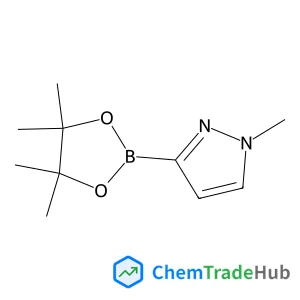
1-Methyl-3-(4,4,5,5-tetramethyl-1,3,2-dioxaborolan-2-yl)-1H-pyrazole
CAS番号:
1020174-04-2
分子式:
C10H17BN2O2
おすすめサプライヤー







免責事項
このページに表示される学術雑誌情報は、参考および研究目的のみを目的としています。当社は雑誌出版社とは提携しておらず、投稿の取り扱いも行っておりません。出版に関するお問い合わせは、各雑誌出版社に直接ご連絡ください。
表示されている情報に誤りがある場合は、support@chemtradehub.com までご連絡ください。迅速に確認し、対応いたします。