


A new physicochemical characterization of sodium taurodeoxycholate/water system
文献情報
出版日
2008-10-09
DOI
10.1039/B809582E
インパクトファクター
3.676
著者
Mohamed Youssry, Luigi Coppola, Emilia Furia, Cesare Oliviero, Isabella Nicotera
原文を見る
要旨
In this paper, some new physicochemical properties of sodium taurodeoxycholate (STDC)–water system are carefully investigated using shear rheology and NMR diffusometry. Of clear interest to us was the study of structure and/or morphology of the isotropic liquid and the hexagonal phase. We observed that the isotropic liquid phase (C < 30 wt% STDC) consists of a micellar solution (L1) and presents a sharp structural transition from spherical micelles to an entangled network upon increasing the concentration. Below 10 °C, the L1 phase transforms slowly into a firm, gel phase (V) which results stable in the composition interval 15 < C < 30 wt%. The linear viscoelasticity of this phase is interpreted by means of the cooperative-flow theory. The liquid crystalline phase (36 < C < 65 wt% STDC) is unequivocally characterized as having a direct hexagonal structure (H1). Specifically, the hexagonal mixture with 45 wt% STDC presents a low thermal stability (T < 35 °C) and slow kinetics at the liquid–hexagonal transition (>5 hours). The linear viscoelasticity of this phase is interpreted by means of the generalized Maxwell model. All these findings are confirmed by some additional measurements performed on a lyotropic mixture of hexaethylene glycol monododecyl ether (C12E6), a nonionic surfactant forming a direct hexagonal phase in a similar interval of compositions and temperatures of STDC.
おすすめジャーナル

Advanced Powder Technology

Diamond and Related Materials

Advances in Cement Research

Journal of Physical Organic Chemistry

Applied Composite Materials

Construction and Building Materials

Journal of Computer-Aided Molecular Design

Computational Materials Science

Advanced Materials

Bio-Medical Materials and Engineering
関連文献
Modeling of aromatics formation in fuel-rich methane oxy-combustion with an automatically generated pressure-dependent mechanism
Te-Chun Chu, Zachary J. Buras, Patrick Oßwald, Mengjie Liu, Mark Jacob Goldman, William H. Green
2018-12-07
Paper
DOI: 10.1039/C8CP06097E
Non-covalent complexes of the peptide fragment Gly-Asn-Asn-Gln-Gln-Asn-Tyr in the gas-phase. Photodissociative cross-linking, Born–Oppenheimer molecular dynamics, and ab initio computational binding study
Shu R. Huang, Yang Liu, František Tureček
2019-01-08
Paper
DOI: 10.1039/C8CP06893C
Theoretical study of the bandgap regulation of a two-dimensional GeSn alloy under biaxial strain and uniaxial strain along the armchair direction
Wenqi Huang, Hong Yang, Buwen Cheng, Chunlai Xue
2018-08-20
Paper
DOI: 10.1039/C8CP03570A
DFT investigations for the catalytic reaction mechanism of methane combustion occurring on Pd(ii)/Al-MCM-41
Anis Gannouni, Carine Michel, Françoise Delbecq, Mongia Saïd Zina
2018-09-20
Paper
DOI: 10.1039/C8CP04178D
Origin of high thermoelectric performance with a wide range of compositions for BixSb2−xTe3 single quintuple layers
Zhen Li, Siyu Han, Yuanchun Pan, Jian Zhou, Huibin Xu
2018-12-10
Paper
DOI: 10.1039/C8CP06534A
Unexpected stable phases of tungsten borides
Changming Zhao, Yifeng Duan, Jie Gao, Wenjie Liu, Haiming Dong, Huafeng Dong, Dekun Zhang
2018-09-07
Paper
DOI: 10.1039/C8CP04222E
Pressure induced excellent thermoelectric behavior in skutterudites CoSb3 and IrSb3‡
Xiuxian Yang, Zhenhong Dai, Yinchang Zhao, Wenchao Niu, Jianye Liu
2018-11-21
Paper
DOI: 10.1039/C8CP04301A
こちらもおすすめ
化合物よくある質問
四氢-3-呋喃羧酰胺を含む廃棄物はどのように処理すべきですか?
四氢-3-呋喃羧酰胺を含む廃棄物の処理は、まず安全に収集し、化学的処理または専門廃棄処理を行うことが推奨されます。高温焼却は一般的な選択肢ですが、環境保護の観点...
871677-92-8Tetrahydro-3-furanca...
化合物よくある質問
DIMETHYL 3-AMINO-2,5-THIOPHENEDICARBOXYLATEについて「に適用される法規ガイドラインは何ですか」
DIMETHYL 3-AMINO-2,5-THIOPHENEDICARBOXYLATE(CAS番号: 785803-74-9)は、GHS( Globally H...
785803-74-9Dimethyl 3-amino-2,5...
化合物よくある質問
5-フェニル-2,2'-ビピリジンはどのように合成されますか?
5-フェニル-2,2'-ビピリジンは、ピリジン環とフェニル基を有する化合物から合成されます。一般的な合成方法は、4-ブロミノ苯と2,2'-ビピリジンの窒素上的ウ...
156972-80-45-Phenyl-2,2'-bipyri...
化合物よくある質問
三溴甲基苯砜とは何ですか?
三溴甲基苯砜はCAS番号17025-47-7の化合物で、(Tribromomethyl)sulfonyl]benzeneと呼ばれています。この物質は、芳香族化合...
17025-47-7[(Tribromomethyl)sul...
化合物よくある質問
四氢吡喃-4,4-二甲酸二甲酯を含む廃棄物はどのように処理すべきですか?
四氢吡喃-4,4-二甲酸二甲酯の廃棄物は、専門の廃棄処理業者に委託して安全に処理することが推奨されます。具体的には、反応性の点から常温で保存し、容器は密閉状態で...
149777-00-4Dimethyl tetrahydro-...
化合物よくある質問
N-叔丁氧羰基-N-甲乙二胺はどのように合成されますか?
N-叔丁氧羰基-N-甲乙二胺は、N-叔丁氧羰基アミンとプロピニルアミンのジアミン反応により合成されます。反応は無機触媒なしで行え、選択性と収率は良好です。
121492-06-62-Methyl-2-propanyl ...
化合物よくある質問
1,2-プロパンジオール-D6はどのように合成されますか?
1,2-プロパンジオール-D6は、プロパン-1,2-ジオールをD6同位体と交換反応を行うことで合成されます。この反応は触媒を必要とし、選択性と収率が良好です。
52910-80-21,2-Propane-d6-diol
化合物よくある質問
4,4'-異プロピルジキレートとは何ですか?
4,4'-異プロピルジキレートは、CAS番号7418-16-8の化合物で、4,4'-(2,2-プロパネディイル)ジシクロヘキサンカーボン酸は、白色の粉末またはク...
7418-16-84,4'-(2,2-Propanediy...
化合物よくある質問
2-メチル-2-プロパンチル (2S)-4-酸化-2-(1,3-チアゾリジン-3-イルカルベニル)-1-ピロリジンカルボキシレートの主な用途は何ですか?
この化合物は主に医薬品の開発に関与しており、特に抗炎症薬や神経保護剤の研究に利用されます。また、有機合成の中間体として工業製品の製造にも応用されることがあります...
401564-36-12-Methyl-2-propanyl ...
化合物よくある質問
ナトリウム5'-O-{ヘキシロキシ[(ヘキシロキシフォスフィニルオキシ)フィロホスフィル]アデノシン}を含む廃棄物はどのように処理すべきですか?
ナトリウム5'-O-{ヘキシロキシ[(ヘキシロキシフォスフィニルオキシ)フィロホスフィル]アデノシン}を含む廃棄物は、適切な化学廃棄処理施設に引き渡す必要があり...
1172-42-5Sodium 5'-O-{hydroxy...
掲載誌
Physical Chemistry Chemical Physics

CiteScore:
5.5
自己引用率:
10.3%
年間論文数:
3036
Physical Chemistry Chemical Physics (PCCP) is an international journal co-owned by 19 physical chemistry and physics societies from around the world. This journal publishes original, cutting-edge research in physical chemistry, chemical physics and biophysical chemistry. To be suitable for publication in PCCP, articles must include significant innovation and/or insight into physical chemistry; this is the most important criterion that reviewers and Editors will judge against when evaluating submissions. The journal has a broad scope and welcomes contributions spanning experiment, theory, computation and data science. Topical coverage includes spectroscopy, dynamics, kinetics, statistical mechanics, thermodynamics, electrochemistry, catalysis, surface science, quantum mechanics, quantum computing and machine learning. Interdisciplinary research areas such as polymers and soft matter, materials, nanoscience, energy, surfaces/interfaces, and biophysical chemistry are welcomed if they demonstrate significant innovation and/or insight into physical chemistry. Joined experimental/theoretical studies are particularly appreciated when complementary and based on up-to-date approaches.
おすすめ化合物
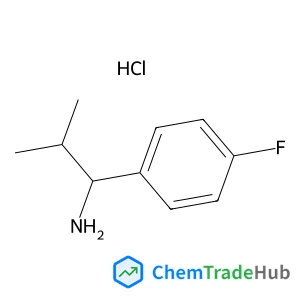
(1R)-1-(4-Fluorophenyl)-2-methyl-1-propanamine hydrochloride (1:1)
CAS番号:
1213329-40-8
分子式:
C10H15ClFN
おすすめサプライヤー



免責事項
このページに表示される学術雑誌情報は、参考および研究目的のみを目的としています。当社は雑誌出版社とは提携しておらず、投稿の取り扱いも行っておりません。出版に関するお問い合わせは、各雑誌出版社に直接ご連絡ください。
表示されている情報に誤りがある場合は、support@chemtradehub.com までご連絡ください。迅速に確認し、対応いたします。