












Conformations, structural transitions and visible near-infrared absorption spectra of four-, five- and six-coordinated Cu(ii) aqua complexes
文献情報
出版日
2008-11-06
DOI
10.1039/B806423G
インパクトファクター
3.676
著者
Katia Júlia de Almeida, N. Arul Murugan, Zilvinas Rinkevicius, Håkan Wilhelm Hugosson, Olav Vahtras, Hans Ågren, Amary Cesar
原文を見る
要旨
We have performed Car–Parrinello molecular dynamics simulations at ambient conditions for four-, five- and six-coordinated Cu(II) aqua complexes. The molecular geometry has been investigated in terms of Cu–O, Cu–H bond lengths and O–Cu–O bond angles and compared with earlier experimental measurement results and theoretical calculations. We find that the average Cu–O and Cu–H bond lengths increase with increasing coordination number. We have also observed relatively faster structural transition in the case of five-coordinated complex between trigonal bipyramidal and square pyramidal geometry. This result deviates from the findings of the earlier report (A. Pasquarello et al., Science, 2001, 291, 856) on copper(II) in aqueous solution and we attribute these differences to the neglect of solvent environment in our calculations. The averaged absorption spectra for the copper(II) aqua complexes have been computed using spin-restricted density functional linear response formalism taking 100 snap shots from a trajectory of 0.48 ps. We find that the calculated spectra are significantly different, showing clear features that distinguish each coordination model. Comparison with the experimentally reported absorption spectra is made wherever it is possible and the results obtained favor the distorted fivefold-coordination arrangement for the molecular structure of the Cu(II) ion in aqueous solution.
関連文献
POSS containing organometallic polymers: synthesis, characterization and solid-state pyrolysis behavior
Zhijun Ruan, Wenhui Rong, Xuejun Zhan, Qianqian Li, Zhen Li
2014-06-23
Paper
DOI: 10.1039/C4PY00555D
Design, synthesis and photovoltaic properties of two π-bridged cyclopentadithiophene-based polymers
Manjun Xiao, Xichang Bao, Liangliang Han, Ning Wang, Shuguang Wen, Weiguo Zhu, Renqiang Yang
2014-07-29
Paper
DOI: 10.1039/C4PY00881B
Unanticipated bright blue fluorescence produced from novel hyperbranched polysiloxanes carrying unconjugated carbon–carbon double bonds and hydroxyl groups
2016-05-03
Paper
DOI: 10.1039/C6PY00654J
Dicyanovinyl-functionalized fluorescent hyperbranched conjugated polymer nanoparticles for sensitive naked-eye cyanide ion detection
Xiaofu Wu, Hui Tong, Lixiang Wang
2014-06-13
Paper
DOI: 10.1039/C4PY00592A
Indium-catalyzed polycyclotrimerization of diynes: a facile route to prepare regioregular hyperbranched polyarylenes
Zhe Wang, Yang Shi, Jian Wang, Lingzhi Li, Haiqiang Wu, Bicheng Yao, Jing Zhi Sun
2014-07-15
Communication
DOI: 10.1039/C4PY00859F
Catalytic synthesis of polyethylene-block-polynorbornene copolymers using a living polymerization nickel catalyst
Haiyang Gao, Yong Liu, Guiliang Li, Zefan Xiao, Guodong Liang, Qing Wu
2014-06-26
Paper
DOI: 10.1039/C4PY00701H
Surface-engineered nanogel assemblies with integrated blood compatibility, cell proliferation and antibacterial property: towards multifunctional biomedical membranes
Yi Xia, Rui Wang, Hui Qin, Yi Zhang, Lang Ma, Hong Tan, Zhongwei Gu
2014-07-08
Paper
DOI: 10.1039/C4PY00870G
こちらもおすすめ
化合物よくある質問
6- bromo-1-cyclopropyl-1H-benzimidazoleの市場動向や研究トレンドはどうですか?
6- bromo-1-cyclopropyl-1H-benzimidazoleは、抗炎症、抗ウイルス作用を持つことが報告されており、新薬開発の研究対象として注目...
1416713-53-56-Bromo-1-cyclopropy...
化合物よくある質問
環氧プロpanol-d5を取り扱う際の実験室安全事項は何ですか?
取り扱う際には、防護眼鏡と手袋を使用し、ドラフトチャンバー内で操作することを推奨します。漏洩時には適切な手順で処理し、安全データシートを常に参照してください。
1246819-20-4Glycidol-d5
化合物よくある質問
2,2’-ジメチル-3,3’-ビピリジンはどのように合成されますか?
2,2’-ジメチル-3,3’-ビピリジンは、ピリジンと2-メチルアクリルアミドを有機合成反応で合成します。この反応では、ピリジンと2-メチルアクリルアミドを含有...
86156-55-02,2’-Dimethyl-3,3’-b...
化合物よくある質問
6-甲基ピリジン-2-ボリック酸の主な用途は何ですか?
6-甲基ピリジン-2-ボリック酸は、合成化学、医薬品合成、以及研究用途などに広く使用され、特に組換えDNA技術や分子生物学の研究において重要な役割を果たします。
372963-50-3(6-Methyl-2-pyridiny...
化合物よくある質問
(R)-3-(1-甲基-2-氧環己基)プロpano酸メチルは安全ですか?
(R)-3-(1-甲基-2-氧環己基)プロpano酸メチルは一定の安全性がありますが、直接的な皮膚接触や吸入は避けるべきです。使用する際は適切な個々の安全データ...
94089-47-1methyl 3-[(1R)-1-met...
化合物よくある質問
ketorolacはどのように保存すればよいですか?
ketorolacは、密封して遮光容器に保管し、直射日光や高温を避けて保存してください。温度は常温で保存し、湿度をなるべく低く保つことが推奨されます。
74103-06-3rac Ketorolac
化合物よくある質問
L-2,3-二氨基丙酸二盐酸盐を取り扱う際の実験室安全事項は何ですか?
L-2,3-二氨基丙酸二盐酸盐は腐食性が強く、皮膚や粘膜に刺激を与える可能性があります。取り扱う際は、防塵マスク、ゴーグル、手袋を使用し、適切な排気設備を使用し...
19777-68-5(S)-2,3-Diaminopropa...
化合物よくある質問
2-(4-溴ピリジン-2-基)乙腈の物理化学的性質は何ですか?
2-(4-溴ピリジン-2-基)乙腈のCAS番号は312325-73-8です。主に結晶形態で存在し、分子量は159.01 g/molです。この化合物は水に溶けやす...
312325-73-8(4-Bromo-2-pyridinyl...
化合物よくある質問
3-フローロ-[1,1-ベンジレン]-3,4-ジカルボン酸を取り扱う際の実験室安全事項は何ですか?
この化合物は毒性は低いですが、直接的な接触や吸入に注意が必要です。PPE(個人防護具)を着用し、ドラフトチャンバーを使用して操作することを推奨します。また、漏洩...
1261915-32-53'-Fluoro-[1,1'-biph...
化合物よくある質問
3-(1-氧代-1,3-二氢-2H-2-异吲哚)丙酸の主な用途は何ですか?
3-(1-氧代-1,3-二氢-2H-2-异吲哚)丙酸は、薬理学研究や医薬品製造において広く用いられる化合物です。また、工業的な用途でも一部の化学反応の触媒や助剤...
83747-30-23-(1-Oxo-1,3-dihydro...
掲載誌
Physical Chemistry Chemical Physics

CiteScore:
5.5
自己引用率:
10.3%
年間論文数:
3036
Physical Chemistry Chemical Physics (PCCP) is an international journal co-owned by 19 physical chemistry and physics societies from around the world. This journal publishes original, cutting-edge research in physical chemistry, chemical physics and biophysical chemistry. To be suitable for publication in PCCP, articles must include significant innovation and/or insight into physical chemistry; this is the most important criterion that reviewers and Editors will judge against when evaluating submissions. The journal has a broad scope and welcomes contributions spanning experiment, theory, computation and data science. Topical coverage includes spectroscopy, dynamics, kinetics, statistical mechanics, thermodynamics, electrochemistry, catalysis, surface science, quantum mechanics, quantum computing and machine learning. Interdisciplinary research areas such as polymers and soft matter, materials, nanoscience, energy, surfaces/interfaces, and biophysical chemistry are welcomed if they demonstrate significant innovation and/or insight into physical chemistry. Joined experimental/theoretical studies are particularly appreciated when complementary and based on up-to-date approaches.
おすすめ化合物
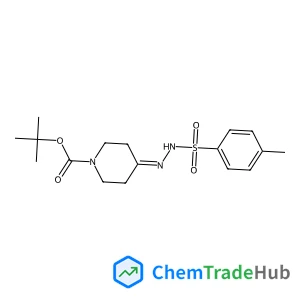
tert-Butyl 4-(2-(p-Tolylsulfonyl)hydrazono)piperidine-1-carboxylate
CAS番号:
1046478-89-0
分子式:
C17H25N3O4S
おすすめサプライヤー




免責事項
このページに表示される学術雑誌情報は、参考および研究目的のみを目的としています。当社は雑誌出版社とは提携しておらず、投稿の取り扱いも行っておりません。出版に関するお問い合わせは、各雑誌出版社に直接ご連絡ください。
表示されている情報に誤りがある場合は、support@chemtradehub.com までご連絡ください。迅速に確認し、対応いたします。