












The importance of solvent reorganisation in the effect of an ionic liquid on a unimolecular substitution process
文献情報
出版日
2008-06-09
DOI
10.1039/B805255G
インパクトファクター
6.222
著者
Hon Man Yau, Susan A. Barnes, James M. Hook, Tristan G. A. Youngs, Anna K. Croft, Jason B. Harper
原文を見る
要旨
Temperature dependent rate studies demonstrate an enthalpic benefit and an entropic cost associated with the change in the rate of a unimolecular substitution process on addition of a high proportion of an ionic liquid, the latter effect being supported by molecular dynamics simulations.
関連文献
Fabrication of an antibacterial hydrogel nanocomposite with self-healing properties using ZnO/β-cyclodextrin dimer/modified alginate
Masoumeh Mohamadhoseini, Zahra Mohamadnia
2021-09-23
Paper
DOI: 10.1039/D1PY00973G
Elucidation of network structure in cationic photopolymerization of cyclic ether comonomers
Sara M. Kaalberg, Sage M. Schissel, Michael Soumounthong, Julie L. P. Jessop
2021-10-04
Paper
DOI: 10.1039/D1PY00824B
The role of the biotin linker in polymer antibody mimetics, iBodies, in biochemical assays
Vladimír Šubr, Tereza Ormsby, Pavel Šácha, Jan Konvalinka, Tomáš Etrych, Libor Kostka
2021-10-01
Paper
DOI: 10.1039/D1PY00707F
Visible light-responsive micelles enable co-delivery of nitric oxide and antibiotics for synergistic antibiofilm applications
Kewu He, Zhiqiang Shen, Zhenhua Chen, Bin Zheng, Sheng Cheng, Jinming Hu
2021-10-14
Paper
DOI: 10.1039/D1PY01137E
A spontaneously healable robust ABA tri-block polyacrylate elastomer with a multiphase structure
Wenyan Wang, Zijian Guo, Zongxu Liu, Shuai Qiu, Chunmei Li, Qiuyu Zhang
2021-09-30
Paper
DOI: 10.1039/D1PY00907A
Unlocking the potential of furan-based poly(ester amide)s: an investigation of crystallization, molecular dynamics and degradation kinetics of novel poly(ester amide)s based on renewable poly(propylene furanoate)
Lazaros Papadopoulos, Panagiotis A. Klonos, Marcel Kluge, Alexandra Zamboulis, Zoi Terzopoulou, Dimitra Kourtidou, Andreas Magaziotis, Konstantinos Chrissafis, Apostolos Kyritsis, Dimitrios N. Bikiaris, Tobias Robert
2021-09-08
Paper
DOI: 10.1039/D1PY00713K
One-pot construction of nitrogen-rich polymeric ionic porous networks for effective CO2 capture and fixation
Chenxiang Ai, Xinquan Ke, Juntao Tang, Xincun Tang, Raed Abu-Reziq, Jian Chang, Jinyin Yuan, Guipeng Yu, Chunyue Pan
2021-11-24
Paper
DOI: 10.1039/D1PY01121A
Ring opening polymerization of β-acetoxy-δ-methylvalerolactone, a triacetic acid lactone derivative
Hussnain Sajjad, Emily A. Prebihalo, William B. Tolman, Theresa M. Reineke
2021-11-14
Paper
DOI: 10.1039/D1PY00561H
Emissive semi-interpenetrating polymer networks for ink-jet printed multilayer OLEDs
Susanna V. Kunz, Cameron M. Cole, Thomas Baumann, Prashant Sonar, Soniya D. Yambem, James P. Blinco
2021-08-20
Communication
DOI: 10.1039/D1PY00794G
Using nickel to fold discrete synthetic macromolecules into single-chain nanoparticles
Melissa A. Reith, Chiel Mertens, Mathieu Fossépré, Mathieu Surin, Jan Steinkoenig, Filip E. Du Prez
2021-06-21
Paper
DOI: 10.1039/D1PY00229E
こちらもおすすめ
化合物よくある質問
3-(5-フェニル-2-ファイル)-プロパン酸の市場動向や研究トレンドはどうですか?
この化合物の市場動向は不明ですが、類似化合物の需要は化学繊維、医薬品、農薬分野で安定しています。研究トレンドとしては、該当化合物の生物学的活性の評価や、その他の...
3465-61-03-(5-Phenyl-2-furyl)...
化合物よくある質問
3- Chloro-1H-indazol-5-olはどのように保存すればよいですか?
3- チロロ-1H-吲唑-5-醇は遮光し、直射日光を避けて、温度は室温を推奨し、密閉容器に保存してください。
885519-34-63-Chloro-1H-indazol-...
849924-76-11,2,3,4,5-Cyclopenta...
化合物よくある質問
L-(1-~13~C)メチオニンの市場動向や研究トレンドはどうですか?
L-(1-~13~C)メチオニンは、医薬品やバイオテクノロジー分野での研究が増加しており、その価格は安定しています。新興研究分野では、代謝解析や遺伝子機能解析で...
81202-04-2L-(1-~13~C)Methionin...
化合物よくある質問
1,3-フェニレンビスメチレンビスアクリレートは安全ですか?
1,3-フェニレンビスメチレンビスアクリレートは一般的に安全ですが、直接皮膚に触れる場合は保護用具を使用することを推奨します。高濃度の蒸気が吸入された場合は呼吸...
22757-16-01,3-Phenylenebis(met...
化合物よくある質問
丹参醇Aはどのように保存すればよいですか?
丹参醇Aは、直射日光を避けて室温で保存し、密栓容器に入れることをお勧めします。適切な保存条件は、安定性を保ち、安全性を確保する上で重要です。
189308-08-5Danshenol A
化合物よくある質問
4-メチル-2-(1,1,1-三フロロ-2-メチルプロパニル)ピリドインとは何ですか?
CAS番号1378865-93-0の4-メチル-2-(1,1,1-三フロロ-2-メチルプロパニル)ピリドインは、合成化学分野で用いられる有機化合物の一種です。こ...
1378865-93-04-Methyl-2-(1,1,1-tr...
化合物よくある質問
N-フェニルベンジル-2-クロロ酢氨を取り扱う際の実験室安全事項は何ですか?
N-フェニルベンジル-2-クロロ酢氨は毒性があり、皮膚や粘膜に刺激を与えます。取り扱う際には、保護眼鏡、手袋、ゴーグルを着用することを強く推奨します。ドラフトチ...
2653-14-7N-benzyl-2-chloro-N-...
化合物よくある質問
UCN-02を取り扱う際の実験室安全事項は何ですか?
UCN-02は毒性は低いですが、人体への直接的な接触は避けるべきです。PPE要件はグローブと顔面保護具を着用することです。ドラフトチャンバーを使用して漏洩を処理...
121569-61-7UCN-02
化合物よくある質問
N-[3-[2-(二甲基氨基)乙氧基]-4-甲氧基苯基]-2'-甲基-4'-(5-甲基-1,2,4-恶二唑-3-基)-[1,1'-联苯]-4-甲酰胺を取り扱う際の実験室安全事項は何ですか?
手袋と保護眼鏡を着用し、漏洩時には吸気防止装置を使用してください。室温、乾燥した場所に保管し、直日光から隔離してください。SDS(安全データシート)を参照してく...
170230-39-4N-{3-[2-(Dimethylami...
掲載誌
Chemical Communications

CiteScore:
8.6
自己引用率:
4.7%
年間論文数:
2458
ChemComm publishes urgent research which is of outstanding significance and interest to experts in the field, while also appealing to the journal’s broad chemistry readership. Our communication format is ideally suited to short, urgent studies that are of such importance that they require accelerated publication. Our scope covers all topics in chemistry, and research at the interface of chemistry and other disciplines (such as materials science, nanoscience, physics, engineering and biology) where there is a significant novelty in the chemistry aspects. Major topic areas covered include: Analytical Chemistry Catalysis Chemical Biology and medicinal chemistry Computational Chemistry and Machine Learning Energy and sustainable chemistry Environmental Chemistry Green Chemistry Inorganic Chemistry Materials Chemistry Nanoscience Organic Chemistry Physical Chemistry Polymer Chemistry Supramolecular Chemistry
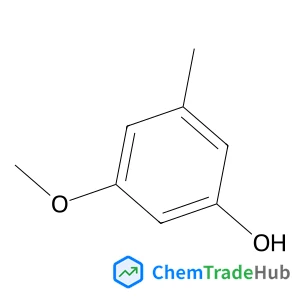
おすすめ化合物
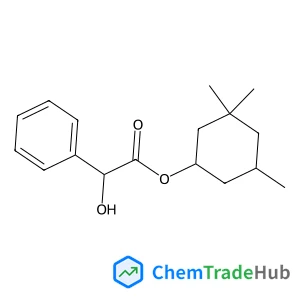
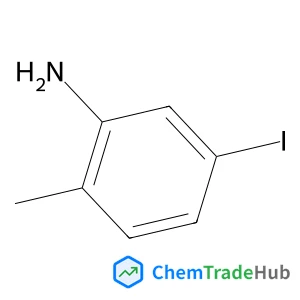
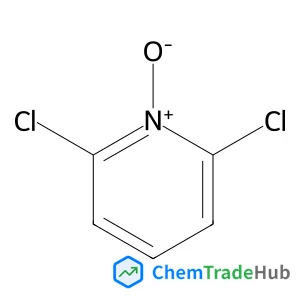
おすすめサプライヤー




免責事項
このページに表示される学術雑誌情報は、参考および研究目的のみを目的としています。当社は雑誌出版社とは提携しておらず、投稿の取り扱いも行っておりません。出版に関するお問い合わせは、各雑誌出版社に直接ご連絡ください。
表示されている情報に誤りがある場合は、support@chemtradehub.com までご連絡ください。迅速に確認し、対応いたします。