












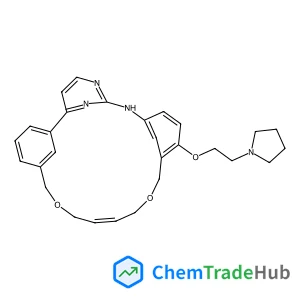
Opto-fluidic micro-ring resonator for sensitive label-free viral detection
文献情報
出版日
2008-01-08
DOI
10.1039/B716834A
インパクトファクター
4.616
著者
Hongying Zhu, Ian M. White, Jonathan D. Suter, Mohammed Zourob, Xudong Fan
原文を見る
要旨
We have demonstrated sensitive label-free virus detection using the opto-fluidic ring resonator (OFRR) sensor. The OFRR is a novel sensing platform that integrates the microfluidics and photonic sensing technology with a low detection limit and small volume. In our experiment, filamentous bacteriophage M13 was used as a safe model system. Virus samples were flowed through the OFRR whose surface was coated with M13-specific antibodies. We studied the sensor performance by monitoring in real-time the virus and antibody interaction. It is shown that OFRR can detect M13 with high specificity and sensitivity. The detection limit is approximately 2.3 × 10³ pfu mL−1 and the detection dynamic range spanned seven orders of magnitude. Theoretical analysis was also carried out to confirm the experimental results. Our study will lead to development of novel OFRR-based, sensitive, rapid, and low-cost micro total analysis devices for virus detection.
関連文献
Voltammetric, EPR and UV–VIS–NIR spectroscopic studies associated with the one-electron oxidation of C60 and C70 in 1,1′,2,2′-tetrachloroethane containing trifluoromethanesulfonic acid
Richard D. Webster, Graham A. Heath
2001-06-05
Paper
DOI: 10.1039/B101980P
A pulse radiolysis study of H atom reactions with aliphatic alcohols: evaluation of kinetics by direct optical absorption measurement
M. S. Alam, B. S. M. Rao, E. Janata
2001-05-31
Paper
DOI: 10.1039/B101385H
Evaluation of the performance of the HCTH exchange-correlation functional using a benchmark of sulfur compounds
Paper
DOI: 10.1039/A907704I
Post-polymerization ‘click’ end-capping of polyglyoxylate self-immolative polymers
Peter G. Maschmeyer, Xiaoli Liang, Allison Hung, Oksana Ahmadzai, Annmaree L. Kenny, Yuan C. Luong, Timothy N. Forder, Haoxiang Zeng
2021-10-26
Paper
DOI: 10.1039/D1PY01169C
Organic contribution to sub-micron aerosol evolution over a boreal forest—a case study
Paper
DOI: 10.1039/A904441H
こちらもおすすめ
化合物よくある質問
3-(5-フェニル-2-ファイル)-プロパン酸の市場動向や研究トレンドはどうですか?
この化合物の市場動向は不明ですが、類似化合物の需要は化学繊維、医薬品、農薬分野で安定しています。研究トレンドとしては、該当化合物の生物学的活性の評価や、その他の...
3465-61-03-(5-Phenyl-2-furyl)...
化合物よくある質問
3- Chloro-1H-indazol-5-olはどのように保存すればよいですか?
3- チロロ-1H-吲唑-5-醇は遮光し、直射日光を避けて、温度は室温を推奨し、密閉容器に保存してください。
885519-34-63-Chloro-1H-indazol-...
849924-76-11,2,3,4,5-Cyclopenta...
化合物よくある質問
L-(1-~13~C)メチオニンの市場動向や研究トレンドはどうですか?
L-(1-~13~C)メチオニンは、医薬品やバイオテクノロジー分野での研究が増加しており、その価格は安定しています。新興研究分野では、代謝解析や遺伝子機能解析で...
81202-04-2L-(1-~13~C)Methionin...
化合物よくある質問
1,3-フェニレンビスメチレンビスアクリレートは安全ですか?
1,3-フェニレンビスメチレンビスアクリレートは一般的に安全ですが、直接皮膚に触れる場合は保護用具を使用することを推奨します。高濃度の蒸気が吸入された場合は呼吸...
22757-16-01,3-Phenylenebis(met...
化合物よくある質問
丹参醇Aはどのように保存すればよいですか?
丹参醇Aは、直射日光を避けて室温で保存し、密栓容器に入れることをお勧めします。適切な保存条件は、安定性を保ち、安全性を確保する上で重要です。
189308-08-5Danshenol A
化合物よくある質問
4-メチル-2-(1,1,1-三フロロ-2-メチルプロパニル)ピリドインとは何ですか?
CAS番号1378865-93-0の4-メチル-2-(1,1,1-三フロロ-2-メチルプロパニル)ピリドインは、合成化学分野で用いられる有機化合物の一種です。こ...
1378865-93-04-Methyl-2-(1,1,1-tr...
化合物よくある質問
N-フェニルベンジル-2-クロロ酢氨を取り扱う際の実験室安全事項は何ですか?
N-フェニルベンジル-2-クロロ酢氨は毒性があり、皮膚や粘膜に刺激を与えます。取り扱う際には、保護眼鏡、手袋、ゴーグルを着用することを強く推奨します。ドラフトチ...
2653-14-7N-benzyl-2-chloro-N-...
化合物よくある質問
UCN-02を取り扱う際の実験室安全事項は何ですか?
UCN-02は毒性は低いですが、人体への直接的な接触は避けるべきです。PPE要件はグローブと顔面保護具を着用することです。ドラフトチャンバーを使用して漏洩を処理...
121569-61-7UCN-02
化合物よくある質問
N-[3-[2-(二甲基氨基)乙氧基]-4-甲氧基苯基]-2'-甲基-4'-(5-甲基-1,2,4-恶二唑-3-基)-[1,1'-联苯]-4-甲酰胺を取り扱う際の実験室安全事項は何ですか?
手袋と保護眼鏡を着用し、漏洩時には吸気防止装置を使用してください。室温、乾燥した場所に保管し、直日光から隔離してください。SDS(安全データシート)を参照してく...
170230-39-4N-{3-[2-(Dimethylami...
掲載誌
Analyst

CiteScore:
7.8
自己引用率:
5.6%
年間論文数:
653
Analyst publishes analytical and bioanalytical research that reports premier fundamental discoveries and inventions, and the applications of those discoveries, unconfined by traditional discipline barriers.
おすすめ化合物
おすすめサプライヤー






免責事項
このページに表示される学術雑誌情報は、参考および研究目的のみを目的としています。当社は雑誌出版社とは提携しておらず、投稿の取り扱いも行っておりません。出版に関するお問い合わせは、各雑誌出版社に直接ご連絡ください。
表示されている情報に誤りがある場合は、support@chemtradehub.com までご連絡ください。迅速に確認し、対応いたします。