


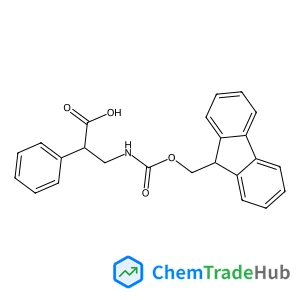
(S)-3-((((9H-Fluoren-9-yl)methoxy)carbonyl)amino)-2-phenylpropanoic acid
CAS番号:
1217663-60-9
分子式:
C24H21NO4
Ferenc Molnár Jr
In the past years considerable attention has been devoted to designing and controlling patterns at the microscale using bottom-up self-assembling techniques. The precipitation process proved itself to be a good candidate for building complex structures. Therefore, the techniques and ideas to control the precipitation processes in space and in time play an important role. We present here a simple and technologically applicable technique to produce arbitrarily shaped precipitation (Liesegang) patterns. The precipitation process is modelled using a sol coagulation model, in which the precipitation occurs if the concentration of the intermediate species (sol) produced from the initially separated reactants (inner and outer electrolytes) reaches the coagulation threshold. Spatial and/or temporal variation of this threshold can result in equidistant and revert (inverse) type patterns in contrast to regular precipitation patterns, where during the pattern formation a constant coagulation threshold is supposed and applied in the simulations. In real systems, this threshold value may be controlled by parameters which directly affect it (e.g. temperature, light intensity or ionic strength).

Fibre Chemistry

Planta Medica

Kinetics and Catalysis

Journal of Organometallic Chemistry

Science

Journal of Physics and Chemistry of Solids

Organic Preparations and Procedures International

European Journal of Wood and Wood Products

Proceedings of the National Academy of Sciences of the United States of America

Helvetica Chimica Acta
Zhiguo Zhang, Yongchao Zhang, Guoqing Huang, Guisheng Zhang
DOI: 10.1039/C7QO00156H
Hyungmo Koo, Hun Young Kim, Kyungsoo Oh
DOI: 10.1039/C9QO00217K
Tianjiao Hou, Jian Zhang, Chenjiao Wang, Jun Luo
DOI: 10.1039/C7QO00357A
Etienne Levernier, Vincent Corcé, Louise-Marie Rakotoarison, Adrien Smith, Mengxue Zhang, Stephanie Ognier, Michael Tatoulian, Cyril Ollivier, Louis Fensterbank
DOI: 10.1039/C9QO00092E
Dongyang Xu, Hongbo Wei, Yanxia Zhen, Yu-Qi Gao, Ruoxin Li, Xingzhou Li, Yupeng He, Zhong Zhang
DOI: 10.1039/C9QO00304E
Na Zhang, Zhengyi Shi, Yi Guo, Shuangshuang Xie, Yuben Qiao, Xiao-Nian Li, Yongbo Xue, Zengwei Luo, Hucheng Zhu, Chunmei Chen, Yonghui Zhang
DOI: 10.1039/C9QO90045D
Daniel Bauer, Beatrice Andrae, Patrick Gaß, Danjano Trenz, Sabine Becker, Stefan Kubik
DOI: 10.1039/C9QO90027F
Xinqiang Cheng, Xinzheng Yang, Yun-Lai Ren, Kaisheng Yao, Huiyong Wang, Jianji Wang
DOI: 10.1039/C9QO00004F
Yong You, Jian-Qiang Zhao
DOI: 10.1039/C9QO00347A
Zhen Zhang, Xiao-Ming Zhang, Fu-Min Zhang, Shao-Hua Wang
DOI: 10.1039/C9QO00353C
6- bromo-1-cyclopropyl-1H-benzimidazoleは、抗炎症、抗ウイルス作用を持つことが報告されており、新薬開発の研究対象として注目...
取り扱う際には、防護眼鏡と手袋を使用し、ドラフトチャンバー内で操作することを推奨します。漏洩時には適切な手順で処理し、安全データシートを常に参照してください。
2,2’-ジメチル-3,3’-ビピリジンは、ピリジンと2-メチルアクリルアミドを有機合成反応で合成します。この反応では、ピリジンと2-メチルアクリルアミドを含有...
6-甲基ピリジン-2-ボリック酸は、合成化学、医薬品合成、以及研究用途などに広く使用され、特に組換えDNA技術や分子生物学の研究において重要な役割を果たします。
(R)-3-(1-甲基-2-氧環己基)プロpano酸メチルは一定の安全性がありますが、直接的な皮膚接触や吸入は避けるべきです。使用する際は適切な個々の安全データ...
ketorolacは、密封して遮光容器に保管し、直射日光や高温を避けて保存してください。温度は常温で保存し、湿度をなるべく低く保つことが推奨されます。
L-2,3-二氨基丙酸二盐酸盐は腐食性が強く、皮膚や粘膜に刺激を与える可能性があります。取り扱う際は、防塵マスク、ゴーグル、手袋を使用し、適切な排気設備を使用し...
2-(4-溴ピリジン-2-基)乙腈のCAS番号は312325-73-8です。主に結晶形態で存在し、分子量は159.01 g/molです。この化合物は水に溶けやす...
この化合物は毒性は低いですが、直接的な接触や吸入に注意が必要です。PPE(個人防護具)を着用し、ドラフトチャンバーを使用して操作することを推奨します。また、漏洩...
3-(1-氧代-1,3-二氢-2H-2-异吲哚)丙酸は、薬理学研究や医薬品製造において広く用いられる化合物です。また、工業的な用途でも一部の化学反応の触媒や助剤...

Physical Chemistry Chemical Physics (PCCP) is an international journal co-owned by 19 physical chemistry and physics societies from around the world. This journal publishes original, cutting-edge research in physical chemistry, chemical physics and biophysical chemistry. To be suitable for publication in PCCP, articles must include significant innovation and/or insight into physical chemistry; this is the most important criterion that reviewers and Editors will judge against when evaluating submissions. The journal has a broad scope and welcomes contributions spanning experiment, theory, computation and data science. Topical coverage includes spectroscopy, dynamics, kinetics, statistical mechanics, thermodynamics, electrochemistry, catalysis, surface science, quantum mechanics, quantum computing and machine learning. Interdisciplinary research areas such as polymers and soft matter, materials, nanoscience, energy, surfaces/interfaces, and biophysical chemistry are welcomed if they demonstrate significant innovation and/or insight into physical chemistry. Joined experimental/theoretical studies are particularly appreciated when complementary and based on up-to-date approaches.
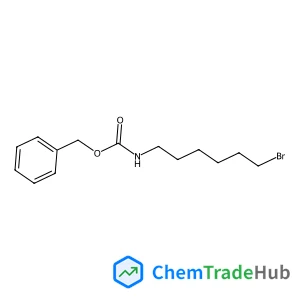
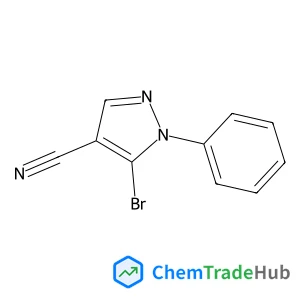
![2-{[(1R,2S)-2-Aminocyclohexyl]amino}-4-{[3-(2H-1,2,3-triazol-2-yl)phenyl]amino}-5-pyrimidinecarboxamide structure](https://static.chemtradehub.com/structs/137/1370261-96-3-40df.webp "2-{[(1R,2S)-2-Aminocyclohexyl]amino}-4-{[3-(2H-1,2,3-triazol-2-yl)phenyl]amino}-5-pyrimidinecarboxamide structure")






