












Recent advances in shell cross-linked micelles
文献情報
出版日
2007-03-20
DOI
10.1039/B701217A
インパクトファクター
6.222
著者
Elizabeth S. Read, Steven P. Armes
原文を見る
要旨
The field of shell cross-linked (SCL) micelles is briefly reviewed. Important advances over the last two years are emphasized, potential application areas are discussed and current technical problems with these fascinating nanoparticles are highlighted. Particular attention is paid to (i) the development of new cross-linking chemistries and (ii) the adsorption of SCL micelles at interfaces.
関連文献
Vibronic quantized tunneling controlled photoinduced electron transfer in an organic solar cell subjected to an external electric field
Peng Song, Yuanzuo Li, Fengcai Ma
2017-05-30
Paper
DOI: 10.1039/C7CP02157G
Understanding the adsorptive interactions of arsenate–iron nanoparticles with curved fullerene-like sheets in activated carbon using a quantum mechanics/molecular mechanics computational approach
Le Minh Cam, Nguyen Thi Thu Ha, Bee-Min Goh, Martin Saunders, Zhong-Tao Jiang, Mohammednoor Altarawneh, Bogdan Z. Dlugogorski, Mohanad El-Harbawi, Chun-Yang Yin
2017-05-08
Paper
DOI: 10.1039/C7CP02006F
Photophysical properties and excited state dynamics of 4,7-dithien-2-yl-2,1,3-benzothiadiazole
Andrea Basagni, Agnese Marcelli, Andrea Alessi, Stefano Zanardi, Roberto Fusco, Mario Salvalaggio, Laura Bussotti
2017-04-28
Paper
DOI: 10.1039/C6CP08721C
Thionine–graphene oxide covalent hybrid and its interaction with light
Ewelina Krzyszkowska, Justyna Walkowiak-Kulikowska, Sven Stienen, Aleksandra Wojcik
2017-05-22
Paper
DOI: 10.1039/C7CP01267E
3T1R model and tuning of thermoluminescence intensity by optimization of dopant concentration in monoclinic Gd2O3:Er3+;Yb3+ co-doped phosphor
Raunak Kumar Tamrakar, Kanchan Upadhyay, D. P. Bisen
2017-05-09
Paper
DOI: 10.1039/C7CP01424D
Colloid–oil–water-interface interactions in the presence of multiple salts: charge regulation and dynamics‡
J. C. Everts, S. Samin, N. A. Elbers, J. E. S. van der Hoeven, A. van Blaaderen, R. van Roij
2017-05-18
Paper
DOI: 10.1039/C7CP01935A
Modeling of diameter-dependent Fe and Co ultrathin nanowires from first-principles calculations
Shivam Kansara, Sanjeev K. Gupta, Yogesh Sonvane, Igor Lukačević
2017-05-25
Paper
DOI: 10.1039/C7CP02072D
The mechanism of ammonium bisulfate formation and decomposition over V/WTi catalysts for NH3-selective catalytic reduction at various temperatures
Chenxu Li, Jianqiang Wang, Jun Wang, Yanping Zhai
2017-05-05
Paper
DOI: 10.1039/C7CP02324C
The A-center defect in diamond: quantum mechanical characterization through the infrared spectrum
Simone Salustro, Giuseppe Sansone, Claudio M. Zicovich-Wilson, Yves Noël, Lorenzo Maschio, Roberto Dovesi
2017-05-23
Paper
DOI: 10.1039/C7CP00093F
Reaction of H + HONO in solid para-hydrogen: infrared spectrum of ˙ONH(OH)
Karolina Anna Haupa, Alexander Godfried Gerardus Maria Tielens
2017-06-05
Paper
DOI: 10.1039/C7CP02621H
こちらもおすすめ
化合物よくある質問
環戊烷-1,3-二甲酸甲酯はどのように合成されますか?
環戊烷-1,3-二甲酸甲酯は、環戊烷と塩酸によるヒンデンブルク反応を経由して合成されます。この反応では、環戊烷が塩酸と作用し、1,3-ジカルボキシ基が導入されま...
2435-36-1Dimethyl 1,3-cyclope...
化合物よくある質問
4-メトキシ-1,2,3-スチアゼ-3,5-ジオンとは何ですか?
4-メトキシ-1,2,3-スチアゼ-3,5-ジオンは、CAS番号107843-77-6の化合物で、(E)-ベンジル3-(3,4-ジヒドロキシフェニル) acry...
107843-77-6(E)-Benzyl 3-(3,4-di...
化合物よくある質問
プロスタグランジンA2について「に適用される法規ガイドラインは何ですか?'
プロスタグランジンA2 (CAS番号: 41691-92-3) は、化学物質の安全管理に関する規制として、GHS (危険物質の国際的ハザード分類・ラベル付けシス...
41691-92-316,16-DIMETHYL PROST...
化合物よくある質問
4-アミノ-1-ナフタレン sulfonic 酸についての物理化学的性質は何ですか?
4-アミノ-1-ナフタレン sulfonic 酸のCAS番号は84-86-6です。この化合物は結晶性で、分子量は212.15 g/molです。アルコールや水など...
84-86-64-Amino-1-naphthalen...
化合物よくある質問
N-GlcNAc-生物素を取り扱う際の実験室安全事項は何ですか?
N-GlcNAc-生物素は吸収性があり、皮膚や目への接触を避けることが重要です。PPE(個体保護具)は使用し、ドラフトチャンバーは必要に応じて使用します。漏洩時...
1272755-69-72-Acetamido-2-deoxy-...
化合物よくある質問
3-アミノメチルフローラノピペリジン-1-カルボニル酸テルブチルエステルとは何ですか?
CAS番号1209781-11-2の3-アミノメチルフローラノピペリジン-1-カルボニル酸テルブチルエステルは、有機化合物の一種で、化学式はC10H17FNO3...
1209781-11-22-Methyl-2-propanyl ...
化合物よくある質問
6-溴-1-甲基-1H-ベンゾ[d][1,2,3]三氮唑はどのように合成されますか?
6- bromo-1-methyl-1H-benzotriazoleは、ブロモフリオリンと1-メチル-1H-ベンゾ[d][1,2,3]三氮唑の反応により合成され...
944718-32-56-Bromo-1-methyl-1H-...
化合物よくある質問
4-硫代尿苷はどのように合成されますか?
4-硫代尿苷は、尿素とD-リボシルヒドロキシアルデヒドを用いてスルホン化反応を経て合成されます。通常は塩酸ヒドロキシチオニルスルホン酸などの触媒を使用し、選択性...
6741-73-71-(4-thio-beta-D-rib...
化合物よくある質問
ブレインナトリユリックペプチド32ラットとは何ですか?
ブレインナトリユリックペプチド32ラット(CAS番号: 133448-20-1)は、心臓で作られるホルモンの一つで、心不全の診断や予後評価に使用されます。
133448-20-1Brain Natriuretic Pe...
化合物よくある質問
1-(3-氮杂啶)-4-羟基哌啶双盐酸盐の物理化学的性質は何ですか?
CAS番号810680-60-5の1-(3-氮杂啶)-4-羟基哌啶双盐酸盐は、白色の結晶性粉末である。分子量は360.84 g/molで、水に溶けやすい。反応活...
810680-60-51-(3-Azetidinyl)-4-p...
掲載誌
Chemical Communications

CiteScore:
8.6
自己引用率:
4.7%
年間論文数:
2458
ChemComm publishes urgent research which is of outstanding significance and interest to experts in the field, while also appealing to the journal’s broad chemistry readership. Our communication format is ideally suited to short, urgent studies that are of such importance that they require accelerated publication. Our scope covers all topics in chemistry, and research at the interface of chemistry and other disciplines (such as materials science, nanoscience, physics, engineering and biology) where there is a significant novelty in the chemistry aspects. Major topic areas covered include: Analytical Chemistry Catalysis Chemical Biology and medicinal chemistry Computational Chemistry and Machine Learning Energy and sustainable chemistry Environmental Chemistry Green Chemistry Inorganic Chemistry Materials Chemistry Nanoscience Organic Chemistry Physical Chemistry Polymer Chemistry Supramolecular Chemistry
おすすめ化合物
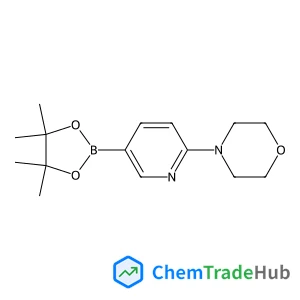
4-(5-(4,4,5,5-tetramethyl-1,3,2-dioxaborolan-2-yl)pyridin-2-yl)morpholine
CAS番号:
485799-04-0
分子式:
C15H23BN2O3
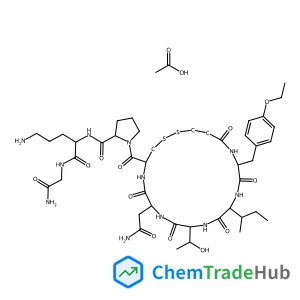
![Ethyl 3-((6-(4,5-dihydro-1H-benzo[d]azepin-3(2H)-yl)-2-(pyridin-2-yl)pyrimidin-4-yl)amino)propanoate structure](https://static.chemtradehub.com/structs/137/1373423-53-0-496a.webp "Ethyl 3-((6-(4,5-dihydro-1H-benzo[d]azepin-3(2H)-yl)-2-(pyridin-2-yl)pyrimidin-4-yl)amino)propanoate structure")
おすすめサプライヤー


免責事項
このページに表示される学術雑誌情報は、参考および研究目的のみを目的としています。当社は雑誌出版社とは提携しておらず、投稿の取り扱いも行っておりません。出版に関するお問い合わせは、各雑誌出版社に直接ご連絡ください。
表示されている情報に誤りがある場合は、support@chemtradehub.com までご連絡ください。迅速に確認し、対応いたします。