












Directed evolution and axial chirality: optimization of the enantioselectivity of Pseudomonas aeruginosa lipase towards the kinetic resolution of a racemic allene
文献情報
出版日
2007-02-21
DOI
10.1039/B700849J
インパクトファクター
6.222
著者
José Daniel Carballeira, Patrik Krumlinde, Marco Bocola, Andreas Vogel, Manfred T. Reetz, Jan-E. Bäckvall
原文を見る
要旨
Directed evolution of Pseudomonas aeruginosa lipase by the use of combinatorial active site saturation test (CAST) criteria provided a highly enantioselective mutant (Leu162Phe) for kinetic resolution of an axially chiral allene, p-nitrophenyl 4-cyclohexyl-2-methylbuta-2,3-dienoate (E = 111); the high enantioselectivity of the Leu162Phe mutant was rationalized by π–π stacking.
関連文献
Exchange-dependent spin polarized transport and phase transition in a triple monomer molecule
Yongchen Xiong, Shijun Luo, Haiming Huang, Yanan Ma, Xiong Zhang
2019-04-25
Paper
DOI: 10.1039/C9CP01350D
Tuning the electronic and magnetic properties of antimonene nanosheets via point defects and external fields: first-principles calculations
Mitra Ghergherehchi, Saber Farjami Shayesteh
2019-04-25
Paper
DOI: 10.1039/C9CP01378D
Triplet state promoted reaction of SO2 with H2O by competition between proton coupled electron transfer (pcet) and hydrogen atom transfer (hat) processes
Josep M. Anglada, Marilia T. C. Martins-Costa, Joseph S. Francisco, Manuel F. Ruiz-López
2019-04-23
Paper
DOI: 10.1039/C9CP01105F
A competitive hopping model for carrier transport in disordered organic semiconductors
Chongguang Zhao, Chen Li
2019-04-12
Paper
DOI: 10.1039/C9CP01243E
J-Aggregates of zinc tetraphenylporphyrin: a new pathway to excellent electrochemiluminescence emitters
Guiqiang Pu, Xingming Ning, Yali Wu, Zhen Zhang, Duoliang Shan
2019-04-29
Paper
DOI: 10.1039/C9CP01278H
Photodissociation dynamics of CH3I probed via multiphoton ionisation photoelectron spectroscopy
Emily M. Warne, Briony Downes-Ward, Joanne Woodhouse, Michael A. Parkes, Darren Bellshaw, Emma Springate, Paulina Majchrzak, Yu Zhang, Gabriel Karras, Adam S. Wyatt, Richard T. Chapman, Adam Kirrander, Russell S. Minns
2019-05-10
Paper
DOI: 10.1039/C9CP01477B
Response of adhesive polymer interfaces to repeated mechanical loading and the spatial variation of diffusion coefficient and stresses in a deforming polymer film
Jeeno Jose, Narasimhan Swaminathan
2019-04-29
Paper
DOI: 10.1039/C9CP00576E
Synergy of orientational relaxation between bound water and confined water in ice cold-crystallization
Qiang Wang, Xiao Huang, Wei Guo
2019-04-18
Paper
DOI: 10.1039/C9CP01600G
Diffusion in gadolinium doped ceria thin films: a combined Monte Carlo and molecular dynamics study
2019-04-26
Paper
DOI: 10.1039/C8CP07136E
Unexpected chalcogen bonds in tetravalent sulfur compounds
Antonio Franconetti, David Quiñonero, Antonio Frontera, Giuseppe Resnati
2019-05-09
Paper
DOI: 10.1039/C9CP01033E
こちらもおすすめ
化合物よくある質問
2-氟-4-イオドベンzo酸エチルエステルを取り扱う際の実験室安全事項は何ですか?
2-氟-4-イオドベンzo酸エチルエステルは有機溶媒を用いた反応であり、ドラフトチャンバーでの操作が必要です。漏洩時にはSDS参照の安全措置を講じ、PPE(防護...
205750-82-9Benzoic acid, 2-fluo...
化合物よくある質問
血根碱の主な用途は何ですか?
血根碱は主に医薬分野で利用され、抗炎症や抗がん剤としての潜在的な効果が研究されています。また、化学研究や薬物開発において、新しい薬剤設計の参考となる化合物として...
2447-54-313-Methyl[1,3]benzod...
化合物よくある質問
Methyl 3-methoxythiophene-2-carboxylateの主な用途は何ですか?
Methyl 3-メトキシスチフェン-2-カルボン酸メチルエステルは、薬品合成、染料製造、以及合成中間体としての用途が広がっています。
62353-75-7Methyl 3-methoxythio...
化合物よくある質問
丹磺酰-L-亮氨酸はどのように保存すればよいですか?
丹磺酰-L-亮氨酸は乾燥した場所で、直射日光から保護し、低温(室温以下)で保存してください。密閉容器に入れて保管することをおすすめします。
1100-22-7N-{[5-(Dimethylamino...
化合物よくある質問
5-(苄氧基)ピラミジン-4-アミンの代替品はありますか?
5-(苄氧基)ピラミジン-4-アミンの代替品として、6-メトキシピラミジンや5-フェニルピラミジンなどが挙げられます。これらの化合物は、5-(苄氧基)ピラミジン...
92289-50-45-benzyloxypyrimidin...
化合物よくある質問
8-ヒドロキシノルデコペントアセートの物理化学的性質は何ですか?
8-ヒドロキシノルデコペントアセートはCAS番号84807-87-4の化合物で、分子量は750.02 uです。これは油溶性で、水に溶けにくい特徴があります。反応...
84807-87-4(5Z,8Z,11Z,13E,15S)-...
化合物よくある質問
tert-ブチル(エス)-1-ヒドロキシペンタ-4-エン-2-イルカルバamateの主な用途は何ですか?
tert-ブチル(エス)-1-ヒドロキシペンタ-4-エン-2-イルカルバamateは主に医薬品の合成材料や分析化学の試薬として使用されます。
116613-81-12-Methyl-2-propanyl ...
化合物よくある質問
ブコール-L-2-フローヨルブリンについて適切な法規ガイドラインは何ですか?
ブコール-L-2-フローヨルブリン(CAS番号: 1196107-73-9)は、GHS(グローバルハザードアサessmentシステム)に基づく危害分類と表示が求...
1196107-73-92-Bromo-13,13-dimeth...
化合物よくある質問
6-ブロモ-N-環丙基-2-ピリジニニメタンの市場動向や研究トレンドはどうですか
6-ブロモ-N-環丙基-2-ピリジニニメタンは、薬理学研究や合成化学に使用される化合物であり、特に抗ウイルス薬や抗がん薬の開発に注目されています。市場では、薬物...
959237-20-86-Bromo-N-cyclopropy...
化合物よくある質問
RS-AMPÀはどのように保存すればよいですか?
RS-AMPÀは、遮光容器に保存し、室温(15〜25℃)で保管することが推奨されます。高湿や熱は物質を劣化させるため、湿度は50%以下に保つことが重要です。また...
74341-63-2(RS)-AMPA
掲載誌
Chemical Communications

CiteScore:
8.6
自己引用率:
4.7%
年間論文数:
2458
ChemComm publishes urgent research which is of outstanding significance and interest to experts in the field, while also appealing to the journal’s broad chemistry readership. Our communication format is ideally suited to short, urgent studies that are of such importance that they require accelerated publication. Our scope covers all topics in chemistry, and research at the interface of chemistry and other disciplines (such as materials science, nanoscience, physics, engineering and biology) where there is a significant novelty in the chemistry aspects. Major topic areas covered include: Analytical Chemistry Catalysis Chemical Biology and medicinal chemistry Computational Chemistry and Machine Learning Energy and sustainable chemistry Environmental Chemistry Green Chemistry Inorganic Chemistry Materials Chemistry Nanoscience Organic Chemistry Physical Chemistry Polymer Chemistry Supramolecular Chemistry
おすすめ化合物
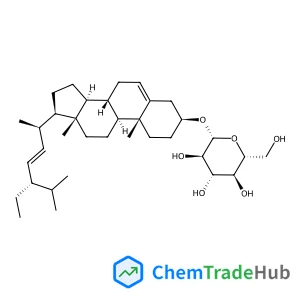
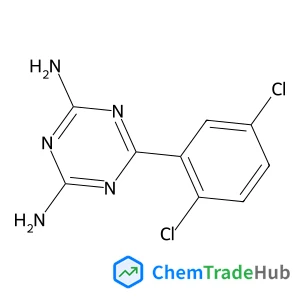
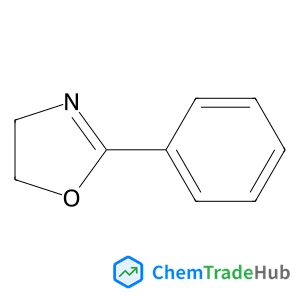
おすすめサプライヤー




免責事項
このページに表示される学術雑誌情報は、参考および研究目的のみを目的としています。当社は雑誌出版社とは提携しておらず、投稿の取り扱いも行っておりません。出版に関するお問い合わせは、各雑誌出版社に直接ご連絡ください。
表示されている情報に誤りがある場合は、support@chemtradehub.com までご連絡ください。迅速に確認し、対応いたします。