












Reactivity of V2O3(0001) surfaces: molecular vs dissociative adsorption of water
文献情報
出版日
2006-01-30
DOI
10.1039/B515179A
インパクトファクター
3.676
著者
原文を見る
要旨
The adsorption of water on V2O3(0001) surfaces has been investigated by thermal desorption spectroscopy, high-resolution electron energy loss spectroscopy, and X-ray photoelectron spectroscopy with use of synchrotron radiation. The V2O3(0001) surfaces have been generated in epitaxial thin film form on a Rh(111) substrate with three different surface terminations according to the particular preparation conditions. The stable surface in thermodynamic equilibrium with the bulk is formed by a vanadyl (VO) (1 × 1) surface layer, but an oxygen-rich (√3 × √3)R30° reconstruction can be prepared under a higher chemical potential of oxygen (μO), whereas a V-terminated surface consisting of a vanadium surface layer requires a low μO, which can be achieved experimentally by the deposition of V atoms onto the (1 × 1) VO surface. The latter two surfaces have been used to model, in a controlled way, oxygen and vanadium containing defect centres on V2O3. On the (1 × 1) VO and (√3 × √3)R30° surfaces, which expose only oxygen surface sites, the experimental results indicate consistently that the molecular adsorption of water provides the predominant adsorption channel. In contrast, on the V-terminated (1/√3 × 1/√3)R30° surface the dissociation of water and the formation of surface hydroxyl species at 100 K is readily observed. Besides the dissociative adsorption a molecular adsorption channel exists also on the V-terminated V2O3(0001) surface, so that the water monolayer consists of both OH and molecular H2O species. The V surface layer on V2O3 is very reactive and is reoxidised by adsorbed water at 250 K, yielding surface vanadyl species. The results of this study indicate that V surface centres are necessary for the dissociation of water on V2O3 surfaces.
関連文献
Organic dye-photocatalyzed fluoroalkylation of heteroarene-N-oxide derivatives
Beatriz Lantaño, Sebastián Barata-Vallejo, Al Postigo
2018-08-29
Paper
DOI: 10.1039/C8OB01653D
Aminative Umpolung cyclization for synthesis of chiral exocyclic vicinal diamines
Feng Liu, Guoqing Zhao, Weiqi Cai, Dongfang Xu, Baoguo Zhao
2018-09-26
Paper
DOI: 10.1039/C8OB02000K
Synthesis of 1,3-dithiol-2-ones as proligands related to molybdopterin
Ben Bradshaw, David Collison, C. David Garner, John A. Joule
2002-11-27
Paper
DOI: 10.1039/B209217D
Fe-Catalyzed tandem cyclization for the synthesis of 3-nitrofurans from homopropargylic alcohols and Al(NO3)3·9H2O
Ting Wang, Yong Jiang, Yanyan Wang, Rulong Yan
2018-07-02
Communication
DOI: 10.1039/C8OB01184B
Synthesis and evaluation of N,S-compounds as chiral ligands for transfer hydrogenation of acetophenone
Jenny K. Ekegren, Peter Roth, Klas Källström, Tibor Tarnai, Pher G. Andersson
2002-12-09
Paper
DOI: 10.1039/B208907F
Preferential precipitation of C70 over C60 with p-halohomooxacalix[3]arenes
Naoki Komatsu
2002-11-27
Paper
DOI: 10.1039/B208107E
Dependence of selective enclathration on types of cholic acid crystals
Nungruethai Yoswathananont, Kazuki Sada, Mikiji Miyata, Shigendo Akita, Kazunori Nakano
2002-11-29
Paper
DOI: 10.1039/B210544F
d-/l-Isothymidine incorporation in the core sequence of aptamer BC15 enhanced its binding affinity to the hnRNP A1 protein
Liyu Li, Kunfeng Li, Guangpu Zhang, Yuan Ma, Baobin Cai, Shaohua Li, Hongmei Ding, Jiali Deng, Xiyan Nan, Jing Sun, Yun Wu, Ningsheng Shao, Lihe Zhang, Zhenjun Yang
2018-09-19
Paper
DOI: 10.1039/C8OB01454J
こちらもおすすめ
化合物よくある質問
3-(2-オキサプロピル)ベンzoic酸はどのように合成されますか?
3-(2-オキサプロピル)ベンzoic酸は、ベンzoic酸とプロパノ酸をヒドロキシム化合物として反応させて生成します。具体的には、ベンzoic酸とプロパノ酸を反...
205927-63-53-(2-Oxopropyl)benzo...
114873-01-73-Fluoro-N-{[(2-meth...
化合物よくある質問
4-メチル-4-ピペリジニル-1-ピロリドイン甲酸の主な用途は何ですか?
4-メチル-4-ピペリジニル-1-ピロリドイン甲酸は、主に医薬品の合成材料や研究用物質として使用されます。さらに、一部の薬理学的研究にも応用されています。
885523-47-7(4-Methyl-4-piperidi...
化合物よくある質問
Biotin-PEG3-oxyamine HCl塩について、適切な化合物名称に適用される法規ガイドラインは何ですか?
Biotin-PEG3-oxyamine HCl塩は、GHS( Globally Harmonized System of Classification and...
1786206-22-1Biotin-PEG3-oxyamine...
化合物よくある質問
N-(4-イソチオシアネートフェニル)-2-メトキシアリニンはどのように合成されますか?
N-(4-イソチオシアネートフェニル)-2-メトキシアリニンは、4-イソチオシアノフェノールと2-メトキシアリニルアミンのアミニド反応を用いて合成されます。この...
915919-57-2N-(4-Isothiocyanatop...
化合物よくある質問
金粉蕨亭2'-O-葡萄糖甙の主な用途は何ですか?
金粉蕨亭2'-O-葡萄糖甙は主に薬理研究や医薬品製造に使用され、抗炎症作用や抗がん作用などがあります。また、その構造や性質から、合成化学や化学生理学の研究にも用...
76947-60-92-(7-Hydroxy-2,2,4,6...
化合物よくある質問
2-(2-ニトロフェニル)酢酸ヒドライドの物理化学的性質は何ですか?
2-(2-ニトロフェニル)酢酸ヒドライドのCAS番号は114953-81-0です。この化合物は白色結晶性粉末で、分子量は244.12です。水溶性は限られており、...
114953-81-02-(2-Nitrophenyl)ace...
化合物よくある質問
5-(ヒドロキシメチル)-2-チオキソ-2,3-ジヒドロピリミジン-4(1H)-オンを取り扱う際の実験室安全事項は何ですか?
この化合物は高活性のため、取り扱いには注意が必要です。PPE(個人保護具)としてゴーグル、ガントリー、および防滴シールドを着用することが推奨されます。ドラフトチ...
93185-31-05-(Hydroxymethyl)-2-...
化合物よくある質問
11-脱氢血栓烷 b2の市場動向や研究トレンドはどうですか?
11-脱氢血栓烷 b2は、血栓溶解・抗凝固作用に関する研究で注目を集めています。特に心血管疾患の治療法開発において、市場の需要が高まっています。研究トレンドとし...
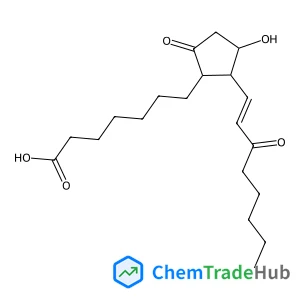
67910-12-77-{(2R,3S,4S)-4-Hydr...
化合物よくある質問
3,3-二甲基哌啶-4-酮はどのように保存すればよいですか?
3,3-二甲基哌啶-4-酮は避光、常温、乾燥した場所で保存してください。容器は密閉し、遠くから火源を離して保管することを確認してください。
150668-82-93,3-Dimethyl-4-piper...
掲載誌
Physical Chemistry Chemical Physics

CiteScore:
5.5
自己引用率:
10.3%
年間論文数:
3036
Physical Chemistry Chemical Physics (PCCP) is an international journal co-owned by 19 physical chemistry and physics societies from around the world. This journal publishes original, cutting-edge research in physical chemistry, chemical physics and biophysical chemistry. To be suitable for publication in PCCP, articles must include significant innovation and/or insight into physical chemistry; this is the most important criterion that reviewers and Editors will judge against when evaluating submissions. The journal has a broad scope and welcomes contributions spanning experiment, theory, computation and data science. Topical coverage includes spectroscopy, dynamics, kinetics, statistical mechanics, thermodynamics, electrochemistry, catalysis, surface science, quantum mechanics, quantum computing and machine learning. Interdisciplinary research areas such as polymers and soft matter, materials, nanoscience, energy, surfaces/interfaces, and biophysical chemistry are welcomed if they demonstrate significant innovation and/or insight into physical chemistry. Joined experimental/theoretical studies are particularly appreciated when complementary and based on up-to-date approaches.
おすすめ化合物
![Benzyl spiro[indole-3,4'-piperidine]-1(2H)-carboxylate hydrochloride (1:1) structure](https://static.chemtradehub.com/structs/159/159635-46-8-8de0.webp "Benzyl spiro[indole-3,4'-piperidine]-1(2H)-carboxylate hydrochloride (1:1) structure")
Benzyl spiro[indole-3,4'-piperidine]-1(2H)-carboxylate hydrochloride (1:1)
CAS番号:
159635-46-8
分子式:
C20H23ClN2O2
おすすめサプライヤー





免責事項
このページに表示される学術雑誌情報は、参考および研究目的のみを目的としています。当社は雑誌出版社とは提携しておらず、投稿の取り扱いも行っておりません。出版に関するお問い合わせは、各雑誌出版社に直接ご連絡ください。
表示されている情報に誤りがある場合は、support@chemtradehub.com までご連絡ください。迅速に確認し、対応いたします。