












Non-matrix matched calibration of major and minor concentrations of Zn and Cu in brass, aluminium and silicate glass using NIR femtosecond laser ablation inductively coupled plasma mass spectrometry
文献情報
出版日
2005-12-20
DOI
10.1039/B513690C
インパクトファクター
4.023
著者
Qunzhou Bian, Carmen C. Garcia, Joachim Koch, Kay Niemax
原文を見る
要旨
The feasibility of using near-infrared (NIR) femtosecond laser ablation (fs-LA) inductively coupled plasma mass spectrometry (ICP-MS) for the analysis of solid samples with non-matrix matched standard reference materials was studied. Major and minor concentrations of Zn and Cu (433 μg g−1–0.95 g g−1) were measured in three sets of metallic and dielectric standards (brass, aluminium, silicate glass) using He as the ablation cell gas and, with admixed Ar, for aerosol transportation from the cell into an Ar-ICP-MS instrument. Not surprisingly for ICP-MS detection, the experimental Zn/Cu ion ratios were found to be dependent on the sampler cone position in the plasma. However, at a fixed sampler position the experimental Zn/Cu ratios of the brass and Al samples were found to be proportional to the certified ratios independent of the laser fluence applied (range: 2–42 J cm−2). In contrast, the Zn/Cu ratio of an optical transparent glass sample (NIST 610) was found to be strongly fluence dependent. However, with increasing fluence the measured ratio asymptotically approached the experimentally expected ratio taking into account the results obtained from the brass and aluminium measurements.
関連文献
Strain-engineering the in-plane electrical anisotropy of GeSe monolayers
Zongbao Li, Xinsheng Liu, Xia Wang, Yusi Yang, Wei Shi, Yong Li, Xiaobo Xing
2019-12-10
Paper
DOI: 10.1039/C9CP05058B
First-principles study on screening doped TiO2(B) as an anode material with high conductivity and low lithium transport resistance for lithium-ion batteries
Yanlei Wang, Jing Kong, Feng Huo, Sufan Wang, Hongyan He, Suojiang Zhang
2019-07-25
Paper
DOI: 10.1039/C9CP01885A
About the origin of the large Stokes shift in aminoalkyl substituted heptamethine cyanine dyes
Cristina Sissa, Anna Painelli, Francesca Terenziani, Massimo Trotta, Roberta Ragni
2019-12-10
Paper
DOI: 10.1039/C9CP05473A
Water dissociation and hydrogen evolution on the surface of Fe-based bulk metallic glasses
Ping-Ping Sun, Devesh R. Kripalani
2019-12-04
Paper
DOI: 10.1039/C9CP04672K
Onset of ionic coherence and ultrafast charge dynamics in attosecond molecular ionisation
2019-07-30
Paper
DOI: 10.1039/C9CP03074C
Mechanism and kinetics for both thermal and electrochemical reduction of N2 catalysed by Ru(0001) based on quantum mechanics
Liang-Yu Chen, Tung-Chun Kuo, Zih-Siang Hong, Mu-Jeng Cheng, William A. Goddard, III
2019-07-15
Paper
DOI: 10.1039/C9CP03187A
Quantum mechanical molecular dynamics simulations of polaron formation in methylammonium lead iodide perovskite
Hiroki Uratani, Chien-Pin Chou
2019-11-27
Paper
DOI: 10.1039/C9CP04739E
Theoretical insights into the effect of the overpotential on CO electroreduction mechanisms on Cu(111): regulation and application of electrode potentials from a CO coverage-dependent electrochemical model
Lihui Ou, Junxiang Chen
2019-11-25
Paper
DOI: 10.1039/C9CP05043D
Implicit solvent effects in the determination of Brønsted–Evans–Polanyi relationships for heterogeneously catalyzed reactions
José R. B. Gomes, Francesc Viñes, Francesc Illas, José L. C. Fajín
2019-07-17
Paper
DOI: 10.1039/C9CP02817J
こちらもおすすめ
化合物よくある質問
4-アミノフェノール酸ナトリウム水和物とは何ですか?
4-アミノフェノール酸ナトリウム水和物は、CAS番号206557-08-6の化合物で、4-アミノフェノールとナトリウムが結合した塩と水和物です。この化合物は、白...
206557-08-64-Aminobenzoic acid ...
化合物よくある質問
Methyl 3-methyl-N-{[(2-methyl-2-propanyl)oxy]carbonyl}-L-histidinateの代替品はありますか?
この化合物は特定の合成プロセスに使用される可能性がありますが、代替品として、他の类似的な化合物、例えばMethyl 3-methyl-N-{[(2-methyl...
72212-51-2Methyl 3-methyl-N-{[...
化合物よくある質問
4-Boc-2-哌嗪甲酸の市場動向や研究トレンドはどうですか?
4-Boc-2-哌嗪甲酸は、薬品開発や合成化学分野で広く使用されており、その需要は継続的に推移しています。特に、新薬開発における合成化学分野での需要が高まってい...
192330-11-3(2R)-4-[(tert-butoxy...
化合物よくある質問
4,4'-二羟甲基联苯の物理化学的性質は何ですか?
4,4'-二羟甲基联苯のCAS番号は1667-12-5です。この化合物は白色の結晶粉末で、分子量は154.20です。水にわずかに溶けますが、アルコールや有機溶媒...
1667-12-54,4'-Biphenyldiyldim...
化合物よくある質問
5-甲硫基戊腈はどの業界で使用されていますか?
5-甲硫基戊腈は医薬品産業で使用される可能性があります。また、ポリマー合成の触媒として、センサー製造の一部として、半導体製造のプロセス改善に使用される可能性があ...
59121-25-45-(Methylsulfanyl)pe...
化合物よくある質問
CAS番号1311961-50-8の化合物はどのように合成されますか?
この化合物は、1-abieta-8,11,13-trien-19-イルと6'-メトキシシンコナナン-9-基を含有する窒素含有化合物から合成されます。一般的な合成...
1311961-50-81-Abieta-8,11,13-tri...
化合物よくある質問
6-ブロモベンジジミダゾール-2-カルビルデオキシドはどのように保存すればよいですか?
6-ブロモベンジジミダゾール-2-カルビルデオキシドは、避光・乾燥した容器(密閉容器)で-20℃~4℃の低温で保存してください。高温や直射日光、湿気は避けてくだ...
885280-26-25-Bromo-1H-benzimida...
化合物よくある質問
Boc-N-甲基氨甲环酸とは何ですか?
621-65-8のCAS番号を持つBoc-N-甲基氨甲环酸は、化学式C7H13NO5を有する化合物です。この化合物は白色の結晶性粉末で、吸湿性があります。
621-65-83-Hydroxy-1,2-propan...
化合物よくある質問
乙基三氟硼酸钾はどのように合成されますか?
乙基三氟硼酸钾は、トリフLUオール酸カリウムとエチルブロミドを反応させて合成されます。この反応は高い選択性と収率を持ち、触媒を用いることで効率的に進行します。
882871-21-8Potassium ethyltrifl...
化合物よくある質問
2-フロウロ-5-クロロ-4-アミノフェノールはどのように保存すればよいですか?
2-フロウロ-5-クロロ-4-アミノフェノールは、直射日光を避けて冷却された暗所で保存し、密閉容器に保管してください。温度は常温か低温が適しています。
847872-10-04-Amino-5-chloro-2-f...
掲載誌
Journal of Analytical Atomic Spectrometry

CiteScore:
6.2
自己引用率:
25.8%
年間論文数:
254
The Journal of Analytical Atomic Spectrometry (JAAS) is the central journal for publishing innovative research on fundamentals, instrumentation, and methods in the determination, speciation and isotopic analysis of (trace) elements within all fields of application. This includes, but is not restricted to, the most recent progress, developments and achievements in all forms of atomic and elemental detection, isotope ratio determination, molecular analysis, plasma-based analysis and X-ray techniques. The journal welcomes full papers, communications, technical notes, critical and tutorial review articles, editorials, and comments, in addition to the Atomic Spectrometry Updates (ASU) literature reviews that are prepared by an expert panel. Submissions are welcome in the following areas, but note this list reflects the current scope and authors are strongly encouraged to contact the Editorial team if they believe that their work offers potentially new and emerging research relevant to the journal remit: Fundamental studies in the following. New and existing sources for atomic emission, absorption, fluorescence and mass spectrometry and those that provide both atomic and molecular information Sample introduction techniques for solids, liquids, gases Improvements in sensitivity, selectivity, precision, accuracy and/or robustness Isotope ratio measurements, including techniques for improving precision and mass bias correction Single channel and multichannel simultaneous detection systems Chemometrics, statistics, calibration techniques and internal standardisation Theoretical and numerical modelling of fundamental processes related to all of the above methodologies Novel or improved methodologies in areas of application including, but not limited to the following. Biosciences, including elemental, speciation and isotopic analysis in biological systems, immunoassays based on metal-labeled antibodies, bio-imaging, and nanoparticle toxicology Geochemistry Environmental science Materials science, including engineered nanoparticles and quantum dots Metrology, including reference materials Forensic analysis Food and agricultural sciences Energy Archaeometry Molecular analysis. Molecular sources for elemental and isotopic analysis Atomic sources for molecular analysis Atomic and molecular techniques simultaneously used for complementary chemical information All contributions are judged on originality and quality of scientific content, and appropriateness of length to content of new science.
おすすめ化合物
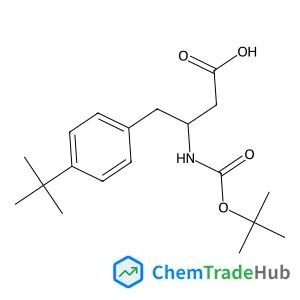
(S)-3-((tert-Butoxycarbonyl)amino)-4-(4-(tert-butyl)phenyl)butanoic acid
CAS番号:
403661-85-8
分子式:
C19H29NO4
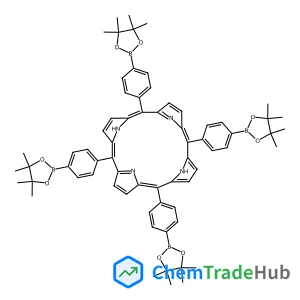
5,10,15,20-tetrakis(4-boronic acid pinacol ester phenyl) porphyrin
CAS番号:
1332748-00-1
分子式:
C68H74B4N4O8
おすすめサプライヤー




免責事項
このページに表示される学術雑誌情報は、参考および研究目的のみを目的としています。当社は雑誌出版社とは提携しておらず、投稿の取り扱いも行っておりません。出版に関するお問い合わせは、各雑誌出版社に直接ご連絡ください。
表示されている情報に誤りがある場合は、support@chemtradehub.com までご連絡ください。迅速に確認し、対応いたします。