












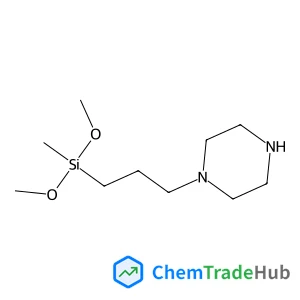
Laser-induced fluorescence excitation and dispersed fluorescence spectroscopy of the Ã(1B1)–(1A1) transition of dichlorocarbene
文献情報
出版日
2004-11-25
DOI
10.1039/B413391A
インパクトファクター
3.676
著者
Joseph S. Guss, Craig A. Richmond, Klaas Nauta, Scott H. Kable
原文を見る
要旨
The Ã(1B1)–(1A1) transition of jet-cooled CCl2 has been investigated using both laser-induced fluorescence (LIF) excitation and dispersed fluorescence (DF) spectroscopy. DF spectra were taken from over 90 emitting vibronic states over the breadth of the LIF spectrum. 68 ground state vibrational levels were assigned in the C35Cl2 isotopomer and 47 in C35Cl37Cl. The ground state frequencies were fit to an anharmonic potential yielding: ω″1 = 736 cm−1, ω″2 = 338 cm−1, ν″3 = 760 cm−1, x″11 = −3.19 cm−1, x″22 = −0.29 cm−1, x″12 = −1.80 cm−1, x″13 = −5.70 cm−1 and x″23 = −3.80 cm−1. This is the first gas phase measurement of ν″3. Despite the close frequency match between ν″1 and 2ν″2 there was no evidence for Fermi resonance. The intensities of transitions in the DF spectra were analysed to identify the nature of the emitting state. Levels below T00 + 2500 cm−1 in the à state could be assigned simply as combinations and overtones of ν′1 and ν′2. Between T00 + 2500 and T00 + 5300 cm−1 the emission revealed an increasing mixing between levels within the same polyad, i.e., (m,n,0), (m + 1,n − 2,0), (m + 2,n − 4,0) etc, presumably due to Fermi resonance. This mixing becomes so extensive that simple assignment of the emitting states is not possible. Above T00 + 5300 cm−1 only K′ = 0 states could be identified, indicating that the Renner–Teller intersection between the and à states had been exceeded. This intersection is therefore 22 600 cm−1 above the ground state, in excellent agreement with a previous theoretical calculation of 23 000 cm−1.
関連文献
Low temperature synthesis of wurtzite zinc sulfide (ZnS) thin films by chemical spray pyrolysis
Xin Zeng, Stevin S. Pramana, Sudip K. Batabyal, Xiaodong Chen, K. B. Jinesh
2013-01-17
Communication
DOI: 10.1039/C3CP43470B
Thermodynamics of oligomer formation: implications for secondary organic aerosol formation and reactivity
Joseph W. DePalma, Andrew J. Horan, Wiley A. Hall IV, Murray V. Johnston
2013-03-22
Paper
DOI: 10.1039/C3CP44586K
Ultrahigh-efficiency photocatalysts based on mesoporous Pt–WO3 nanohybrids
Zhuang Liu, Hao Zhang, Jinghong Li, Junhong Chen
2013-04-02
Communication
DOI: 10.1039/C3CP50647A
Comparing molecular photofragmentation dynamics in the gas and liquid phases
Stephanie J. Harris, Daniel Murdock, Yuyuan Zhang, Thomas A. A. Oliver, Michael P. Grubb, Andrew J. Orr-Ewing, Gregory M. Greetham, Ian P. Clark, Michael Towrie, Stephen E. Bradforth, Michael N. R. Ashfold
2013-03-19
Perspective
DOI: 10.1039/C3CP50756D
In situ fluorescence and electrochemical monitoring of a photosynthetic microbial fuel cell
Alister E. Inglesby, Kamran Yunus, Adrian C. Fisher
2013-04-02
Paper
DOI: 10.1039/C3CP51076J
Ab initio simulations of scanning-tunneling-microscope images with embedding techniques and application to C58-dimers on Au(111)
Alexei Bagrets
2013-02-14
Paper
DOI: 10.1039/C3CP44286A
Non-bonding interactions and internal dynamics in CH2F2⋯H2CO: a rotational and model calculations study
Qian Gou, Gang Feng, Luca Evangelisti, Alberto Lesarri, Emilio J. Cocinero, Walther Caminati
2013-03-01
Paper
DOI: 10.1039/C3CP50306B
Experimental visualization of the Bi–O covalency in ferroelectric bismuth ferrite (BiFeO3) by synchrotron X-ray powder diffraction analysis
Kotaro Fujii, Hiroki Kato, Kazuki Omoto, Jun Chen, Xianran Xing
2013-03-14
Communication
DOI: 10.1039/C3CP50236H
In situ determination of the surface excess upon electrochemical sulfate adsorption on Au(111) films by surface plasmon resonance
2013-02-14
Paper
DOI: 10.1039/C3CP44303E
Investigation of the nanomechanical properties of β-Si3N4nanowires under three-point bending via molecular dynamics simulation
Xuefeng Lu, Hongjie Wang, Meng Chen, Lei Fan, Chao Wang, Shuhai Jia
2013-02-27
Communication
DOI: 10.1039/C3CP50372K
こちらもおすすめ
化合物よくある質問
2-ブロモ-9,9-ジフェニル-9H-フルオレンの主な用途は何ですか?
2-溴-9,9-二苯基芴は、医薬品、工業材料、有機合成の研究分野で応用されます。特に、レーザー材料や機能性ポリマーの合成に使用されることがあります。また、蛍光色...
474918-32-62-Bromo-9,9-diphenyl...
化合物よくある質問
四氯化铱の市場動向や研究トレンドはどうですか?
四氯化铱の市場は研究開発分野で注目されており、特にナノ技術や金属有機框架(MOFs)の分野での需要が増加傾向にあります。価格は安定しており、中国や韓国での生産が...
207399-11-9Tetrachloroiridium h...
882-06-44-Nitrocinnamic acid
化合物よくある質問
1-(4-溴-3-氟苯基)-2-氯乙酮を含む廃棄物はどのように処理すべきですか?
1-(4-溴-3-氟苯基)-2-氯乙酮 (CAS番号: 1260857-14-4) の廃棄物は専門的な廃棄処理が必要です。まず、廃棄物は密閉された容器に収集し、...
1260857-14-41-(4-Bromo-3-fluorop...
化合物よくある質問
苦参酚Kとは何ですか?
苦参酚Kは、CAS番号101236-49-1を持つ化合物で、主に天然由来の生薬から抽出されます。この化合物は、抗炎症作用や抗癌作用を持つことが報告されています。
101236-49-1Kushenol K
化合物よくある質問
POTASSIUM (1-(TERTBUTOXYCARBONYL)AZETIDIN-3-YL)TRIFLUOROBORATE を含む廃棄物はどのように処理すべきですか?
POTASSIUM (1-(TERTBUTOXYCARBONYL)AZETIDIN-3-YL)TRIFLUOROBORATE を含む廃棄物は、まず安全なエント...
1430219-73-0Potassium (1-(tert-b...
化合物よくある質問
4-庚基-4’-联苯羧酸の市場動向や研究トレンドはどうですか?
4-庚基-4’-聯苯羧酸は、特殊化学品や合成化学の分野で用いられる化学物質ですが、市場動向としては、研究開発の進展とともに需要が増加しています。また、環境配慮型...
58573-94-74'-Heptyl-4-biphenyl...
化合物よくある質問
6-ブロモ-3-メトキシ-1-フェニル-1H-インドゾールを含む廃棄物はどのように処理すべきですか?
6-ブロモ-3-メトキシ-1-フェニル-1H-インドゾールを含む廃棄物は、適切な化学廃棄処理が必要です。通常、廃棄物は密閉容器に収集され、専門の廃棄処理業者に引...
1332527-03-36-Bromo-3-methoxy-1-...
化合物よくある質問
4,4-二甲基-2-吡咯烷酮はどの業界で使用されていますか?
4,4-二甲基-2-吡咯烷酮は医薬、ポリマー、センサー、半導体などの業界で広く使用されています。特に溶媒としての性能が高く評価されています。
66899-02-34,4-dimethylpyrrolid...
51312-42-6Sodium Phosphotungst...
掲載誌
Physical Chemistry Chemical Physics

CiteScore:
5.5
自己引用率:
10.3%
年間論文数:
3036
Physical Chemistry Chemical Physics (PCCP) is an international journal co-owned by 19 physical chemistry and physics societies from around the world. This journal publishes original, cutting-edge research in physical chemistry, chemical physics and biophysical chemistry. To be suitable for publication in PCCP, articles must include significant innovation and/or insight into physical chemistry; this is the most important criterion that reviewers and Editors will judge against when evaluating submissions. The journal has a broad scope and welcomes contributions spanning experiment, theory, computation and data science. Topical coverage includes spectroscopy, dynamics, kinetics, statistical mechanics, thermodynamics, electrochemistry, catalysis, surface science, quantum mechanics, quantum computing and machine learning. Interdisciplinary research areas such as polymers and soft matter, materials, nanoscience, energy, surfaces/interfaces, and biophysical chemistry are welcomed if they demonstrate significant innovation and/or insight into physical chemistry. Joined experimental/theoretical studies are particularly appreciated when complementary and based on up-to-date approaches.
おすすめ化合物
![[4-(Heptyloxy)phenyl]boronic acid structure](https://static.chemtradehub.com/structs/136/136370-19-9-ad33.webp "[4-(Heptyloxy)phenyl]boronic acid structure")
おすすめサプライヤー






免責事項
このページに表示される学術雑誌情報は、参考および研究目的のみを目的としています。当社は雑誌出版社とは提携しておらず、投稿の取り扱いも行っておりません。出版に関するお問い合わせは、各雑誌出版社に直接ご連絡ください。
表示されている情報に誤りがある場合は、support@chemtradehub.com までご連絡ください。迅速に確認し、対応いたします。