


Dynamics of H-atom loss in adenine
文献情報
出版日
2004-10-05
DOI
10.1039/B411295D
インパクトファクター
3.676
著者
原文を見る
要旨
Time- and frequency resolved detection of H-atoms was used to investigate the excited-state photophysics and photochemistry of isolated adenine and 9-methyladenine at two excitation wavelengths, 266 nm and 239.5 nm. By comparison of the two molecules it is shown that dissociation of the N9–H bond is an important deactivation pathway in adenine. The appearance time of the H-atoms was shorter than a few nanoseconds, indicating a rapid non-statistical dissociation. From the Doppler profiles a dissociation energy of 393 ± 20 kJ mol−1 was determined for adenine. Typically 40–50% of the excess energy is released as translation. The Doppler profile of the H-atom photofragments from adenine excited at 239.5 nm shows an anisotropic angular distribution and suggests that dissociation occurs in less than a rotational period. An anisotropy parameter β ≈ −0.9 was derived, indicating an almost pure perpendicular transition. Our data are consistent with a H-atom loss in adenine that can be adequately described by a coupling with πσ* excited states as recently suggested in the literature. The Doppler profiles of 9-methyladenine on the other hand are more isotropic. From the width of the profile it is assumed that not only one of the N–H bonds in the amino group is cleaved, but some H-loss also occurs on the methyl group.
おすすめジャーナル

Molecular Pharmacology

Organic Preparations and Procedures International

Journal of Heterocyclic Chemistry

Science Progress

Pharmacological Reviews

Pure and Applied Chemistry

Fibre Chemistry

European Journal of Wood and Wood Products

Journal of Catalysis

Proceedings of the National Academy of Sciences of the United States of America
関連文献
Correction: Functionalisable acyclic cucurbiturils
Daniel Bauer, Beatrice Andrae, Patrick Gaß, Danjano Trenz, Sabine Becker, Stefan Kubik
2019-03-18
Correction
DOI: 10.1039/C9QO90027F
Formates plus triazabicyclodecene (TBD): an efficient platform for non-gaseous carbonylation and unexpected hydrogenation
Jinzhong Yao, Linlin Chen, Linfeng Hu, Xiaofang Li, Hongwei Zhou
2019-03-08
Research Article
DOI: 10.1039/C9QO00028C
Copper-promoted dehydrogenative cross-coupling reaction of dialkyl phosphites with sulfoximines
Surabhi Gupta, Siddharth Baranwal, Priyanka Chaudhary, Jeyakumar Kandasamy
2019-05-06
Research Article
DOI: 10.1039/C9QO00469F
Orthogonally arranged tripyrrin–BODIPY conjugates with an “edge to plane” mode
Chun-Liang Hou, Yuhang Yao, Da Wang, Jing Zhang, Jun-Long Zhang
2019-04-25
Research Article
DOI: 10.1039/C9QO00445A
Direct access to benzo[b]fluorenes via a gold-catalysed A3-coupling strategy
Danilo M. Lustosa, Patrick Cieslik, Deborah Hartmann, Tim Bruckhoff, Matthias Rudolph, Frank Rominger, A. Stephen K. Hashmi
2019-03-28
Research Article
DOI: 10.1039/C9QO00260J
Visible-light-mediated hydrodehalogenation and Br/D exchange of inactivated aryl and alkyl halides with a palladium complex
Jia-Hui Zhao, Xue-Ya Gou, Xi-Meng Chen, Yong-Min Liang
2019-03-28
Research Article
DOI: 10.1039/C9QO00240E
Diffusion NMR for the characterization, in solution, of supramolecular systems based on calixarenes, resorcinarenes, and other macrocyclic arenes
Yoram Cohen, Sarit Slovak
2019-04-17
Review Article
DOI: 10.1039/C9QO00329K
Oxidative dual C–H selenation of imidazoheterocycles with ethers or alkanes using selenium powder via a radical pathway
Tao Guo, Xu-Ning Wei, Yu Liu, Pan-Ke Zhang, Yun-Hui Zhao
2019-03-12
Research Article
DOI: 10.1039/C9QO00198K
Oxalamide-based bisdiamidophosphites: synthesis, coordination, and application in asymmetric metallocatalysis
Konstantin N. Gavrilov, Igor S. Mikhel, Sergey V. Zheglov, Vladislav K. Gavrilov, Ilya V. Chuchelkin, Ilya D. Firsin, Kirill P. Birin, Ivan S. Pytskii, Ksenia A. Paseshnichenko, Victor A. Tafeenko, Alexei A. Shiryaev
2019-03-28
Research Article
DOI: 10.1039/C9QO00237E
The effects of the heteroatom and position on excited-state intramolecular proton transfer of new hydroxyphenyl benzoxazole derivatives: a time-dependent density functional theory study
Wei Guo, Panwang Zhou, Zhe Tang
2019-04-01
Research Article
DOI: 10.1039/C9QO00295B
こちらもおすすめ
化合物よくある質問
6- bromo-1-cyclopropyl-1H-benzimidazoleの市場動向や研究トレンドはどうですか?
6- bromo-1-cyclopropyl-1H-benzimidazoleは、抗炎症、抗ウイルス作用を持つことが報告されており、新薬開発の研究対象として注目...
1416713-53-56-Bromo-1-cyclopropy...
化合物よくある質問
環氧プロpanol-d5を取り扱う際の実験室安全事項は何ですか?
取り扱う際には、防護眼鏡と手袋を使用し、ドラフトチャンバー内で操作することを推奨します。漏洩時には適切な手順で処理し、安全データシートを常に参照してください。
1246819-20-4Glycidol-d5
化合物よくある質問
2,2’-ジメチル-3,3’-ビピリジンはどのように合成されますか?
2,2’-ジメチル-3,3’-ビピリジンは、ピリジンと2-メチルアクリルアミドを有機合成反応で合成します。この反応では、ピリジンと2-メチルアクリルアミドを含有...
86156-55-02,2’-Dimethyl-3,3’-b...
化合物よくある質問
6-甲基ピリジン-2-ボリック酸の主な用途は何ですか?
6-甲基ピリジン-2-ボリック酸は、合成化学、医薬品合成、以及研究用途などに広く使用され、特に組換えDNA技術や分子生物学の研究において重要な役割を果たします。
372963-50-3(6-Methyl-2-pyridiny...
化合物よくある質問
(R)-3-(1-甲基-2-氧環己基)プロpano酸メチルは安全ですか?
(R)-3-(1-甲基-2-氧環己基)プロpano酸メチルは一定の安全性がありますが、直接的な皮膚接触や吸入は避けるべきです。使用する際は適切な個々の安全データ...
94089-47-1methyl 3-[(1R)-1-met...
化合物よくある質問
ketorolacはどのように保存すればよいですか?
ketorolacは、密封して遮光容器に保管し、直射日光や高温を避けて保存してください。温度は常温で保存し、湿度をなるべく低く保つことが推奨されます。
74103-06-3rac Ketorolac
化合物よくある質問
L-2,3-二氨基丙酸二盐酸盐を取り扱う際の実験室安全事項は何ですか?
L-2,3-二氨基丙酸二盐酸盐は腐食性が強く、皮膚や粘膜に刺激を与える可能性があります。取り扱う際は、防塵マスク、ゴーグル、手袋を使用し、適切な排気設備を使用し...
19777-68-5(S)-2,3-Diaminopropa...
化合物よくある質問
2-(4-溴ピリジン-2-基)乙腈の物理化学的性質は何ですか?
2-(4-溴ピリジン-2-基)乙腈のCAS番号は312325-73-8です。主に結晶形態で存在し、分子量は159.01 g/molです。この化合物は水に溶けやす...
312325-73-8(4-Bromo-2-pyridinyl...
化合物よくある質問
3-フローロ-[1,1-ベンジレン]-3,4-ジカルボン酸を取り扱う際の実験室安全事項は何ですか?
この化合物は毒性は低いですが、直接的な接触や吸入に注意が必要です。PPE(個人防護具)を着用し、ドラフトチャンバーを使用して操作することを推奨します。また、漏洩...
1261915-32-53'-Fluoro-[1,1'-biph...
化合物よくある質問
3-(1-氧代-1,3-二氢-2H-2-异吲哚)丙酸の主な用途は何ですか?
3-(1-氧代-1,3-二氢-2H-2-异吲哚)丙酸は、薬理学研究や医薬品製造において広く用いられる化合物です。また、工業的な用途でも一部の化学反応の触媒や助剤...
83747-30-23-(1-Oxo-1,3-dihydro...
掲載誌
Physical Chemistry Chemical Physics

CiteScore:
5.5
自己引用率:
10.3%
年間論文数:
3036
Physical Chemistry Chemical Physics (PCCP) is an international journal co-owned by 19 physical chemistry and physics societies from around the world. This journal publishes original, cutting-edge research in physical chemistry, chemical physics and biophysical chemistry. To be suitable for publication in PCCP, articles must include significant innovation and/or insight into physical chemistry; this is the most important criterion that reviewers and Editors will judge against when evaluating submissions. The journal has a broad scope and welcomes contributions spanning experiment, theory, computation and data science. Topical coverage includes spectroscopy, dynamics, kinetics, statistical mechanics, thermodynamics, electrochemistry, catalysis, surface science, quantum mechanics, quantum computing and machine learning. Interdisciplinary research areas such as polymers and soft matter, materials, nanoscience, energy, surfaces/interfaces, and biophysical chemistry are welcomed if they demonstrate significant innovation and/or insight into physical chemistry. Joined experimental/theoretical studies are particularly appreciated when complementary and based on up-to-date approaches.
おすすめ化合物
![[4-(Isobutyrylamino)phenyl]boronic acid structure](https://static.chemtradehub.com/structs/874/874219-50-8-6ab5.webp "[4-(Isobutyrylamino)phenyl]boronic acid structure")
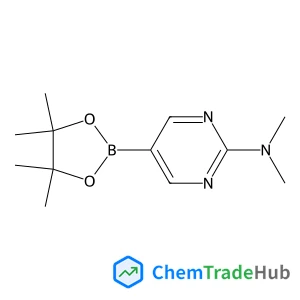
N,N-Dimethyl-5-(4,4,5,5-tetramethyl-1,3,2-dioxaborolan-2-yl)-2-pyrimidinamine
CAS番号:
1032759-30-0
分子式:
C12H20BN3O2
おすすめサプライヤー





免責事項
このページに表示される学術雑誌情報は、参考および研究目的のみを目的としています。当社は雑誌出版社とは提携しておらず、投稿の取り扱いも行っておりません。出版に関するお問い合わせは、各雑誌出版社に直接ご連絡ください。
表示されている情報に誤りがある場合は、support@chemtradehub.com までご連絡ください。迅速に確認し、対応いたします。