


Dissociative recombination of N2OD+
文献情報
出版日
2004-05-10
DOI
10.1039/B403461A
インパクトファクター
3.676
著者
W. D. Geppert, R. Thomas, F. Hellberg, A. Ehlerding, F. Österdahl, M. af Ugglas, M. Larsson
原文を見る
要旨
Branching ratios and absolute cross sections have been measured for the dissociative recombination of N2OD+ using the CRYRING ion storage ring. The most dominating pathways were found to be those leading to N2 + OD (46%) and the three-body break-up producing N2 + O + D (40%). The production of N2O is not observed. The cross section of the reaction could be fitted to the expression σ = 1.25 ± 0.25 × 10⁻¹⁵(E/eV)−1.24±0.02, which leads to a thermal reaction rate of k(T) = 1.4 ± 0.1 × 10⁻⁶(T/300)−0.74±0.02 cm3 s−1. The findings are compared with those of the related dissociative recombination of DOCO+ as well as with earlier flowing afterglow measurements.
おすすめジャーナル

Main Group Metal Chemistry

Bio-Medical Materials and Engineering

Advanced Powder Technology

Construction and Building Materials

Journal of Computer-Aided Molecular Design

Cement and Concrete Composites

Heterocyclic Communications

Diamond and Related Materials

Journal of Physical Organic Chemistry

Computational Materials Science
関連文献
A reversed-phase/hydrophilic bifunctional interaction mixed-mode monolithic column with biphenyl and quaternary ammonium stationary phases for capillary electrochromatography
Changjun Hu, Zhentao Li
2019-06-03
Paper
DOI: 10.1039/C9AN00428A
Evidence of CT complex formation between a probe and unreacted methylimidazole in imidazolium cation based ionic liquids: sensing by functionalised 2-benzyledinemalononitrile
Manish Kumar Tiwari, Monika Das, Satyen Saha
2019-06-03
Paper
DOI: 10.1039/C9AN00575G
EM∩IM: software for relating ion mobility mass spectrometry and electron microscopy data
2015-11-23
Communication
DOI: 10.1039/C5AN01636C
Cancer screening via infrared spectral cytopathology (SCP): results for the upper respiratory and digestive tracts
Miloš Miljković, Benjamin Bird, Antonella I. Mazur, Jen M. Schubert, Douglas Townsend, Nora Laver, Max Almond, Oliver Old
2015-09-28
Minireview
DOI: 10.1039/C5AN01751C
Uncoiling collagen: a multidimensional mass spectrometry study
H. J. Simon, M. A. van Agthoven, P. Y. Lam, F. Floris, L. Chiron, C. Rolando, M. P. Barrow, P. B. O'Connor
2015-11-03
Paper
DOI: 10.1039/C5AN01757B
Mass spectrometry of modified RNAs: recent developments
Collin Wetzel, Patrick A. Limbach
2015-10-21
Minireview
DOI: 10.1039/C5AN01797A
A specific electrochemiluminescence sensor for selective and ultra-sensitive mercury(ii) detection based on dithiothreitol functionalized copper nanocluster/carbon nitride nanocomposites
Huitao Liu, Xueqing Gao, Chunyuan Tian, Zhenguang Wang, Yanxiu Li
2019-06-04
Paper
DOI: 10.1039/C9AN00667B
Serum protein biomarkers relevant to hepatocellular carcinoma and their detection
Eric Waidely, Abdul-Rahman Obaid Al-Yuobi, A. S. Bashammakh, Mohammad S. El-Shahawi, Roger M. Leblanc
2015-11-11
Critical Review
DOI: 10.1039/C5AN01884F
Real-time imaging of cancer cell chemotaxis in paper-based scaffolds
Rachael M. Kenney, Matthew W. Boyce, Andrew S. Truong, C. Robert Bagnell
2015-11-09
Paper
DOI: 10.1039/C5AN01787D
Ultrasensitive detection of disease biomarkers using an immuno-wall device with enzymatic amplification
Keine Nishiyama, Seiya Nakamata, Koya Ishikawa, Masatoshi Maeki, Akihiko Ishida, Hirofumi Tani
2019-06-19
Paper
DOI: 10.1039/C9AN00480G
こちらもおすすめ
化合物よくある質問
3-(5-フェニル-2-ファイル)-プロパン酸の市場動向や研究トレンドはどうですか?
この化合物の市場動向は不明ですが、類似化合物の需要は化学繊維、医薬品、農薬分野で安定しています。研究トレンドとしては、該当化合物の生物学的活性の評価や、その他の...
3465-61-03-(5-Phenyl-2-furyl)...
化合物よくある質問
3- Chloro-1H-indazol-5-olはどのように保存すればよいですか?
3- チロロ-1H-吲唑-5-醇は遮光し、直射日光を避けて、温度は室温を推奨し、密閉容器に保存してください。
885519-34-63-Chloro-1H-indazol-...
849924-76-11,2,3,4,5-Cyclopenta...
化合物よくある質問
L-(1-~13~C)メチオニンの市場動向や研究トレンドはどうですか?
L-(1-~13~C)メチオニンは、医薬品やバイオテクノロジー分野での研究が増加しており、その価格は安定しています。新興研究分野では、代謝解析や遺伝子機能解析で...
81202-04-2L-(1-~13~C)Methionin...
化合物よくある質問
1,3-フェニレンビスメチレンビスアクリレートは安全ですか?
1,3-フェニレンビスメチレンビスアクリレートは一般的に安全ですが、直接皮膚に触れる場合は保護用具を使用することを推奨します。高濃度の蒸気が吸入された場合は呼吸...
22757-16-01,3-Phenylenebis(met...
化合物よくある質問
丹参醇Aはどのように保存すればよいですか?
丹参醇Aは、直射日光を避けて室温で保存し、密栓容器に入れることをお勧めします。適切な保存条件は、安定性を保ち、安全性を確保する上で重要です。
189308-08-5Danshenol A
化合物よくある質問
4-メチル-2-(1,1,1-三フロロ-2-メチルプロパニル)ピリドインとは何ですか?
CAS番号1378865-93-0の4-メチル-2-(1,1,1-三フロロ-2-メチルプロパニル)ピリドインは、合成化学分野で用いられる有機化合物の一種です。こ...
1378865-93-04-Methyl-2-(1,1,1-tr...
化合物よくある質問
N-フェニルベンジル-2-クロロ酢氨を取り扱う際の実験室安全事項は何ですか?
N-フェニルベンジル-2-クロロ酢氨は毒性があり、皮膚や粘膜に刺激を与えます。取り扱う際には、保護眼鏡、手袋、ゴーグルを着用することを強く推奨します。ドラフトチ...
2653-14-7N-benzyl-2-chloro-N-...
化合物よくある質問
UCN-02を取り扱う際の実験室安全事項は何ですか?
UCN-02は毒性は低いですが、人体への直接的な接触は避けるべきです。PPE要件はグローブと顔面保護具を着用することです。ドラフトチャンバーを使用して漏洩を処理...
121569-61-7UCN-02
化合物よくある質問
N-[3-[2-(二甲基氨基)乙氧基]-4-甲氧基苯基]-2'-甲基-4'-(5-甲基-1,2,4-恶二唑-3-基)-[1,1'-联苯]-4-甲酰胺を取り扱う際の実験室安全事項は何ですか?
手袋と保護眼鏡を着用し、漏洩時には吸気防止装置を使用してください。室温、乾燥した場所に保管し、直日光から隔離してください。SDS(安全データシート)を参照してく...
170230-39-4N-{3-[2-(Dimethylami...
掲載誌
Physical Chemistry Chemical Physics

CiteScore:
5.5
自己引用率:
10.3%
年間論文数:
3036
Physical Chemistry Chemical Physics (PCCP) is an international journal co-owned by 19 physical chemistry and physics societies from around the world. This journal publishes original, cutting-edge research in physical chemistry, chemical physics and biophysical chemistry. To be suitable for publication in PCCP, articles must include significant innovation and/or insight into physical chemistry; this is the most important criterion that reviewers and Editors will judge against when evaluating submissions. The journal has a broad scope and welcomes contributions spanning experiment, theory, computation and data science. Topical coverage includes spectroscopy, dynamics, kinetics, statistical mechanics, thermodynamics, electrochemistry, catalysis, surface science, quantum mechanics, quantum computing and machine learning. Interdisciplinary research areas such as polymers and soft matter, materials, nanoscience, energy, surfaces/interfaces, and biophysical chemistry are welcomed if they demonstrate significant innovation and/or insight into physical chemistry. Joined experimental/theoretical studies are particularly appreciated when complementary and based on up-to-date approaches.
おすすめ化合物
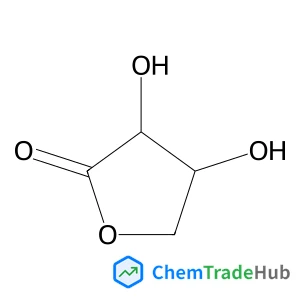
![N-[(E)-Phenylmethylene]benzenesulfonamide structure](https://static.chemtradehub.com/structs/139/13909-34-7-8167.webp "N-[(E)-Phenylmethylene]benzenesulfonamide structure")
おすすめサプライヤー




免責事項
このページに表示される学術雑誌情報は、参考および研究目的のみを目的としています。当社は雑誌出版社とは提携しておらず、投稿の取り扱いも行っておりません。出版に関するお問い合わせは、各雑誌出版社に直接ご連絡ください。
表示されている情報に誤りがある場合は、support@chemtradehub.com までご連絡ください。迅速に確認し、対応いたします。